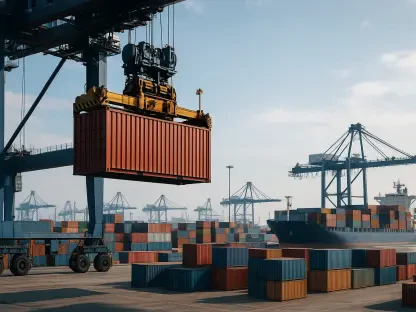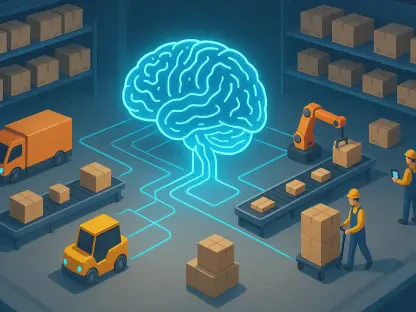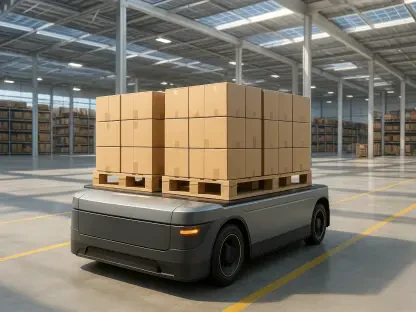

Global industrial networks are currently experiencing a profound structural realignment as artificial intelligence matures from a peripheral experimental tool into the central nervous system of modern logistics operations. This transition marks the end of an era defined by reactive problem-solving and manual data reconciliation, ushering in a period where predictive capabilities allow for near-instantaneous adjustments to global disruptions. The modern supply chain now functions as a high-velocity digital ecosystem where machine learning algorithms and computer vision provide a level of visibility and security that was once considered technologically impossible. By synthesizing vast quantities of unstructured data, organizations are not only increasing their operational efficiency but also fundamentally changing the nature of human labor within the logistics and manufacturing sectors.
The significance of this shift cannot be overstated, as the global economy relies on the seamless movement of goods across increasingly volatile geopolitical landscapes. Current integration strategies focus on breaking down traditional silos between procurement, warehousing, and distribution to create a unified data layer. Major market players in the high-tech and logistics industries have already moved beyond simple automation, implementing sophisticated AI frameworks that manage everything from gate security to complex manufacturing schedules. Furthermore, relevant regulations are beginning to catch up with these technological leaps, ensuring that as AI takes a more prominent role in decision-making, it remains transparent and accountable to human oversight.
The Current State of Global Logistics and AI Integration
The present landscape of global logistics is characterized by a move toward total digital integration, where the physical movement of goods is mirrored by a precise digital twin. Companies are currently leveraging computer vision to automate inventory tracking and gate security, effectively transforming warehouses into smart environments that require minimal manual intervention for routine monitoring. This technological influence has drastically reduced the frequency of lost assets and cargo theft, as AI-driven systems provide indisputable evidence and real-time alerts that human security teams might overlook. The scope of these improvements extends from the smallest retail replenishment cycles to massive global distribution networks, ensuring that every segment of the chain is optimized for speed and accuracy.
Technological influences are predominantly visible in how unstructured data is managed across different supply chain partners. Historically, the variety of formats used for invoices, shipping manifests, and email tenders created significant friction, requiring hours of manual labor to translate into actionable system inputs. However, modern AI tools now ingest these diverse data formats with zero friction, allowing for seamless collaboration between providers and customers without requiring a change in existing documentation habits. This evolution has empowered market players to focus on strategic growth rather than administrative maintenance, significantly increasing the agility of the entire industry.
Moreover, the significance of AI integration is highlighted by the industry’s ability to navigate external shocks, such as fluctuating tariffs or sudden shifts in manufacturing capacity. Advanced platforms now allow executives to run complex what-if scenarios, evaluating the potential ripple effects of a single change across the entire global network in a matter of hours. This shift from weekly manual analysis to near real-time strategic pivot capabilities has redefined the competitive advantage in logistics. Consequently, the industry is no longer just moving boxes but is increasingly focused on managing the information flow that dictates where those boxes should be at any given moment.
The Rise of Agentic AI and Compressed Decision Cycles
The most transformative trend currently affecting the industry is the shift toward agentic AI, which moves beyond simple data analysis to take autonomous actions within predefined parameters. These intelligent agents are designed to handle complex tasks such as sourcing and request-for-quote processes with minimal human guidance, effectively compressing decision cycles from weeks down to mere seconds. This evolution is driven by the need for extreme speed in a market where consumer behaviors change rapidly and traditional procurement methods are often too slow to respond. By delegating the heavy lifting of data synthesis and initial vendor communication to AI agents, businesses can maintain a pace of operation that aligns with the speed of digital commerce.
Evolving consumer behaviors are also a major driver for this trend, as the expectation for rapid delivery and product availability has become a global standard. Market drivers now favor organizations that can predict shifts in demand before they fully manifest, allowing for proactive inventory placement and replenishment. These new opportunities are particularly visible in the growth of predictive sourcing, where AI agents identify potential supply gaps and initiate contact with alternative suppliers automatically. This proactive stance ensures that supply chains remain resilient even when primary manufacturing hubs face unexpected downtime or logistical bottlenecks.
Furthermore, the rise of agentic AI is transforming the relationship between humans and machines in the workplace. Instead of fearing replacement, the current workforce—often composed of digital-first professionals—is embracing these tools to eliminate repetitive tasks and focus on higher-level strategic management. The opportunity for human workers to act as governors of these AI agents rather than manual data processors has led to a more engaged and specialized labor force. This synergy between human intuition and machine speed is creating a new operational paradigm that is likely to define the next several years of industrial progress.
Quantitative Growth and Adoption Metrics in Predictive Analytics
Recent market data indicates that the adoption of predictive analytics in supply chain management has reached a critical mass, with retail sectors showing an 82 percent implementation rate as of the current year. This growth is not merely a matter of adoption but is reflected in the performance indicators of companies that have successfully integrated these tools. Quantitative metrics show a significant reduction in overhead costs and a substantial decrease in out-of-stock scenarios, directly impacting the profitability of global trade. The forward-looking perspective suggests that from 2026 to 2028, the investment in AI-driven predictive tools will continue to accelerate as the ROI becomes increasingly undeniable across all logistics segments.
Performance indicators also highlight the effectiveness of AI in demand forecasting, where the accuracy of predictions has improved by nearly 40 percent compared to traditional statistical methods. This improvement allows for more precise manufacturing schedules and a reduction in the capital tied up in excess inventory. Forecasts based on available data suggest that the market for AI in logistics will expand by an annual growth rate exceeding 20 percent through 2028. This rapid expansion is fueled by the falling cost of data processing and the increasing availability of pre-trained models that can be customized for specific industry needs with relatively little effort.
The quantitative shift is also visible in the sheer volume of data being processed to inform supply chain decisions. Organizations are now integrating external data points, such as weather patterns, social media trends, and geopolitical stability scores, into their predictive models. This holistic approach to data ingestion ensures that growth projections are grounded in a comprehensive understanding of the global market. As these tools become more sophisticated, the gap between the industry leaders who utilize predictive analytics and the laggards who rely on historical data is expected to widen significantly, driving further consolidation in the market.
Navigating Implementation Hurdles and Strategic Obstacles
Despite the clear benefits, the path toward total AI integration is fraught with technological and organizational hurdles that require strategic navigation. One of the primary obstacles is the persistence of legacy systems that were not designed to share data in real time, creating silos that prevent AI from accessing a unified view of the supply chain. Overcoming this challenge often requires a significant investment in middleware or a complete overhaul of the digital infrastructure, a move that many organizations are hesitant to make due to the potential for short-term disruption. Successful strategies involve a phased approach where specific, high-value segments of the chain are digitized first to demonstrate value before a full-scale rollout.
Regulatory and security challenges also present significant strategic obstacles, particularly concerning the privacy of customer data and the protection of intellectual property. As companies share more data with AI-driven platforms, the risk of data breaches or the unauthorized use of proprietary information increases. To mitigate these risks, industry leaders are adopting decentralized data models and edge computing solutions that allow AI to process information locally without the need for mass data transfers. This strategy not only enhances security but also reduces the latency involved in decision-making, providing a more robust defense against both cyber threats and operational inefficiencies.
Furthermore, a lack of standardized terminology and a shared understanding of AI capabilities can lead to internal friction and misaligned expectations. Organizations often struggle with the definition of agentic AI versus generative AI, which can result in the misallocation of resources toward tools that do not solve the actual problem at hand. To resolve this, many firms are investing in internal education programs and hiring specialized talent to bridge the gap between technical teams and operational managers. This focus on cultural and educational alignment is proving to be just as important as the technological implementation itself in ensuring long-term success.
The Regulatory Landscape and Data Security Standards
The regulatory environment surrounding AI in supply chain management is rapidly evolving, with significant laws such as the EU AI Act setting a global precedent for how these technologies should be governed. Compliance is no longer an optional consideration but a core component of industrial strategy, as failing to meet transparency and accountability standards can result in substantial fines and reputational damage. These standards require that AI systems used in critical infrastructure, including logistics and food supply, must be auditable and free from bias. Consequently, developers are focusing on creating explainable AI models that allow human operators to understand the logic behind every recommendation or autonomous action.
Security measures are also becoming more rigorous, with new standards for data encryption and identity management becoming mandatory for participants in global trade networks. As supply chains become more interconnected, a single vulnerability in one partner’s system can compromise the entire network. To counter this, industry bodies are promoting the adoption of standardized security protocols that ensure every participant adheres to the same level of data protection. This role of compliance acts as a stabilizing force in the industry, providing a framework that allows for innovation while protecting the integrity of the global movement of goods.
The effect on industry practices is profound, as companies must now integrate regulatory considerations into the very early stages of their technological development. This proactive approach to compliance ensures that when new laws are introduced, the organization is already aligned with the core principles of data security and ethical AI. Moreover, the focus on data security has led to an increased interest in blockchain and other distributed ledger technologies to provide a tamper-proof audit trail for AI-driven decisions. This integration of regulation and technology is creating a more trustworthy and resilient supply chain environment that is better equipped to handle the complexities of the modern global economy.
The Future Frontier: Circular Economies and Autonomous Sourcing
The industry is currently heading toward a future where the linear take-make-waste model is replaced by a circular economy managed by sophisticated AI systems. This transition is particularly evident in the burgeoning field of reverse logistics, where AI is used to manage the complexity of product returns, refurbishments, and recycling. By utilizing machine learning to match returned goods with secondary market buyers or determining the most efficient way to recycle materials, companies can significantly reduce waste and uncover new revenue streams. This shift is driven by both environmental necessity and consumer preferences for sustainable brands, making circularity a key growth area for the coming years.
Autonomous sourcing represents another major frontier, as AI moves from suggesting potential suppliers to managing the entire procurement cycle without human intervention. This disruptor will likely redefine the role of procurement officers, who will transition from negotiating individual contracts to managing the strategic parameters within which the AI operates. Factors such as innovation in natural language processing and the increasing digitization of supplier data are making this possible, allowing for a level of sourcing agility that can respond to market changes in real time. This evolution will likely lead to a more fragmented but highly specialized supplier base, as AI can efficiently manage thousands of small-scale relationships that would be impossible for a human team to track.
However, the growth of these technologies is not without its paradoxes, particularly concerning the environmental impact of the data centers required to run them. While AI can optimize routes and reduce carbon emissions, the energy and water consumption of large-scale AI infrastructure is a growing concern that must be addressed through innovation in green computing. Global economic conditions will also play a role in determining the speed of this transition, as periods of volatility may either accelerate the need for AI-driven efficiency or slow down the capital investment required for these advanced systems. Despite these challenges, the trajectory toward a more autonomous and circular supply chain remains the most promising path for long-term industrial sustainability.
Synthesis of Industry Evolution and Strategic Recommendations
The investigation into the current state of global supply chains established that artificial intelligence has become an indispensable engine for operational resilience and economic growth. The findings revealed that the integration of computer vision, predictive analytics, and agentic AI systems successfully compressed decision cycles and reduced the friction associated with unstructured data ingestion. The report also identified that while technological progress moved at a rapid pace, organizational hurdles such as legacy system silos and terminology gaps remained significant barriers to universal adoption. Furthermore, the analysis showed that the regulatory landscape began to provide the necessary guardrails to ensure that AI-driven decisions remained transparent and secure in an increasingly complex global environment.
To maintain a competitive edge, organizations should prioritize the modernization of their data infrastructure to support a unified layer of information accessible by advanced AI agents. Leaders must focus on fostering a human-in-the-loop governance model that ensures accountability while leveraging the speed and predictive power of autonomous systems. Strategic investment in circular economy technologies and reverse logistics optimization will likely provide the most significant opportunities for growth and sustainability in the near term. Finally, a proactive approach to regulatory compliance should be viewed as a strategic advantage rather than a burden, as it builds the trust and security necessary for deep integration with global partners. The prospects for the industry remain strong for those who can successfully navigate the tension between rapid technological innovation and the need for ethical, resource-conscious management.