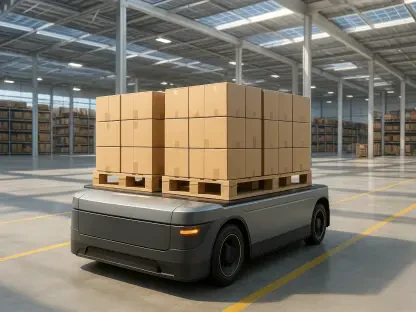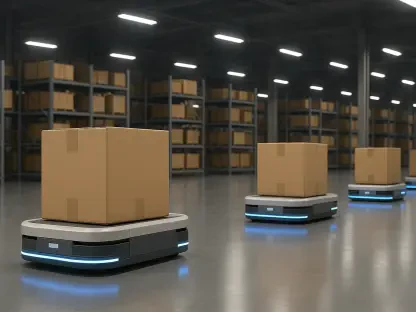

The disparity between a robotic arm delicately flipping a pancake in a Silicon Valley laboratory and the frantic precision required to move millions of packages through a logistics hub highlights the massive chasm between experimental hype and industrial reality. While much of the global tech sector remains captivated by the aesthetic promise of humanoid robots, the actual demands of the logistics industry call for a far more grounded approach. The reality of a modern sorting center is not one of graceful, two-legged machines navigating aisles, but rather a high-speed, synchronized ballet of specialized hardware governed by a singular digital intelligence. In 2026, the focus has shifted toward technological solutions that solve immediate, high-volume problems rather than those that simply mirror the human form.
Real-World Reliability vs. Lab-Grown Hype: The Current State of Logistics AI
The current fascination with embodied intelligence often fails to account for the brutal efficiency requirements of global supply chains. Laboratory demonstrations typically occur in controlled environments where lighting is constant, floor surfaces are perfectly level, and the variety of objects being handled is strictly limited. In contrast, an industrial setting demands that technology performs flawlessly under shifting conditions, handling everything from heavy crates to fragile, irregularly shaped parcels. This disconnect has led to a strategic divergence where leaders like JD Logistics are intentionally bypassing the humanoid trend. Instead of pursuing the sexy allure of general-purpose robots, the focus has landed squarely on high-ROI, specialized automation that can survive the rigors of a 24-hour fulfillment cycle.
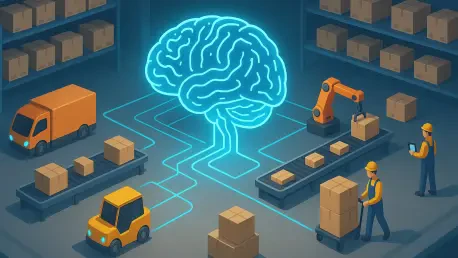
Managing the sheer scale of modern fulfillment requires a level of coordination that far exceeds the capabilities of any single humanoid unit. With 550 million daily tasks spread across millions of unique stock-keeping units, the logistics environment is a shifting landscape of data and physical movement. Every second saved in a sorting process translates to millions of dollars in operational efficiency. This scale has pushed the industry toward a Super Brain model, where a central intelligence coordinates specialized robotic units rather than relying on a singular, versatile mechanical form. The goal is no longer to replace a human with a robot that looks like a human, but to rethink the entire process of movement and storage through the lens of pure systemic performance.
The competitive edge in the express delivery market is now defined by how well these specialized units integrate into the existing infrastructure. While humanoid robots remain expensive and difficult to maintain at scale, specialized robots designed for specific tasks like high-density bin retrieval or roadway navigation offer a predictable path to profitability. These market players are influencing technological development by demanding hardware that can work alongside humans in high-pressure environments without the safety risks associated with large, unpredictable bipedal machines. By prioritizing functional reliability over anthropomorphic design, the industry is building a more resilient and scalable foundation for the next decade of growth.
Evolution of Physical AI and the Push for Industrial ROI
Emerging Trends in Embodied Intelligence and Consumer Logistics
Moving beyond the demo trap has become the primary challenge for developers of Physical AI. While it is impressive to see a robot assist with cooking or domestic chores in a staged environment, these tasks do not translate to the 550 million parcels moving through the Chinese express market. The complexity of consumer logistics lies in its unpredictability. A robot in a warehouse must contend with crushed boxes, translucent packaging, and air-column bags that defy standard computer vision algorithms. The trend is moving away from these isolated successes toward systems that can handle the sheer variety of modern commerce without constant human intervention.
Non-standardization is the new frontier for automation, representing the final 20 percent of challenges that have historically been reserved for human labor. These challenges include irregular packaging and soft materials that change shape when gripped. Addressing these hurdles requires a shift to systemic synchronization, where the robot is not just a blind mechanical arm but a part of a collaborative cluster. These clusters share data in real-time, allowing a dexterous gripper to adjust its pressure based on the weight and material information provided by the central system. This approach ensures that the automation remains flexible enough to handle the chaotic variety of a peak shopping season.
The shift to systemic synchronization also addresses the issue of environmental variability. Warehouses are rarely static environments; they are often subject to unpredictable lighting, dust, and shifting floor layouts. By using collaborative robotic clusters, companies can ensure that if one unit encounters an obstacle, the entire system adjusts its route or task allocation instantly. This level of integrated intelligence provides a much higher level of reliability than a standalone humanoid robot ever could. The focus remains on how these machines work together to maintain a constant flow of goods, regardless of the individual complexities of any single parcel.
Market Projections and the Economics of Pragmatic Automation
The financing boom in the embodied intelligence sector has created immense pressure for tangible returns on investment. In the first half of 2026 alone, capital influx into this sector reached nearly a trillion yuan, but investors are increasingly wary of companies that cannot demonstrate a clear path to profitability. This has led to the adoption of a two-year payback benchmark for technological deployments. If a robotic system cannot pay for itself through increased efficiency or reduced labor costs within twenty-four months, it is often deemed a failure. This internal ROI verification model forces developers to focus on the most practical and impactful hardware configurations.
Utilizing this pragmatic framework, the deployment of specialized AI systems is no longer a speculative venture but a core part of the profit statement. For a company managing over 36 million square meters of warehousing, even a fractional improvement in picking accuracy or storage density has a massive financial impact. The focus has therefore turned toward robots that can maximize vertical space or operate in narrow roadways that humans cannot navigate efficiently. This economic drive is what separates the long-term winners from the companies that are simply chasing the latest technological fashion.
Global expansion forecasts suggest that this pragmatic approach will be the primary driver of growth in international markets like the UK and Germany. These regions often have high labor costs and strict regulatory environments, making the two-year ROI benchmark even more critical. Specialized AI systems that have been proven in the high-volume environment of the Chinese market are being exported as turn-key solutions. These systems are designed to be compatible with existing infrastructure, allowing international logistics providers to upgrade their facilities without the need for massive, structural overhauls. This field performance is what ultimately dictates market share in the global logistics arena.
Overcoming the “Hyper-Automation” Trap and Systemic Friction
Historical failures in the automation sector serve as a stern warning against over-engineering. The case of Denver International Airport’s automated luggage system in the 1990s remains a primary example of how high-end technology can become a liability when it lacks systemic synchronization. The system was designed to be a revolutionary leap in efficiency, yet it ended up crushing bags and causing massive delays because the mechanical units could not handle the variability of real-world luggage. Similarly, the more recent attempt to hyper-automate the Tesla Model 3 production line demonstrated that even the most advanced vision systems could struggle with simple, variable tasks that a human performs effortlessly.
These cautionary tales have highlighted the flexibility bottleneck that often hampers high-end robotics. When a robot is designed to be too capable in a specific, rigid way, it loses the ability to match the adaptability of human labor. The logistics industry has learned that the key to success is not in replacing humans entirely, but in developing technology that remains compatible with manual operations. This hybrid approach allows for a safety valve during peak demand surges. If a robotic system reaches its limit during a major sales event, human workers can step in and work alongside the machines without the entire system collapsing under its own complexity.
Developing strategies for hybrid environments is now a priority for engineers. This involves creating robots that can navigate the same roadways as human pickers and safety systems that prevent collisions in high-pressure sorting centers. By building technology that respects the presence of human labor, companies avoid the friction that often occurs when automation is forced into a space it is not prepared for. The goal is a seamless integration where the robot handles the repetitive, physically taxing labor, while the human provides the high-level troubleshooting and flexibility required for non-standardized tasks.
The Regulatory and Operational Landscape of Physical AI
Implementing safety standards for human-machine coexistence is a critical component of the modern operational landscape. In high-pressure sorting centers, where robots and humans share the same roadways, the margin for error is non-existent. Regulatory frameworks are now requiring advanced sensing and stopping capabilities that go beyond traditional industrial safety barriers. These standards ensure that robots can predict human movement and adjust their paths in real-time, preventing accidents while maintaining a high rate of throughput. This coexistence is not just a technical challenge but a regulatory requirement that dictates how warehouses are designed and managed.
Data security within the Super Brain ecosystem is another major concern for the industry. As predictive order analysis and inventory management become more sophisticated, the amount of sensitive data being processed by these systems grows exponentially. Navigating the compliance requirements for this data involves ensuring that all predictive modeling is handled within secure, localized environments to prevent breaches. Moreover, the integration of global supply chain data requires a high level of transparency and adherence to international data protection laws. Maintaining this security is essential for building trust with both customers and regulatory bodies as the industry moves toward more integrated intelligence.
Adapting to infrastructure constraints is perhaps the most practical challenge in the current landscape. Many logistics hubs are located in older, leased warehouses that cannot be easily modified to accommodate heavy automation. This is where robots like the Canglang system prove their value. These units are designed to operate within existing manual shelves and narrow roadways, mapping the environment autonomously without the need for structural changes. This allows companies to automate their stock warehouses without violating lease agreements or building codes. By working within the limitations of existing infrastructure, Physical AI becomes a viable option for a much broader range of facilities.
The Future of Logistics: Specialized Clusters and Integrated Intelligence
The Wolf Clan paradigm represents a significant shift in how the industry views robotic labor. Instead of a single, general-purpose machine, the future belongs to specialized, collaborative units designed for specific pain points. In this model, one robot might be optimized for lifting heavy bins, while another is designed for the dexterous sorting of small, irregular items. These units work together like a wolf pack, communicating through a central intelligence to ensure that every part of the fulfillment process is optimized. This paradigm favors efficiency and modularity over the versatility of a humanoid form, allowing for faster deployment and easier maintenance.
Physical AI is also finding a critical role in extreme industrial conditions where human labor turnover is naturally high. Cold-chain automation is a prime example, as working in temperatures of minus twenty degrees Celsius is both hazardous and inefficient for humans. Specialized robots equipped with non-contact wireless power and cold-resistant materials can operate indefinitely in these environments, ensuring that frozen goods are handled with the necessary speed and care. This growth in cold-chain technology is solving a major labor bottleneck while also improving the safety of industrial workers who no longer need to endure extreme temperatures for extended shifts.
The singularity of practicality is the ultimate goal of these technological advancements. This concept suggests that the accumulation of small, profitable efficiencies will lead to a more significant technological breakthrough than any single laboratory innovation. By focusing on the daily challenges of the 550 million parcel market, companies are building a library of solutions that are rugged, reliable, and economically viable. These incremental gains, when scaled across an entire global network, create a level of efficiency that was previously unimaginable. The future of logistics is not being written in a research lab, but on the sorting floors and in the delivery trucks where technology meets the physical world.
Conclusion: Pragmatism as the Ultimate Competitive Advantage
The industrial landscape of 2026 proved that the most effective technological strategies were those rooted in the harsh realities of the physical world rather than the speculative allure of humanoid design. By prioritizing the development of the Super Brain and the specialized units of the Wolf Clan, the logistics sector established a foundation that was both economically stable and operationally resilient. The industry successfully moved past the demo trap, ensuring that every robotic deployment met a rigorous internal ROI verification. This shift away from generalized automation toward specialized clusters allowed for a much faster scaling of technology across diverse and challenging environments, including the hazardous conditions of cold-chain storage and the constraints of older warehouse infrastructure.
Managers and engineers realized that the key to long-term success was the seamless integration of human labor and machine efficiency. Instead of attempting a total replacement of the workforce, the focus was redirected toward creating hybrid environments where robots handled the repetitive, high-volume tasks while humans provided the necessary adaptability for non-standardized events. This period saw the rise of the practical tech path, where the accumulation of small, profitable efficiencies created a competitive advantage that was impossible to replicate through flashy demonstrations alone. The transition of Physical AI from a science fiction concept to a predictable industrial process was completed through a commitment to functional reliability and systemic coordination.
Looking ahead, the next phase of industrial evolution required an even deeper focus on the rapid-ROI hardware and system-wide coordination that defined the current market. Strategic recommendations for firms entering this space emphasized the need to invest in modular, specialized units that could be easily integrated into existing global networks. The success of pragmatism as a competitive advantage demonstrated that in the high-pressure reality of global commerce, the most effective tools were not those that looked like humans, but those that functioned with a level of precision and reliability that humans alone could never achieve. This period marked the definitive end of the aesthetic era of robotics, ushering in a cycle of innovation defined solely by its ability to deliver tangible, scalable value.