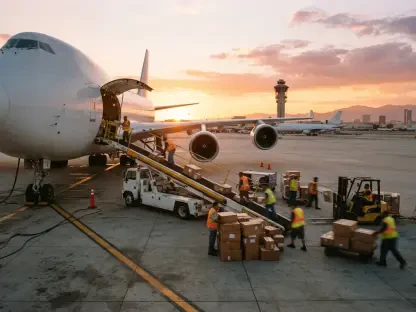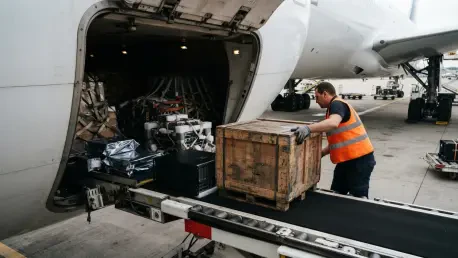

Artificial intelligence and the semiconductor boom have intensified the demand for specialized Boeing 747-400F and 747-8F models capable of nose-loading outsized machinery. This phenomenon occurs as the global air cargo sector navigates a complex period of record-breaking volumes set against a backdrop of aging infrastructure. According to data released by the International Air Transport Association for the year 2025, belly cargo—the freight transported within the lower holds of passenger aircraft—now constitutes approximately 56% of the total air freight moved worldwide. While this integration has provided a temporary reprieve for a market starved of capacity, it has simultaneously introduced a dangerous level of dependency on the commercial travel sector. This reliance suggests that the global movement of goods is no longer entirely controlled by logistics demands but is instead heavily influenced by the fluctuations of tourism and business travel trends across various international corridors. The mismatch between passenger demand and cargo requirements represents a significant structural risk for global commerce.
Regional Disparities: Economic Pressures and Shifting Trade Lanes
The robust performance of the global air cargo sector has not been uniformly distributed across all geographic regions, creating a complex map of operational successes and challenges. During the year 2025, the Asia-Pacific region solidified its position as the primary engine of global logistics growth, reporting an impressive 8.4% year-on-year increase in demand. This surge was primarily driven by the ongoing e-commerce boom and the steady output of high-tech manufacturing centers in the region. In contrast, North American carriers faced a more difficult environment, recording a 1.3% decline in cargo volumes. This downturn was largely attributed to shifts in trade policies and the removal of the “de minimis” exemption, which previously allowed low-value parcels to enter the United States without significant duties. Consequently, many shippers began rerouting their goods through European and Middle Eastern hubs to avoid these regulatory hurdles, fundamentally altering established trade routes and complicating logistical planning for many Western retailers.
Beyond the volume shifts, the financial health of the air cargo industry remains in a state of high-cost normalization as yields begin to stabilize across major lanes. While cargo yields experienced a slight 1.5% decrease in 2025, they remained remarkably elevated, sitting approximately 37.2% higher than the baseline figures recorded in 2019. This persistent price elevation suggests that while the extreme peaks of the previous years have subsided, the cost of moving goods by air is still a significant burden for international businesses. The high yields reflect the intense competition for available space, particularly as the supply of dedicated widebody freighters fails to keep pace with global requirements. As a result, the market has transitioned into a high-yield environment where every cubic foot of cargo space is valued at a premium. This financial reality has forced many logistics providers to prioritize high-margin goods, such as luxury items and sensitive electronics, over traditional bulk commodities, further widening the gap between different sectors.
The Capacity Paradox: The Inherent Risk of Belly Cargo Reliance
The decision to utilize passenger belly space for 56% of global air freight is less an intentional strategic move and more a necessity born from a persistent shortage of dedicated aircraft. This reliance creates a significant operational disadvantage for freight forwarders because they possess almost no influence over the flight schedules, which are designed to serve the needs of travelers. Passenger networks are built around seasonal tourist destinations and business hubs, locations that do not always align with the industrial zones where cargo is manufactured or stored. This geographic and chronological mismatch means that supply chain managers must often settle for suboptimal routing, leading to longer transit times and increased handling risks. Furthermore, because cargo is treated as a secondary priority to passenger luggage and comfort, shipments may be bumped from flights if the passenger load or fuel requirements exceed weight limits, introducing a layer of unpredictability that can disrupt even the most meticulously planned manufacturing production schedules.
The structural fragility inherent in this system becomes most apparent during times of geopolitical instability or economic shifts that negatively impact international travel. When commercial airlines reduce their flight frequencies or exit specific markets altogether, the associated belly capacity disappears instantly, leaving shippers with no immediate alternatives. Because the global freighter fleet is currently too small to absorb a sudden influx of diverted cargo, such disruptions can lead to immediate bottlenecks and price spikes in the logistics market. This lack of a robust safety net underscores the vulnerability of the global economy to changes in the aviation sector that have nothing to do with trade demand. To mitigate these risks, some larger logistics firms have attempted to secure long-term charters, but the high costs and limited availability of airframes make this a difficult solution to scale. The industry remains precariously tethered to the health of the passenger market for its operational survival, highlighting a need for more dedicated freighter investments.
Specialized Solutions: Managing High-Tech Logistics and Fleet Modernization
Addressing the freighter shortage is complicated by significant manufacturing delays and a critical need for specialized aircraft to support the high-tech sector. The highly anticipated Boeing 777-8F, which was expected to provide much-needed widebody capacity, has seen its launch timeline pushed back from 2026 toward 2028. These setbacks are particularly damaging for the semiconductor industry, which relies on the unique nose-loading capabilities of the aging Boeing 747 fleet to transport massive lithography equipment. Since these 747 models are no longer in production, the global supply chain for microchips is effectively dependent on a shrinking number of airframes that are increasingly expensive to maintain. Furthermore, the market for converted freighters is facing a tightening supply as the pool of viable feedstock aircraft like the 777-300ER continues to dry up. This combination of delayed new technology and the sunsetting of specialized legacy aircraft has created a bottleneck that threatens the growth of the global artificial intelligence market and other high-tech industries.
Global trade leaders ultimately recognized that a more resilient strategy was necessary to decouple the movement of critical goods from the volatility of the passenger travel industry. The industry transitioned toward a dual-track approach, where investments in dedicated cargo infrastructure were balanced with the development of more efficient regional logistical hubs. Logistics providers began to prioritize the acquisition of smaller, more flexible freighters to serve emerging markets in Africa and Southeast Asia, reducing their dependence on major international passenger arteries. Additionally, the integration of real-time visibility software allowed shippers to react more quickly to capacity changes, enabling a more agile response to service disruptions. By the conclusion of this period, the sector had established more robust contingency plans and fostered closer collaboration between aircraft manufacturers and freight operators to streamline the certification of new airframes. These collective actions successfully fortified the global supply chain against future shocks and promoted a more stable logistical environment.