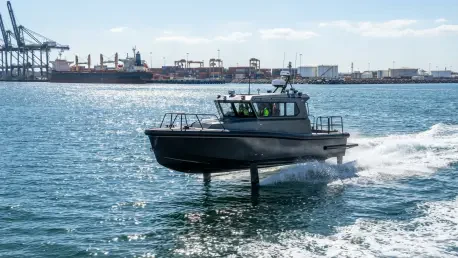

A $3.2 million grant from the System-Wide Investment in Freight Transport program is funding the acquisition of this high-speed, electric-powered vessel. The maritime industry currently faces a significant hurdle: maintaining the rapid pace of global commerce while stripping carbon from its most vital operations. At the Port of Long Beach, this tension is resolving through a strategic partnership between Jacobsen Pilot Service and Artemis Technologies. The introduction of the Artemis EF-12 Pilot vessel represents more than just a fleet upgrade; it is a fundamental reimagining of how service vessels interact with the marine environment and the massive container ships they guide. As the first commercial electric hydrofoil of its kind in the United States, this vessel bridges the gap between traditional harbor operations and the urgent requirements of a zero-emission future. By moving away from heavy diesel engines, the port is not only clearing the local air but also proving that high-performance maritime technology can thrive without fossil fuels.
Advancing Maritime Technology and Engineering
Innovative Design: Performance Capabilities
The Artemis EF-12 utilizes a proprietary eFoiler® system that allows the vessel to lift its hull completely out of the water upon reaching specific speeds. This “flying” mechanism significantly reduces drag compared to traditional hulls, enabling the boat to maintain a service speed of 25 knots with remarkable energy efficiency. By minimizing the surface area in contact with the water, the EF-12 requires much less energy to operate than its internal combustion predecessors. This technical leap not only proves the viability of electric propulsion for commercial use but also demonstrates how aerospace technology can be adapted to solve the unique challenges of the maritime sector. The design is specifically tailored to the rigorous demands of harbor pilotage, where speed and reliability are non-negotiable. As the boat accelerates, the hydrofoils generate lift, hoisting the carbon-fiber hull above the waves and effectively decoupling the vessel from the surface friction that traditionally hampers efficiency.
Engineering Precision: The Active Flight Control System
Beyond pure speed, the vessel is engineered for versatility, operating in a high-speed foiling mode for transit and a stable displacement mode for the delicate process of transferring pilots to massive container ships. This dual-mode capability ensures that the transition to electric power does not compromise the rigorous demands of 24/7 harbor pilotage. The integration of an active flight control system provides unparalleled stability even in choppy harbor conditions, which is essential for maritime safety. When the vessel approaches a large cargo carrier, it transitions from its foiling state back into the water, providing a steady platform for pilots to disembark. This seamless transition is managed by sophisticated onboard sensors and computers that adjust the foils in real-time to counteract the influence of swell and wind. Such precision engineering transforms the pilot boat from a simple transport craft into a high-tech instrument that enhances the overall safety of the Port of Long Beach’s daily logistics.
Assessing Economic and Environmental Gains
Sustainability: Quantifying the Ecological Shift
The environmental benefits of adopting electric hydrofoil technology are immediate and measurable, with the EF-12 expected to cover nearly a third of the pilot service’s annual operating hours. This shift is projected to eliminate the consumption of 40,000 gallons of diesel fuel and reduce carbon dioxide emissions by approximately 400 metric tons every year. Beyond air quality improvements, the vessel’s quiet operation and lack of wake protect the local marine ecosystem from noise pollution and shoreline erosion. These factors align with the Port of Long Beach’s strategic vision to become a zero-emissions facility by the year 2050. The reduction in hydroacoustic noise is particularly beneficial for local marine life, which often relies on sound for navigation and communication. By eliminating the heavy wake produced by traditional displacement hulls, the EF-12 also preserves the integrity of harbor infrastructure and sensitive coastal habitats that are often battered by the constant movement of service vessels.
Financial Viability: Long-Term Infrastructure Value
From a financial perspective, the move toward electrification offers long-term stability despite the high initial investment in advanced technology. Electric drivetrains contain fewer moving parts than diesel engines, leading to lower maintenance costs and less mechanical downtime over the vessel’s lifespan. The project is bolstered by the System-Wide Investment in Freight Transport (SWIFT) program, reflecting a strong public-private commitment to decarbonizing freight infrastructure. This funding model serves as a blueprint for how state initiatives can successfully de-risk the transition to green energy for private operators. Furthermore, as global fuel prices remain volatile, the switch to an electric fleet provides a more predictable operational cost structure. The ability to charge during off-peak hours or integrate with port-side renewable energy sources further enhances the economic argument. By investing in this technology, the port is effectively future-proofing its operations against tightening environmental regulations and rising carbon taxes.
Enhancing Safety and Pilot Welfare
Human Factors: Optimizing the Operational Environment
The deployment of the EF-12 places a significant emphasis on the physical well-being and performance of maritime pilots, who perform the high-stakes task of guiding massive ships into port. Traditional pilot boats often subject crew members to intense engine noise, heavy vibrations, and the jarring physical impact of waves hitting the hull. By gliding above the water’s surface, the electric hydrofoil offers a much smoother and quieter transit. This improved environment reduces fatigue, ensuring that pilots arrive at their destination focused and ready for the complex maneuvers required to dock large cargo vessels. The reduction in sea-sickness and physical strain is a critical benefit for a workforce that operates in all weather conditions, day and night. When a pilot is better rested and less physically taxed by the journey out to a ship, the safety margin for the entire harbor increases. This human-centric approach to design demonstrates that technological innovation can improve labor conditions while also meeting environmental targets.
Global Precedent: Shaping the Future of Harbor Logistics
Jacobsen Pilot Service established a century-long reputation for pioneering new technologies, and this latest move cemented that legacy of innovation. The delivery of the Artemis EF-12 in 2027 represented a significant milestone as the first commercial use of an eFoiler® in the United States, following successful implementations in international markets. As this technology became a fixture of the California coastline, it inspired other major ports to adopt similar solutions that prioritized both environmental health and the safety of the essential workers. Moving forward, port authorities should prioritize the development of high-speed charging infrastructure to support a wider rollout of electric service fleets. The success of this pilot program demonstrated that the maritime sector can achieve zero emissions without sacrificing the speed and efficiency required for global trade. Stakeholders should now look toward scaling these electric solutions to larger vessel classes to further accelerate the transition toward a sustainable and efficient maritime future.