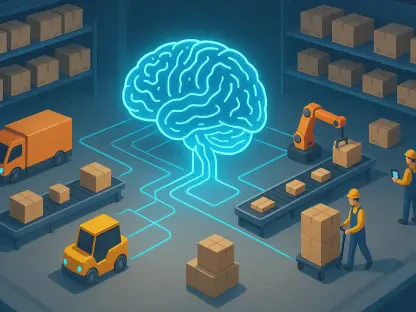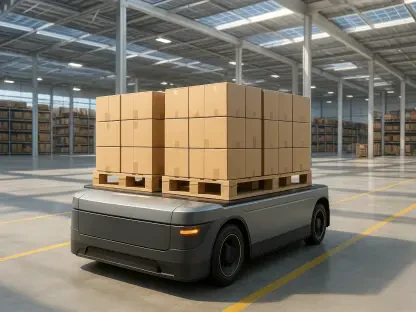

The transition from high-speed mechanical conveyor belts to cognitive algorithms is fundamentally redefining how global packaging firms manage their most complex logistics corridors today. In the current industrial landscape, the definition of automation has migrated from the repetitive motion of robotic arms to the complex, decision-heavy layers of the supply chain. Packaging operations serve as the indispensable conduit between raw material extraction and the final consumer, making them the most sensitive link to any logistical friction. While factory floors have reached a high state of mechanical maturity, the digital workflows connecting these hubs to the global market have historically remained siloed and manually intensive.
The industry is currently moving away from traditional Warehouse Management Systems toward autonomous operational environments that require significantly less human intervention. This shift is driven by the rise of autonomous logistics employees, which are specialized AI agents capable of handling procurement and carrier coordination independently. Rather than acting as simple software tools, these agents operate within the enterprise sector to manage freight and inventory with a level of cognitive nuance previously reserved for human staff. This convergence of physical precision and digital intelligence is creating a seamless bridge between manufacturing output and global distribution networks.
The Evolution of Autonomous Logistics and Market Projections
Emerging Technologies and the Shift from Assistants to Agents
The distinction between standard Large Language Models and action-oriented Agentic AI is becoming the primary driver of digital strategy in the packaging sector. While standard models act as sophisticated assistants that respond to prompts, Agentic AI is designed to inhabit existing software ecosystems to execute tasks autonomously. These systems do not merely provide data summaries; they possess the agency to contact carriers, negotiate shipping rates, and resolve delays in real-time. This leap from passive assistance to active execution is transforming how companies handle the “communication automation” necessary to maintain a constant flow of goods.
By resolving bottlenecks in carrier and customer interactions, these autonomous agents are meeting the consumer demand for absolute transparency. Real-time data visibility is no longer a luxury but a fundamental expectation of the modern market. Agentic systems monitor every touchpoint of the packaging journey, ensuring that if a shipment is stalled, the system can automatically re-route it or update the stakeholder. This shift allows logistics departments to operate at a speed that matches the high-velocity production lines of modern packaging plants, closing the gap between digital planning and physical execution.
Market Trajectory and the Growing Economic Footprint of AI Agents
Investment trends from 2026 to 2030 indicate a massive shift from experimental AI pilots to results-oriented, mass adoption across the supply chain. The economic impact is already evident, with early adopters reporting up to a 97% reduction in manual administrative workloads. This efficiency is not just theoretical; billion-dollar freight volumes are currently being managed by autonomous platforms, proving that these systems can handle the scale required by multinational packaging corporations. As these agents become more prevalent, the industry is witnessing a stabilization of operational costs that were previously susceptible to human error and administrative lag.
Looking forward, the growth projections for AI adoption suggest that packaging firms will increasingly prioritize ROI-driven investments over general technological upgrades. The move toward autonomous logistics is becoming a competitive necessity rather than an optional innovation. Firms are now evaluating performance indicators based on the autonomy of their systems, seeking platforms that can operate reliably under minimal oversight. This economic footprint is expected to expand as AI agents become more integrated into the global trade infrastructure, facilitating a more predictable and cost-effective movement of goods.
Navigating the Complexities of High-Volume Supply Chain Orchestration
Managing a fragmented logistics network often leads to significant administrative fatigue, as human teams struggle to coordinate between dozens of shipping partners and raw material suppliers. The complexity of high-volume orchestration requires a level of oversight that often exceeds human capacity, especially when dealing with the thousands of daily updates inherent in the packaging industry. Agentic AI mitigates this by serving as the central nervous system of the supply chain, processing vast amounts of data to keep operations moving. However, the true challenge lies in “exception handling,” where the system must determine when a situation requires human intuition over algorithmic logic.
The successful integration of these systems depends on their ability to bridge the gap between legacy Transport Management Software and modern autonomous agents. Technological silos often prevent the seamless flow of information, but Agentic AI is increasingly used as a layer that connects disparate tools. Managing this organizational change requires a transition from manual oversight to a model of autonomous execution. Packaging firms must rethink their operational structures to allow these digital employees to function at full capacity, ensuring that human managers are freed to focus on high-level strategy rather than routine coordination.
The Regulatory Framework and Security Standards for Autonomous Systems
As AI-driven communication becomes the standard for freight and transport, compliance with evolving regulatory frameworks is a top priority. Giving AI agents access to enterprise infrastructure requires robust security measures to prevent data breaches and ensure privacy. Companies must adhere to international shipping standards and digital documentation requirements while maintaining a touchless logistics environment. This requires a sophisticated approach to data governance, ensuring that every autonomous action is logged and auditable to meet corporate accountability standards.
Evolving AI governance laws are also beginning to impact how industrial automation is implemented. As autonomous systems take on more decision-making power, the legal responsibility for those decisions must be clearly defined within the corporate structure. Secure integration means creating a “sandbox” where AI agents can operate effectively without compromising the security of the broader enterprise network. For the packaging industry, maintaining these high standards is essential for building trust with global distributors and regulatory bodies alike.
The Future Landscape of Cognitive Automation and Redefined Human Roles
The rise of the “Strategic Logistics Professional” marks a significant evolution in the workforce, where human talent is redirected toward relationship management and complex procurement. As autonomous agents handle the transactional tasks of the supply chain, humans are empowered to focus on the emotional intelligence and negotiation skills that AI cannot replicate. This synergy allows for a more robust logistics strategy, where the speed of automation is balanced by the nuanced understanding of human experts. In this future landscape, the workforce is not replaced but augmented by cognitive tools.
Disruptors such as localized micro-fulfillment and AI-driven sustainability optimization are further reshaping the industry. Autonomous planning allows packaging firms to optimize their carbon footprints by selecting more efficient routes and materials in real-time. The long-term synergy between emotional intelligence and autonomous execution will likely lead to fully autonomous end-to-end supply chains that can adapt to global economic shifts instantly. This evolution will ensure that packaging firms remain resilient in the face of future volatility, leveraging both human creativity and machine precision.
Synthesizing the Impact of Agentic AI on Packaging Resilience
The integration of agentic AI into the packaging sector demonstrated a profound shift toward operational resilience by removing the human-dependent bottlenecks that once plagued global trade. Companies that pivoted early recognized that cognitive automation was the only viable method for stabilizing costs in an increasingly volatile market environment. This transition proved that the synergy between human strategic talent and autonomous planning agents was the cornerstone of a modern, responsive supply chain. The reduction in operational friction allowed firms to redirect capital toward innovation and sustainable practices.
Strategically, the industry moved away from manual oversight in favor of high-velocity, autonomous execution that maintained consistent results. Firms that prioritized ROI-driven AI investments were able to navigate global disruptions with significantly more agility than their traditional counterparts. This period of transformation successfully redefined the role of the logistics professional and solidified the importance of digital agency in physical manufacturing. Ultimately, the adoption of these systems provided the necessary infrastructure for a more transparent, efficient, and resilient global packaging ecosystem.