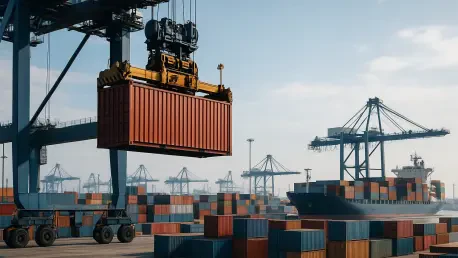

The seamless arrival of a designer package at a consumer’s doorstep relies on a sophisticated orchestration of global variables that were once relegated to the status of administrative afterthoughts. In an environment where a single viral post can deplete global inventory in hours, the ability to maneuver products through geopolitical friction and environmental regulations has become the defining characteristic of industrial resilience. What used to be a matter of simply moving boxes has transformed into a high-stakes competition for visibility and speed. Companies that fail to adapt their logistical frameworks find themselves struggling with mounting costs and eroding brand loyalty.
Modern enterprises now recognize that the efficiency of their distribution networks is the primary engine behind their market valuation. The traditional focus on cost reduction at any expense has given way to a more nuanced understanding of value creation. Leaders are prioritizing flexibility and responsiveness over rigid, lean models that often shatter under the pressure of unforeseen global events. This shift signals a new era where the supply chain is no longer a hidden cost center but a visible driver of competitive advantage.
From Back-Office Utility to C-Suite Mandate: The Modern Logistics Landscape
The integration of supply chain management into boardroom decision-making marks a fundamental shift in corporate governance. Executives no longer treat logistics as a peripheral operational task handled by middle management; instead, it is a core strategic pillar discussed alongside financial projections and product development. This transition stems from the realization that every major corporate goal, from market expansion to revenue growth, is inextricably linked to the reliability of the physical and digital flow of goods. Board members are now expected to understand lead times and port congestion as clearly as they understand balance sheets.
Within the fashion and retail sectors, logistics has emerged as the primary differentiator for market leaders. In an industry defined by rapid trend cycles and high consumer expectations, the speed at which a brand can move a concept from production to the storefront determines its success. Leaders in this space use their supply chain agility to capture transient market opportunities that their slower competitors miss. By treating the delivery network as a customer-facing asset, these firms have managed to turn logistical excellence into a powerful tool for brand differentiation.
The influence of global transport firms has also expanded, as these entities now maintain the essential physical and digital infrastructure required for worldwide commerce. Maintaining a global footprint is no longer just about having ships and planes; it is about providing the data-driven insights that allow brands to optimize their movements in real time. These logistics giants provide the connective tissue for a global economy, ensuring that goods move seamlessly across borders while adhering to local regulations. Their role has shifted from being simple service providers to becoming strategic advisors for the world’s most valuable brands.
Furthermore, logistics is now a primary driver of revenue and a key component of a company’s sustainability profile. Consumers are increasingly making purchasing decisions based on the environmental impact of shipping and the ethical standards of a brand’s sourcing. Organizations that integrate sustainable practices into their logistics—such as optimizing routes to reduce fuel consumption or using eco-friendly packaging—see a direct improvement in their brand equity. Consequently, the modern customer experience is now defined as much by how a product is delivered as by the product itself.
Navigating a Volatile World: Trends and Projections in Global Orchestration
Emerging Dynamics of Agility and Technological Integration
Geopolitical upheavals and global disruptions have mandated the adoption of robust business continuity plans across all sectors. Organizations have learned that relying on a single source or a single shipping route is a recipe for disaster in a world characterized by sudden shifts in trade policy and regional instability. This awareness has led to the rise of regionalized supply chains and the diversification of sourcing locations to mitigate risk. Agility is now the standard by which all supply chain strategies are measured, ensuring that a brand can pivot its operations within days rather than months.
The impact of influencer-driven demand spikes has further complicated the logistics landscape, requiring real-time data visibility to sense and respond to market volatility. When a product goes viral, the resulting surge in orders can cripple a traditional supply chain that relies on historical data and slow replenishment cycles. Modern systems now utilize advanced analytics to monitor social trends and adjust inventory levels before the surge reaches its peak. This proactive approach to demand sensing allows companies to maintain high service levels even when faced with extreme fluctuations in consumer interest.
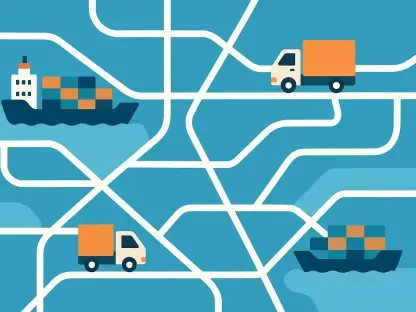
Moreover, the move toward collaborative partnerships has prioritized alternative routing and flexible transport modes. Rather than entering into rigid, long-term contracts with single providers, brands are forming ecosystems with multiple partners that can offer redundant solutions. If a major port closes or a shipping lane becomes hazardous, these collaborative networks allow for the immediate rerouting of cargo through alternative channels. This flexibility ensures that the flow of goods remains uninterrupted, protecting the bottom line from the financial fallout of localized disruptions.
Market Growth and the Data-Driven Forecast
Investment in supply chain technology and IT infrastructure is the primary driver of industry growth as companies seek to digitize their physical operations. From 2026 to 2030, capital expenditure in this sector is projected to focus heavily on artificial intelligence, machine learning, and blockchain for improved traceability. These technologies provide the granular visibility required to track individual items through every stage of the journey, reducing losses and improving accountability. The digital twin of the supply chain is no longer a concept but a standard requirement for competitive global operations.
Projections for the expansion of global logistics networks also reflect the continued rise of cross-border e-commerce. As consumers in emerging markets gain more purchasing power, the demand for international delivery options is reaching new heights. This expansion requires significant investment in “last-mile” infrastructure and localized distribution centers to ensure that delivery speeds remain consistent regardless of the destination. The growth of these networks is facilitating a more interconnected global marketplace where geographical barriers are increasingly irrelevant to the consumer experience.
Performance indicators in the industry are shifting toward demand sensing and the financial impact of reduced stockouts. By utilizing better visibility tools, companies can calculate the exact cost of missed sales opportunities and use that data to justify further investments in supply chain technology. The ability to predict where a product will be needed before the customer even places an order is becoming the holy grail of logistics. This data-driven approach not only improves customer satisfaction but also maximizes profit margins by ensuring that inventory is always positioned in the right place at the right time.
Overcoming Structural Hurdles: Complexity in Global Trade
Managing high SKU counts and seasonal inventory remains one of the most significant challenges in a fragmented global marketplace. Brands must balance the need for a wide variety of products with the logistical costs of storing and moving them. This complexity is compounded by the seasonal nature of many industries, where inventory must be rapidly cycled to make room for new collections. Effective management requires a sophisticated understanding of localized preferences and the ability to move stock between regions with minimal friction to avoid heavy discounting of unsold items.
The logistical nightmare of siloed inventory has forced many organizations to rethink their stock management strategies. When inventory is locked into specific channels—such as being reserved only for e-commerce or only for physical stores—it leads to gross inefficiencies. Unifying these stock pools into a single, accessible source allows for better efficiency and higher turnover rates. Strategies that focus on inventory fluidness ensure that a piece of clothing sitting in a retail store in New York can be used to fulfill an online order from a customer in London if necessary.
Solutions for mitigating the rising costs of reverse logistics have become a top priority for profitability. The fashion industry, in particular, suffers from high return rates that can eat into already thin margins. To address this, many firms are adopting “repair and recondition” models and local restocking strategies. Instead of shipping a returned item thousands of miles back to a central warehouse, brands are empowering local centers to inspect, clean, and put the item back into the local inventory pool. This not only reduces transport costs but also shortens the time it takes for an item to become available for sale again.
External shocks, such as trade wars and sudden port closures, have permanently altered the reliability of traditional lean supply chains. The “just-in-time” philosophy, which was the gold standard for decades, proved to be too fragile for the current global environment. In contrast, companies are now building “just-in-case” buffers into their systems, holding slightly more inventory at strategic locations to weather brief periods of instability. This transition represents a pragmatic shift toward durability over theoretical efficiency, acknowledging that the cost of a stockout often far exceeds the cost of carrying extra inventory.
The Regulatory and Compliance Framework: Ensuring Security and Standards
The evolving regulatory landscape surrounding international shipping and carbon emission standards has added a new layer of complexity to logistics. Governments are increasingly mandating strict reporting on the carbon footprint of every shipment, forcing companies to find cleaner ways to move goods. Adhering to these standards is no longer optional, as non-compliance can lead to significant fines and restricted access to key markets. Brands must work closely with their logistics partners to ensure that every step of the supply chain meets the specific requirements of various international jurisdictions.
Compliance also plays a vital role in maintaining brand reputation, particularly concerning ethical sourcing and labor standards. In the modern era, a brand is held responsible for the actions of its entire supplier network, not just its direct employees. Ensuring that every factory and warehouse in the chain operates ethically is essential for avoiding public relations disasters and maintaining consumer trust. Rigorous auditing and the use of technology like blockchain for transparent record-keeping have become standard tools for verifying that products are produced and transported under fair conditions.
Security measures related to data protection are becoming critical as the logistics ecosystem becomes more digitized and interconnected. With the vast amounts of proprietary data moving between brands, shipping lines, and third-party logistics providers, the risk of cyberattacks is a constant concern. Protecting this information is essential for maintaining operational integrity and preventing competitors from gaining insights into a company’s strategic movements. Robust cybersecurity frameworks are now an integral part of any supply chain agreement, ensuring that the digital flow of information is as secure as the physical movement of goods.
The Future Frontier: Innovation and Sustainable Growth
The rise of autonomous omnichannel fulfillment is expected to transform how inventory is allocated across different sales channels. In this model, the final destination of a product is not decided until the last possible moment, using AI-driven algorithms to determine where the demand is highest. This delay in allocation maximizes sales flexibility and ensures that brands do not miss out on revenue because stock was misplaced in the wrong warehouse. This level of automation allows for a truly seamless shopping experience where the backend logistics adapt instantly to the consumer’s actions.
Circular logistics is also gaining momentum, where reverse supply chains are transformed into value-recovery mechanisms rather than being seen as simple cost centers. By developing systems that can efficiently collect, disassemble, and recycle old products, companies can create a closed-loop system that reduces the need for raw materials. This approach not only appeals to the environmentally conscious consumer but also provides a hedge against the rising costs of commodities. The ability to reclaim value from products at the end of their lifecycle is becoming a hallmark of a truly sophisticated and sustainable enterprise.
The long-term impact of AI and predictive analytics will likely be seen in the ability to anticipate global disruptions before they occur. By analyzing vast amounts of data from weather patterns, social media, and economic indicators, these systems can provide early warnings about potential delays. This foresight allows brands to reroute shipments or secure alternative suppliers well in advance of the actual event. As these technologies mature, the supply chain will move from being a reactive function to a predictive one, significantly reducing the impact of external shocks on business operations.
Ultimately, the industry is seeing a permanent shift from simple goods movement to the orchestration of value as a fixture of corporate strategy. This means that every logistical decision is made with the ultimate goal of enhancing the value proposition of the brand. Whether it is through faster delivery, better sustainability, or more transparent sourcing, the supply chain is the primary tool for delivering on the brand promise. This orchestration requires a high degree of synchronization across all departments, ensuring that the physical reality of the business always aligns with its strategic goals.
Strategic Synthesis: Building a Resilient and Profitable Future
The transformation of the supply chain from a back-office utility to a primary value driver represented a defining shift in the corporate landscape of the middle decade. The findings of this analysis showed that organizations which prioritized logistical agility and deep technological integration outperformed those that adhered to outdated, rigid operational models. It became clear that the ability to sense and respond to demand volatility in real time was no longer a luxury but a requirement for survival in a fragmented global market. The research highlighted that logistics became the most effective tool for brands to demonstrate their commitment to sustainability and ethical standards, directly influencing consumer loyalty and market share.
Successful enterprises incorporated logistics into their core governance structures, ensuring that supply chain risks and opportunities were evaluated at the highest levels of leadership. These organizations invested heavily in unifying their inventory pools and streamlining their reverse logistics processes, which resulted in significantly improved profit margins and reduced waste. The adoption of predictive analytics and AI-driven orchestration allowed these firms to maintain continuity during periods of significant global turbulence. This strategic shift underscored the fact that resilience was built through a combination of robust partnerships and the willingness to move away from traditional cost-centric philosophies toward a focus on total value orchestration.
Looking ahead, the necessity of maintaining technological agility and deep, collaborative partnerships will remain the cornerstone of any successful global enterprise. The analysis suggested that the next phase of evolution will involve hyper-local fulfillment and the complete integration of circular economy principles into every logistical touchpoint. Companies must continue to invest in the digital transformation of their supply chains to stay ahead of increasingly complex regulatory requirements and evolving consumer behaviors. By treating the supply chain as a dynamic, strategic asset, businesses ensured their long-term viability and established themselves as leaders in a world where the only constant was change.