
While consumer-facing delivery drones and high-speed freight trains capture the public imagination, the most significant revolution in global supply chain efficiency is occurring quietly within the high-frequency shuttle routes of the industrial middle-mile. The autonomous middle-mile logistics represents a significant advancement in the global supply chain and transportation industry. This review will explore the evolution of the technology, its key features, performance metrics, and the impact it has had on various applications. The purpose of this review is to provide a thorough understanding of the technology, its current capabilities, and its potential future development.
Introduction to Middle-Mile Autonomy
The middle-mile represents the critical connective tissue of the supply chain, consisting of the repeated transfers of goods between warehouses, sorting centers, and distribution hubs. Unlike the chaotic “last-mile,” which must navigate residential obstacles and varied delivery points, the middle-mile functions on predictability and high-volume consistency. Autonomy in this space utilizes self-driving technology to bridge these nodes, stripping away the inefficiencies of manual driving while ensuring that freight flows remain uninterrupted throughout the day and night.
This technology has emerged as a direct response to the “invisible middle” bottleneck, where human driver fatigue and scheduling constraints often lead to delayed handoffs and increased operational costs. By integrating specialized sensors and artificial intelligence into medium-duty trucks, logistics providers are now able to create a closed-loop system of transport. This evolution is particularly relevant in the current technological landscape of 2026, as it offers a scalable solution to the labor shortages and rising fuel costs that have previously hampered global trade networks.
Core Components and Strategic Implementations
Autonomous Fleet Systems and Sensor Integration
At the heart of middle-mile autonomy lies a sophisticated fusion of AI-driven navigation and real-time obstacle avoidance. Companies like Zelostech have pioneered a technical suite that combines LiDAR, high-definition cameras, and radar to create a 360-degree digital awareness of the vehicle’s surroundings. This system does not merely follow a pre-programmed path; it actively interprets environmental data to make split-second decisions, such as yielding to forklift traffic or adjusting for shifting weather conditions within a warehouse yard.
The performance of these AI systems is defined by their ability to maintain precision in structured environments. Because the routes are generally fixed and repeated, the software can achieve a level of reliability that far exceeds human capabilities. This consistency minimizes the risk of accidents and ensures that the timing of each shipment is predictable to the second. By focusing on these specific technical parameters, autonomous fleets provide a specialized service that is much more efficient than general-purpose autonomous passenger vehicles.
Electric Powertrains and Sustainable Charging Infrastructure
The transition to autonomous trucks has been accompanied by a radical shift toward fully electric powertrains. Moving away from internal combustion engines allows for a significant reduction in mechanical complexity, which translates to lower maintenance costs and higher uptime. These electric vehicles are designed to integrate directly into the warehouse power grid, utilizing sustainable charging infrastructure that can be timed to coincide with loading and unloading periods. This creates a synergistic relationship between the vehicle and the facility it serves.
In real-world usage, the performance characteristics of electric autonomous trucks are ideally suited for short-to-medium hauls. The immediate torque provided by electric motors allows for the efficient movement of heavy pallets, while the lack of engine noise and exhaust emissions makes these vehicles ideal for indoor or semi-enclosed terminal operations. As logistics hubs increasingly adopt green energy solutions, these trucks serve as a vital component of a zero-emission logistics chain, effectively decarbonizing the most energy-intensive segments of the warehouse-to-warehouse journey.
Emerging Trends and Market Dynamics
The current market for autonomous trucks is experiencing a period of rapid acceleration, driven by the realization that automation is the only viable path to long-term operational resilience. One of the most influential trends is the formation of deep strategic partnerships, such as the collaboration between DHL and Zelostech. These alliances allow tech startups to test their hardware in high-pressure, live environments, while established logistics giants gain early access to transformative efficiency gains. This synergy is moving the industry away from experimental pilots and toward full-scale industrial adoption.
Industry behavior is also shifting toward a preference for “Autonomy-as-a-Service” models, where companies pay for transport outcomes rather than owning the vehicles themselves. This shift lowers the barrier to entry for smaller logistics firms and encourages faster technology turnover. With the global autonomous truck market projected to grow significantly from 2026 to 2034, the competitive landscape is focusing on who can provide the most robust software integration rather than just the best hardware.
Real-World Applications and Deployment Success
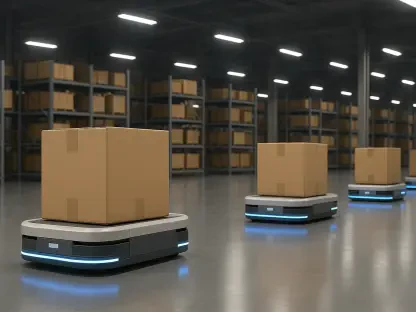
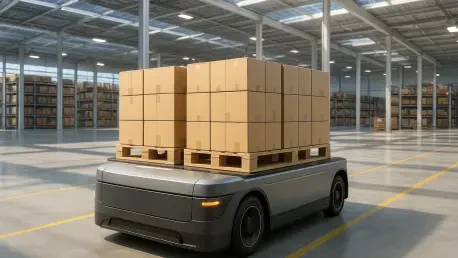
The practical application of middle-mile autonomy is perhaps best observed at the Advanced Regional Center (ARC) in Singapore. This facility serves as a primary hub where the DHL-Zelostech partnership has demonstrated clear operational success. At the ARC, autonomous vehicles manage the movement of up to three pallets per trip, which equals roughly 1.5 tons of cargo. By operating twenty-four hours a day, these vehicles cover nearly 28 kilometers daily across forty individual trips, proving that the technology is more than capable of handling the rigors of a high-volume logistics environment.
These deployments have yielded valuable operational metrics that highlight the technology’s impact on human capital. Rather than replacing workers, the system has allowed for the reallocation of staff to more complex supervisory and managerial roles. Employees who once spent hours on repetitive driving tasks now focus on managing the digital interfaces of the autonomous fleet. This shift not only improves worker satisfaction but also ensures that the warehouse operates at a higher level of throughput without increasing the physical strain on the workforce.
Implementation Barriers and Technical Hurdles
Despite the impressive progress, transitioning autonomous vehicles from controlled warehouse environments to public roads remains a significant technical and regulatory hurdle. While a warehouse yard is highly structured, a public highway contains thousands of unpredictable variables, from aggressive drivers to complex weather patterns that can blind sensors. Developing the software to handle these “edge cases” requires massive amounts of data and testing, which continues to be a primary focus for engineers in the field.
Furthermore, the lack of a unified global regulatory framework creates challenges for widespread adoption across different regions. Logistics companies must navigate a patchwork of local laws regarding insurance, liability, and safety standards. Ongoing development efforts are currently focused on creating standardized communication protocols between vehicles and city infrastructure. Mitigating these limitations is essential for the technology to move beyond its current success in fenced-in hubs and into the broader metropolitan delivery network.
Future Outlook and Scalability
Looking ahead, the scalability of autonomous middle-mile logistics will be a defining factor in addressing the global driver shortage. In the United States, the industry is facing a deficit of approximately 160,000 drivers by 2030, while Europe faces similar gaps. Autonomous technology offers a way to bridge this labor void by handling the “boring” and repetitive routes, thereby freeing up human drivers for more complex long-haul or specialized tasks. This balanced approach will likely define the structure of the logistics workforce for the remainder of the decade.
The long-term impact on society will be seen in the stabilization of supply chain costs and a reduction in the carbon footprint of global trade. As breakthroughs in battery density and AI processing continue to lower the cost of autonomy, we can expect to see these systems implemented in almost every major industrial center worldwide. The technology is heading toward a state of total interoperability, where different fleets can communicate and coordinate movements across shared logistics corridors, creating a truly synchronized global economy.
Summary of the Technological Landscape
The review of autonomous middle-mile logistics demonstrated that the technology has successfully moved past the stage of theoretical novelty into a period of tangible industrial utility. The integration of electric power with sophisticated AI navigation proved to be a decisive factor in reducing both costs and environmental impact. By focusing on the repetitive nature of the invisible middle, developers found a practical niche where autonomy can thrive without the immediate risks associated with public road navigation.
The results from early deployments at centers like the ARC in Singapore indicated that the transition to autonomous systems provided a significant boost to operational consistency. While technical and regulatory barriers still existed for broader public application, the success within controlled environments established a strong foundation for future growth. Ultimately, the adoption of this technology was a necessary step in modernizing the global supply chain, ensuring that it remained resilient against labor market fluctuations and environmental challenges. Moving forward, the industry must prioritize the standardization of safety protocols and the expansion of the charging infrastructure to fully realize the potential of an automated logistics future.