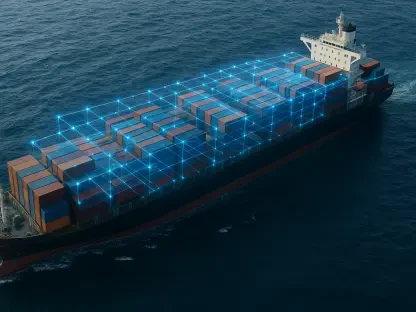

Modern Transportation Management Systems are being augmented by a new layer of engineering designed to provide evidence-based execution for every automated task. This shift represents a departure from the early days of generative experimentation when the primary goal was simply to observe how a large language model might interpret a logistics query. In 2026, the focus has moved toward the harness, a sophisticated architectural framework that contains the probabilistic nature of artificial intelligence within a rigid operational structure. This new standard ensures that every automated decision is verified against real-time physical constraints before it can impact the supply chain. The industry has learned that raw reasoning power is insufficient for the high-stakes environment of global trade. Instead, engineers are building environments where the model acts as a component rather than the master, allowing for a level of reliability that matches traditional deterministic software systems while maintaining the flexibility of modern reasoning engines.
Defining the Role of the Engineered Harness
The distinction between harness engineering and the more common practice of prompt engineering is fundamental to understanding this technological evolution. While prompt engineering focuses on the specific instructions provided to a model to elicit a desired response, harness engineering involves the creation of a comprehensive structural environment. This environment includes strict governance rules, specific tool permissions, and a persistent state that tracks the history and context of every interaction. An engineered harness defines an operating envelope that the artificial intelligence cannot exit, forcing it to validate findings against external data sources like inventory databases or labor schedules. By building these rigid boundaries, logistics providers can ensure that a model does not hallucinate shipping routes or suggest impossible delivery timelines. This architectural layer provides the necessary safeguards that allow for the safe deployment of intelligent agents across complex, multi-modal transportation networks.
Bridging the gap between the probabilistic nature of generative artificial intelligence and the deterministic requirements of the logistics sector remains the primary objective of the harness. In a world where outcomes are often based on statistical likelihood, supply chain operations demand absolute rules and ironclad constraints that cannot be ignored. The harness acts as a sophisticated reconciliation layer, providing the validation and retry logic required to ensure that a model’s best guess is never treated as a final command without passing a series of rigorous checks. This process involves codifying a company’s specific business logic into a set of non-negotiable parameters that the intelligence engine must satisfy. Whether it involves verifying carrier insurance compliance or checking dock door availability, the harness ensures that every automated task aligns with physical reality. This discipline allows organizations to transform creative reasoning tools into dependable industrial assets that operate with predictable precision.
Managing Physical Risks and Operational Stability
The physical consequences of digital errors in the logistics domain are far more severe than in typical office-based software applications. In a standard corporate setting, an artificial intelligence error might result in a poorly formatted presentation or a flawed data summary, but in the world of freight and shipping, a single mistake can lead to significant financial loss. Without a properly engineered harness, an autonomous agent could inadvertently double-tender a high-value load, schedule a carrier for a closed facility, or authorize expensive expedited shipping when standard ground options would suffice. Harness engineering mitigates these risks by requiring evidence-based execution, where every suggested move is verified against the actual state of the physical world before any digital command is sent to a backend system. This focus on physical safety and operational stability is what separates industrial-grade logistics platforms from simple conversational interfaces used in less critical business functions.
As we move through 2026, it has become increasingly clear that the competitive advantage in the logistics sector is no longer found in access to the most powerful underlying models. Because foundation models have become widely commoditized and accessible to all major players, the true value now resides in the proprietary engineering that surrounds these models. Companies are distinguishing themselves through their ability to build robust harnesses that manage exceptions, handle complex escalations, and maintain operational continuity even when faced with data gaps. This transition from demonstration projects to operational reality requires a deep focus on recovery logic and deterministic validation. When an intelligent agent encounters a scenario that falls outside its predefined autonomous limits, the harness triggers a controlled hand-off to a human operator, preventing the type of operational disorder that can paralyze a supply chain. This structured approach ensures that the system maintains high reliability despite the inherent volatility of global trade.
The Strategic Shift Toward Codified Logic
The successful implementation of harness engineering required a fundamental shift in how logistics leaders approached digital transformation over the past several months. Organizations that thrived were those that applied the same level of engineering rigor to their artificial intelligence frameworks as they historically applied to warehouse automation and transport planning systems. These companies prioritized the codification of their operating rules and decision rights, ensuring that every automated workflow remained anchored to proven business logic. This transition allowed for a more granular control over how reasoning engines interacted with legacy databases and third-party APIs. By treating the harness as a core piece of infrastructure rather than a secondary add-on, firms managed to reduce the error rates associated with autonomous dispatching and inventory reallocation. This disciplined strategy turned the theoretical potential of automated reasoning into a tangible driver of operational efficiency and cost reduction across the network.
Industry leaders recognized that model uncertainty must never be allowed to translate into physical chaos, and they responded by investing in structural constraints rather than just better prompts. This evolution established a new benchmark for reliability, proving that the future of the supply chain depends on the strength of the system surrounding the intelligence rather than the intelligence itself. Moving forward, the next step involves expanding these harnesses to support multi-agent orchestration and cross-border data interoperability. Professionals in the field should focus on refining their validation protocols and ensuring that their internal data hierarchies are clean enough to support automated auditing. As the technology matures, the ability to provide proof of execution will become the baseline requirement for any automated system. Organizations must continue to refine these engineered envelopes to accommodate increasingly complex global regulations and shifting consumer demands, ensuring that their logistics platforms remain resilient, compliant, and ready for any disruption.