
The persistent reliance on manual forklift operations at the loading dock represents a significant invisible bottleneck that often stalls the momentum of even the most sophisticated digital supply chains. While production floors and global shipping routes have undergone radical modernization, the point of physical transfer between the facility and the trailer remained a manual stronghold for decades. Automated loading systems emerged as the necessary bridge to close this gap, transforming a chaotic series of manual maneuvers into a synchronized mechanical transition. By replacing the erratic pace of human-operated machinery with constant conveyance, organizations are finally achieving a seamless flow from the assembly line to the customer.
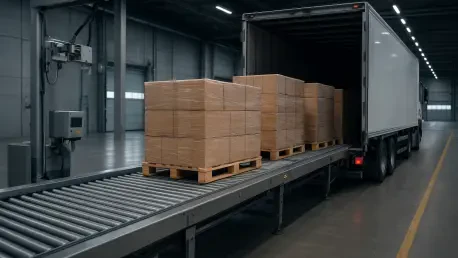
This technology functions as the missing link in end-to-end digital transformation. The core principle involves a hardware-software synergy where specialized trailer flooring and dock-side equipment work in tandem. Unlike traditional docks that require a fleet of forklifts to enter and exit a trailer dozens of times, these systems allow an entire payload to be transferred in a single movement. This evolution signifies a move away from isolated logistics toward a holistic, unified architecture where the loading bay is no longer a separate entity but an extension of the manufacturing process.
Evolution and Core Principles of Automated Loading
The journey of loading automation began as a response to the inherent volatility of manual labor and the high frequency of loading dock accidents. In the past, the transition from production to transportation relied heavily on the physical coordination of multiple operators. The introduction of synchronized conveyance systems fundamentally changed this dynamic by treating the trailer as a temporary extension of the warehouse floor. This transition required a shift in mechanical thinking, moving from individual pallet handling to bulk, simultaneous movement.
Current systems rely on integrated components such as docking plates and reinforced trailer beds that facilitate a frictionless cargo transfer. This mechanical harmony ensures that the momentum generated by high-speed production lines is not lost during the staging process. By establishing a standardized physical interface between the dock and the vehicle, companies have moved toward a model where logistics speed matches manufacturing output. This integration is vital for the broader technological landscape, as it allows for a truly paperless and touchless supply chain.
Technical Architecture and System Capabilities
Mechanical Conveyance and Trailer Integration
At the heart of technical performance lie varied hardware configurations like slip-chain, trailer-skate, or slat conveyor systems. Each serves a specific payload profile, yet they all share a common goal: reducing a standard forty-five-minute loading cycle to under five minutes. Slip-chain systems, for instance, utilize pneumatic rise-and-fall chains to move pallets, while slat conveyors provide a solid platform for non-palletized or irregular goods. This mechanical precision drastically reduces physical damage to goods by eliminating the jarring movements and impacts common in forklift handling.
Furthermore, the weight capacity of these systems has expanded significantly, allowing for the simultaneous movement of up to thirty tons of cargo. The speed of these systems is not merely about quickness but about consistency; a mechanical loader does not fatigue or require breaks. This reliability allows logistics managers to schedule departures with minute-to-minute accuracy, optimizing the throughput of the entire facility. The robustness of the hardware ensures that even in high-cycle environments, the transition phase remains the most stable part of the workflow.
IoT and RFID-Driven Data Integration
The technical sophistication of these systems extends beyond heavy machinery into the realm of digital visibility. Integrated sensors and RFID tracking technology capture real-time data as every pallet crosses the threshold of the trailer. This capability bridges the informational gap that historically existed between the manufacturing line and the global distribution network. By providing an immediate digital record of every load, these systems enable managers to track inventory with unprecedented precision, ensuring that the physical reality of the shipment matches the digital manifest.
Moreover, the integration of IoT allows for predictive maintenance of the loading equipment itself. Continuous monitoring of motor heat, chain tension, and sensor alignment prevents unexpected downtime that could paralyze a high-volume facility. This data-driven approach transforms the loading dock into an intelligent node within the supply chain, feeding critical information back to production planners. Consequently, the flow of goods is no longer a blind spot but a transparent, measurable metric that informs broader business strategy.
Innovations in AI and Data-Driven Intelligence
The current landscape of logistics is being redefined by the integration of Generative AI, which has moved beyond simple automation to active optimization. AI algorithms now analyze historical shipping data and real-time production rates to optimize load allocation, ensuring that every trailer is filled to its maximum legal capacity. This intelligence goes beyond human capability by calculating the most efficient pallet arrangement in seconds, considering weight distribution and fragile cargo requirements simultaneously. These developments signal a move away from siloed manual processes toward a unified, intelligent logistics hub.
In addition to planning, AI-powered vision systems are now being deployed for automated quality control at the loading gate. High-resolution cameras combined with machine learning models can detect damaged packaging or incorrect pallet labeling as the cargo moves. This immediate feedback loop allows for the intervention and correction of errors before the truck departs, significantly reducing the costs associated with returns and shipping disputes. This level of oversight ensures that the high speed of automated loading does not come at the expense of accuracy or quality.
Industrial Applications and Sector Implementation
High-volume sectors such as automotive manufacturing and consumer packaged goods (CPG) have become the primary adopters of these advanced systems. In automotive logistics, where “just-in-sequence” delivery is mandatory, the five-minute loading window provided by automated systems is a critical advantage. This technology also finds a unique use case in “shuttle” services between production plants and nearby distribution centers. By automating these frequent, short-distance trips, companies can maximize warehouse efficiency and maintain a constant flow of materials without the need for massive staging areas.
The pharmaceutical industry also benefits from the climate-controlled possibilities afforded by rapid loading. Since the trailer doors are open for a fraction of the time required for manual loading, the internal temperature of refrigerated trucks remains stable, protecting sensitive medical products. Additionally, these systems offer a practical solution to the dwindling pool of skilled forklift operators. By automating the most repetitive and dangerous dock tasks, companies can reallocate their limited human talent to more complex, value-added roles within the warehouse or manufacturing facility.
Technical Hurdles and Market Obstacles
Despite the clear advantages, the adoption of automated loading systems faces significant financial and logistical hurdles. The initial capital expenditure is substantial, often requiring a total overhaul of the dock area and a significant investment in specialized trailer fleets. For many companies, the necessity for standardized trailers—equipped with matching floor systems—presents a barrier to entry, especially when dealing with third-party logistics providers who use varied equipment. This lack of universal standardization remains a primary obstacle to widespread market penetration.
Safety protocols also require a radical rethink when manual machinery is removed from the loading bay. While automation reduces the risk of forklift-related accidents, it introduces new requirements for light curtains, emergency stop-zones, and strict pedestrian exclusion areas. Furthermore, making these systems adaptable to varied cargo types and non-standardized pallet sizes remains an ongoing challenge for engineers. The industry is currently working toward more flexible designs that can handle a wider range of packaging without requiring expensive mechanical adjustments for every shipment.
Future Trajectory and Sustainability Outlook
The trajectory of this technology points toward the realization of fully autonomous “dark” warehouses and docks, where human intervention is virtually non-existent. Future breakthroughs in predictive logistics are expected to allow AI to anticipate shipping needs based on market trends and raw material arrivals before production is even completed. This would allow for a perfectly synchronized supply chain where goods move directly from the assembly line into a waiting trailer with zero dwell time. This level of synchronization will define the next generation of logistics excellence.
From a sustainability perspective, automated loading contributes significantly to environmental goals. By optimizing trailer fill rates through AI-driven planning, companies can reduce the total number of trips required, directly lowering carbon emissions. Faster turnarounds at the dock also mean that trucks spend less time idling, further improving fuel efficiency. Over the long term, the integration of these systems supports a more sustainable industrial model where physical resources are used with maximum efficiency, and waste—in both time and energy—is systematically eliminated.
Summary and Final Assessment
The transition from manual bottlenecks to automated efficiency proved to be a defining moment for modern logistics. Automated loading systems demonstrated that the dock was no longer a hurdle but a strategic asset. By removing the physical and informational silos between production and shipping, organizations successfully maximized their existing warehouse space and responded more effectively to market disruptions. This holistic approach, combining mechanical automation with predictive AI insights, transformed the supply chain into a cohesive, value-driven asset.
Ultimately, the technology was recognized as a necessity for any business aiming for long-term agility and operational excellence. The integration of high-speed hardware and data-driven intelligence allowed companies to mitigate labor shortages and improve safety simultaneously. As global markets grew more volatile, the ability to move goods with precision and speed became the primary differentiator between industry leaders and their competitors. Moving forward, the continued evolution of these systems will remain central to the quest for a fully autonomous and sustainable global trade network.