
Rohit Laila is a seasoned veteran in the logistics and supply chain sector, bringing decades of hands-on experience to the table. Throughout his career, he has witnessed the evolution of delivery systems from manual sorting hubs to the sophisticated, tech-driven environments we see today. His deep-rooted passion for innovation has made him a leading voice in how robotics can solve the most stubborn challenges in global commerce. Today, he joins us to discuss the seismic shift occurring in fashion logistics, where the marriage of physical AI and vision-based systems is finally conquering the unpredictability of apparel handling.
In this conversation, we explore the integration of industrial-grade physical AI within high-speed sorting environments and the specific technological breakthroughs that allow robots to handle extreme variability. We delve into the reduction of engineering risks through pre-trained models and the role of digital twins in streamlining deployment. Our discussion also highlights the importance of continuous, closed-loop optimization, ensuring that robotic systems grow more intelligent and resilient as they encounter new challenges on the warehouse floor.
How do modern high-performance systems manage to maintain such high throughput despite the extreme variability of product types and packaging found in fashion logistics?
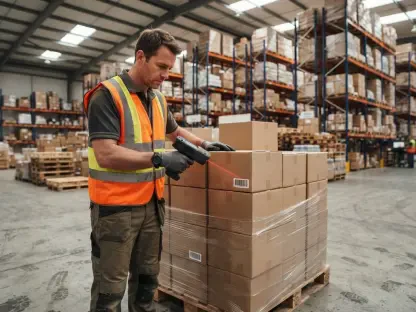
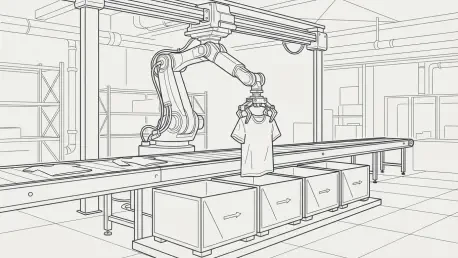
It is a fascinating challenge because, unlike automotive parts, a silk blouse or a poly-bagged pair of jeans changes shape every time it is touched. We are now seeing high-performance cells, like the Fashion Inductor, achieving a throughput of up to 1,300 items per hour per cell, which is a staggering pace for such unpredictable goods. This is made possible by combining vision technology with automatic path planning and incredible motion accuracy. When you watch these robots in action, they aren’t just moving blindly; they are perceiving the specific contours of each item to ensure picking accuracy targets stay above 99.5%. It turns what used to be a chaotic, manual bottleneck into a rhythmic, steady flow of inventory that feels almost organic in its precision.
The integration of AI often comes with significant engineering hurdles. In what ways does the current shift toward pre-trained models simplify the deployment and scaling process for system integrators?
In the past, the “AI tax” was the massive amount of time and specialized expertise required to get a system off the ground, but we are now seeing that engineering and commissioning effort can be slashed by up to 75%. By utilizing pre-trained, fashion-specific AI vision models, integrators can bypass the grueling phase of teaching a robot what a t-shirt looks like from every possible angle. It’s incredibly satisfying to see a project move from the planning phase to full-scale operation without the traditional risks and delays associated with custom coding. This approach allows businesses to scale their automation across multiple sites rapidly, ensuring that the intelligence is consistent and reliable from day one. It really takes the “guesswork” out of the equation, providing a level of industrial-grade stability that was previously hard to find.
Could you elaborate on the role of digital twins in the current landscape of robotic commissioning and how they allow for more flexible hardware setups?
The digital twin has become the heartbeat of modern deployment, acting as a perfect virtual replica of the physical module and its entire software stack. By connecting the application controller and path planning tools within a virtual environment like RobotStudio, we can validate every movement and collision risk before any hardware is even installed. This virtual sandbox gives us the freedom to experiment with third-party components, such as specialized grippers, to see how they interact with the AI-driven system. I’ve seen firsthand how this reduces the high-stress troubleshooting that usually happens on the warehouse floor during a launch. When the physical robot finally starts moving, it’s a sensory relief to see it perfectly mirror the digital simulation we’ve been optimizing for weeks.
How does a continuous closed-loop workflow ensure that robotic performance doesn’t degrade as fashion trends and packaging materials change over time?
The beauty of physical AI is that the system never truly stops learning; it treats every shift as an opportunity to gather data. Through a continuous closed-loop workflow, the system monitors its own performance, identifies anomalies when it struggles with a new material, and generates new training data automatically. This means that if a new trend in sustainable, crinkly packaging hits the market, the robot doesn’t just fail—it adapts. This retraining capability is deployed back to the physical robot, ensuring that performance is maintained throughout the entire lifecycle of the system. It’s a powerful feeling to know that your investment is getting smarter every month, rather than becoming obsolete as inventory styles shift.
As we look at the trajectory of vision-based physical AI, how do you see these capabilities expanding into other areas of industrial robotics?
We are witnessing the first major step in a broader rollout of what we call Autonomous and Versatile Robotics, or AVR. This intelligence is already scheduled to expand across additional vision-based applications through Q1 2027, bringing that same adaptive, lifecycle-managed intelligence to a wider variety of tasks. We are moving toward a future where robots aren’t just programmed for a single repetitive motion but are given the “senses” to understand and react to their environment. This transition will make robotics accessible to industries that were previously considered “too complex” to automate due to high variability. It is an exhilarating time to be in the sector, watching machines evolve from simple tools into truly intelligent partners in the global supply chain.
What is your forecast for the role of AI in global logistics?
I believe we are heading toward a state of “total visibility,” where AI doesn’t just manage the movement of goods but predicts and prevents disruptions before they happen. By the time we reach the end of 2027, the gap between digital planning and physical execution will have almost entirely vanished. We will see warehouses that are self-optimizing, where robotic fleets communicate in real-time to balance workloads and adjust to shipping delays autonomously. This level of intelligence will turn the supply chain from a reactive cost center into a proactive, resilient engine for growth. Ultimately, the focus will shift away from just “speed” and toward “adaptability,” allowing companies to meet consumer demands with a precision we are only just beginning to imagine.