
Rohit Laila is a seasoned authority in the logistics world, possessing a career that bridges the gap between old-school supply chain grit and the cutting-edge of intralogistics innovation. Having navigated the complexities of delivery systems for decades, he understands that the modern warehouse is no longer just a box for storage, but a living ecosystem that must adapt or fail. His passion for technological evolution makes him the perfect guide to decode the strategic partnership between Jungheinrich and Automha. In this conversation, we explore the launch of the UP-Carrier GTJ and how it serves as a bridge for companies looking to modernize their infrastructure without the prohibitive costs of starting from scratch. Our discussion centers on the critical need for increased storage density in existing facilities and the collaborative development of the UP-Carrier GTJ shuttle. We explore the transition from manual pallet handling to automated systems, the speed of modern technological deployment across global markets, and the importance of a technology-agnostic integration strategy that includes mobile robots and advanced software.
Many facilities face the challenge of increasing storage density without altering their existing building structures. How does the development of the UP-Carrier GTJ specifically solve the “brownfield” dilemma for warehouse managers?
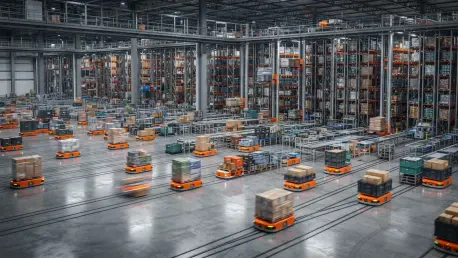
The beauty of the UP-Carrier GTJ lies in its ability to respect the physical limits of a building while completely transforming its internal capacity. For years, managers in these “brownfield” sites felt trapped by their own concrete walls, unable to expand upward or outward without massive capital expenditure. This two-way pallet shuttle changes the narrative by sliding into existing racking layouts and maximizing every available inch of high-density storage. When you see it in action, the precision of the pallet movement is almost rhythmic, turning a cramped, chaotic space into a streamlined flow of goods. It provides that essential entry point into automation, allowing a facility to boost its material flow performance and process reliability without the sound of a single demolition crew.
For a company hesitant to leap into a fully autonomous operation, how does this shuttle technology facilitate a manageable transition from manual labor to automated material flow?
It is a common misconception that automation has to be an all-or-nothing investment, and this partnership proves exactly the opposite. In the early stages, pallet transport continues to be handled by traditional industrial trucks, maintaining a familiar operational rhythm while the shuttle manages the high-density storage movements. This allows a team to get comfortable with the technology, seeing the immediate gains in productivity and space utilization before taking the next step. As the business grows and the material flow requirements become more complex, the process can subsequently be automated further, creating a migration path that feels natural rather than forced. It is about aligning your technological investments with your actual growth curve, ensuring that the transition from a manually supported operation to a fully automated system is both economically viable and operationally sound.
The journey from concept to market readiness for this new shuttle took only nine months and has already seen deployment in over 200 projects. What does this rapid rollout reveal about the current appetite for specialized shuttle technology?
A nine-month development cycle is incredibly swift for this industry, and the fact that it is already deployed in over 200 projects across more than 25 countries speaks volumes about the current market demand. It tells us that the global market is starving for solutions that are both specialized and ready for immediate implementation in established environments. I have spoken with operators in dozens of countries who are all facing the same pressure: they need to do more with less, and they need to do it immediately to stay competitive. The rapid adoption of the UP-Carrier GTJ shows that when you provide a tool that solves a specific, painful problem—like storage density in existing infrastructure—the industry will embrace it at lightning speed.
Beyond the physical shuttle hardware, how critical is the role of system integration and software in ensuring these high-density systems actually deliver on their productivity promises?
You can have the fastest shuttle in the world, but if it does not speak the same language as your warehouse management software or fit perfectly into your racking system, it becomes an expensive paperweight. The collaboration between Jungheinrich and Automha ensures that every element—from the steel in the racks to the code in the system integration—is working in a synchronized dance. This coordination means that projects can be planned with much greater speed and implemented with fewer technical hiccups on the warehouse floor. For the client, having a single partner support the entire lifecycle of the system provides a sense of security that is invaluable during a digital transformation. When the software, conveying technology, and shuttle are all developed under one strategic vision, you eliminate the friction that usually plagues complex automation projects.
Looking at the broader automation landscape, how does this two-way shuttle fit alongside more complex technologies like four-way shuttles or mobile robots?
It is all about using the right tool for the specific job at hand within a technology-agnostic framework that prioritizes the customer’s unique needs. While four-way shuttles, like those from partners such as Movu Robotics, are the gold standard for high-performance, fully automated pallet warehouses, they might be more than a smaller or older facility actually requires. The two-way shuttle addresses the entry-level market, providing an economical way to modernize without over-engineering the solution from the start. However, because this platform is designed for deep integration, it can eventually work in tandem with Jungheinrich Mobile Robots to create a truly end-to-end automated environment. This layered approach allows a company to start where they are today and gradually build toward a future where multiple automation technologies coexist to drive maximum efficiency.
What is your forecast for warehouse automation?
I expect that between 2026 and 2028, the focus will shift almost entirely toward “adaptive automation,” where the distinction between brownfield and greenfield sites begins to blur. We will see a surge in modular, shuttle-based systems that can be installed over a weekend and scaled up during peak seasons, making high-density storage accessible to small and medium enterprises, not just global giants. As software becomes even more intuitive and integration becomes more seamless, the barrier to entry will continue to drop, turning every existing warehouse into a high-performance hub capable of competing on a global scale. The next few years will be defined by flexibility and the ability to upgrade existing infrastructure one smart step at a time.