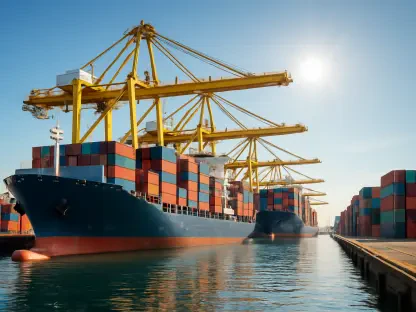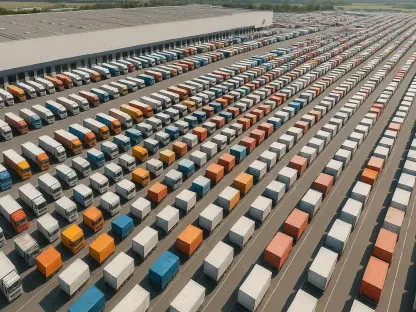

The transition from static, long-term storage commitments to a dynamic logistics framework has become a survival imperative for brands navigating the current landscape of extreme market volatility and unpredictable consumer demand patterns. In the fast-paced commerce environment of the mid-2020s, the traditional reliance on massive, fixed-location distribution centers has proven to be an obstacle rather than an asset. Enterprises now require a more fluid infrastructure that allows for rapid expansion and contraction based on seasonal shifts and global trade fluctuations.
Adopting a flexible warehouse network is no longer a luxury for the largest retailers but a baseline requirement for any organization seeking to maintain high service levels. This guide provides a strategic roadmap for evolving away from rigid real estate models and toward an agile, demand-driven footprint. By reevaluating how space is acquired and utilized, businesses can transform their logistics operations into a competitive advantage that responds to market signals in hours instead of months.
Embracing Agility in Modern Supply Chain Infrastructure
The modern logistics landscape has shifted from a predictable environment to one defined by volatility and rapid consumer shifts. In the context of 2026, where digital integration and instant fulfillment are the standard, static warehousing models are increasingly becoming liabilities. These old frameworks force organizations to commit to space they might not need or, conversely, leave them without options when demand unexpectedly spikes in a new geographic region.
Organizations are now forced to rethink how they store and move inventory to stay relevant. The strategic transition from fixed long-term leases to dynamic, responsive networks prioritizes proximity to the customer and operational scalability. This evolution allows for a more distributed inventory model, which reduces the reliance on a single point of failure and ensures that goods are always within reach of the final destination, regardless of external disruptions.
Beyond the Four Walls: Why Traditional Warehousing is Failing
For decades, supply chain strategy relied on historical data and fixed forecasts to determine footprint requirements. This predict-and-build approach assumed that the future would look much like the past, leading to the construction of massive facilities in locations that eventually became suboptimal. However, the rise of e-commerce and global disruptions has exposed the fragility of this mindset, as market centers shift faster than a 10-year lease can expire.
Today, the value of a warehouse is no longer measured solely by square footage, but by its ability to adapt to real-time market demands and shifting transportation lanes. A facility that is half-empty for eight months of the year represents a massive drain on capital. True operational excellence now requires a “pop-up” capability where storage can be activated near emerging demand zones and deactivated once that demand subsides, mirroring the cloud computing model used in the technology sector.
A Systematic Guide to Transitioning to a Flexible Network
1. Identifying and Mitigating Inflexible Capacity Risks
The first step toward flexibility involves auditing the hidden costs associated with traditional, rigid infrastructure. Many leaders fail to realize how much capital is tied up in maintenance and property taxes for space that does not actively contribute to throughput. A comprehensive audit should evaluate every square foot against its actual utility during both peak and off-peak periods to identify where waste occurs.
Risk mitigation begins by diversifying the portfolio of available space. Rather than owning every asset, the most resilient companies utilize a mix of owned hubs and on-demand spoke facilities. This strategy ensures that the organization is not over-leveraged in any single market, allowing it to pivot resources as consumer demographics shift or as new trade lanes open up across the country.
Redundant Capacity and Empty Square Footage
Paying for unused space during off-peak seasons creates a persistent drain on capital that could be reinvested in growth. In many traditional models, the cost of “carrying” a warehouse remains constant even when inventory levels drop by 40 percent. This creates an imbalance in the cost-per-unit metric, making operations significantly less profitable during slower months.
To address this, logistics leaders must move toward a variable cost model. By shifting from fixed-rent contracts to pay-per-pallet or pay-per-square-foot arrangements, the enterprise aligns its expenses directly with its revenue-generating activities. This ensures that the budget remains healthy throughout the year, providing the financial breathing room needed to invest in marketing or product development.
Eliminating Geography-Driven Inefficiencies
Holding inventory far from modern demand centers leads to dead miles and increased reliance on expensive expedited freight. When a product must travel across three time zones to reach a customer, the carbon footprint and transportation costs both skyrocket. These inefficiencies are often the result of legacy decisions that prioritized cheap rural land over strategic proximity to urban hubs.
Eliminating these gaps requires a data-driven approach to inventory placement. By analyzing where the majority of orders originate, companies can place smaller pools of inventory in flexible facilities much closer to the point of sale. This reduces the need for air freight or overnight shipping, as the product is already sitting within a two-hour radius of the consumer, drastically improving delivery speeds.
2. Synchronizing Warehousing with Transportation Ecosystems
Effective strategy treats storage and movement as a single integrated ecosystem rather than separate operational silos. It is a mistake to view a warehouse in isolation from the trucks that service it. Every hour a product sits in a facility represents a potential delay in the transportation cycle, meaning that the efficiency of the dock is just as important as the cost of the floor space.
When these functions are synchronized, the warehouse acts as a strategic buffer that optimizes truck routes. High-velocity facilities that are integrated into a transportation network can facilitate more frequent, smaller shipments that keep inventory moving. This prevents the “clogging” effect seen in older, massive distribution centers where goods often languish in deep storage for weeks before being processed for outbound shipping.
Reducing Downstream LTL Miles
Strategic placement of goods near entry ports or regional hubs can drastically shorten the final mile. There are documented cases where transportation miles were reduced by 75 percent simply by moving the point of distribution closer to the primary customer base. This reduction in mileage does more than just save on fuel; it also reduces the risk of transit delays and damages that occur during long-haul transport.
By utilizing regional hubs for Less-Than-Truckload or LTL shipments, companies can consolidate orders more effectively. This local-to-local delivery model is far more efficient than cross-country shipping, as it bypasses many of the major bottlenecks in the national freight network. The result is a more predictable delivery schedule that enhances the overall customer experience and builds brand loyalty through reliability.
Leveraging Transloading for Rapid Repositioning
Using flexible facilities for transloading allows inventory to be diverted to high-demand regions before it ever hits a long-term storage shelf. This technique involves moving cargo from one mode of transport to another, such as from an ocean container to a domestic trailer, near the point of entry. It provides the ultimate pivot point for a supply chain that needs to react to sudden market changes.
Transloading facilities act as sorting centers that keep the supply chain lean. Instead of sending all imported goods to a central mid-west warehouse, the inventory can be split at the coast and sent directly to regional markets. This “velocity-first” approach ensures that capital is not tied up in slow-moving stock, as the inventory is always moving toward a specific sale rather than waiting for a forecast to come true.
3. Evaluating Potential 3PL Partners for Scalable Growth
True flexibility requires a partner that offers more than just pallet positions; it requires a specialized suite of scalable services. Not all third-party logistics providers are created equal, and many are still operating with the same rigid mindset as the companies they serve. Selecting the right partner means finding an organization that views its network as a service rather than a series of buildings.
The evaluation process must prioritize adaptability and the ability to handle complex requirements on short notice. A partner should be able to provide value-added services such as kitting, specialized packaging, or light assembly within the warehouse walls. This capability allows the shipper to keep inventory in a generic state until the last possible second, at which point it can be customized for a specific order.
Priorities for Geographic Breadth and Elasticity
A partner must demonstrate the ability to open or contract nodes within their network based on seasonal spikes or new market entries. This geographic elasticity is what allows a business to test new markets without making a multi-million dollar capital investment. If a product launch in a specific region fails, the flexible network allows the company to exit that location without the burden of an empty building.
Furthermore, a wide geographic footprint ensures that the enterprise can maintain operations even if one region experiences a disruption. Whether it is a weather event or a labor shortage, a provider with multiple locations can reroute inventory to keep the supply chain moving. This level of resilience is only possible when the partner has a truly national or multi-regional presence that is integrated under a single management structure.
Ensuring Technological Connectivity and Visibility
Real-time data integration is the glue of a flexible network, allowing shippers to track inventory levels across multiple locations through a single pane of glass. Without this visibility, a distributed network becomes a series of “black holes” where inventory is lost or forgotten. The ideal partner must offer a robust Warehouse Management System that communicates seamlessly with the shipper’s internal planning software.
Visibility also extends to the transportation side of the business. Shippers need to know not just what is on the shelf, but what is on the dock and what is on the road. When inventory data is updated in real-time, the enterprise can make informed decisions about whether to reorder stock or move existing units from one facility to another. This technological transparency is the foundational layer of any modern, agile supply chain.
4. Consolidating Operations to Avoid Network Fragmentation
While diversification is key, managing dozens of disparate vendors creates administrative complexity that can negate the benefits of flexibility. Each new vendor brings its own set of contracts, billing cycles, and communication protocols. This fragmentation often leads to a lack of accountability, where different providers blame one another for delays or errors in the fulfillment process.
To overcome this, leaders should look for a “one-stop” solution where multiple logistics functions are handled by a single entity. Consolidation reduces the overhead associated with managing the supply chain and allows for a more cohesive strategy. When one provider manages both the storage and the distribution, there is a natural incentive for them to optimize the hand-off between these two critical stages.
The Advantage of Centralized Flexibility
Partnering with a single comprehensive provider allows for a unified contract and technology platform while maintaining a multi-city footprint. This approach offers the best of both worlds: the reach of a national network and the simplicity of a single point of contact. Centralized flexibility means that as the business grows, it can add new locations or services with a simple amendment to an existing agreement.
This model also simplifies the financial side of logistics. Having one invoice for warehousing, transportation, and value-added services makes it much easier to track total landed costs. Finance teams can more accurately forecast logistics spend when they are dealing with a standardized pricing structure across all geographic regions, rather than a patchwork of different rates and fee schedules.
Standardizing Quality and Operational Consistency
A consolidated approach ensures that labeling, fulfillment, and kitting processes remain identical regardless of which facility is handling the order. Brand consistency is vital in the modern market, and a customer in New York should receive the same high-quality packaging as a customer in Los Angeles. Achieving this level of uniformity is nearly impossible when using multiple independent warehouse providers.
Standardization also applies to safety and compliance. A single partner with a unified culture can enforce the same rigorous standards across every node in the network. This reduces the risk of product damage or regulatory fines, as every warehouse employee is trained on the same protocols and uses the same quality control software. Consistency creates a predictable outcome, which is the ultimate goal of any strategic logistics plan.
Core Takeaways for the Agile Supply Chain
- Move from Prediction to Responsiveness: Shift the focus from three-year forecasts to real-time network adjustment capabilities that can adapt to current market conditions.
- Integrate Logistics Functions: View warehouse locations as transportation decisions that directly impact freight spend and overall transit times.
- Prioritize Scalability: Select 3PL partners based on their ability to expand or contract services without administrative friction or long-term financial penalties.
- Focus on Value-Added Services: Ensure facilities can handle active operating tasks like cross-docking and pick-and-pack rather than just passive storage to increase inventory velocity.
Future Trends in Distributed Fulfillment and Global Volatility
As global trade routes continue to fluctuate, the gravity of demand will keep shifting toward more localized nodes. We are moving toward a future where micro-warehousing and regional fulfillment centers become the norm for companies of all sizes. The challenge for leaders will be maintaining a cohesive brand experience across a distributed network while navigating labor shortages and rising real estate costs.
Automation will play a critical role in these smaller, more numerous facilities. To maintain efficiency without a massive local workforce, these flexible hubs will increasingly rely on robotics for sorting and kitting. Companies that treat their warehouse footprint as a fluid asset will be the only ones capable of maintaining a competitive edge in a just-in-case economy where speed and proximity are the primary differentiators.
Conclusion: Building a Network That Is Flexible by Design
The transition toward a flexible warehouse network required a fundamental shift in executive mindset that prioritized agility over the comfort of long-term assets. Organizations that succeeded in this evolution recognized that the “predict-and-build” era had ended, replaced by a need for a responsive, distributed infrastructure. They effectively audited their existing networks to uncover hidden costs and shifted toward variable-cost models that protected their margins during fluctuations. By integrating warehousing with transportation, these leaders discovered that proximity to the customer was the most effective way to drive down logistics expenses and improve service levels.
The journey toward a more responsive model involved selecting strategic partners who offered geographic breadth and technological transparency rather than just square footage. These organizations standardized their operations across multiple cities to ensure brand consistency while avoiding the pitfalls of administrative fragmentation. Moving forward, the focus must remain on leveraging real-time data to reposition inventory proactively before market shifts occur. Success in the current landscape belonged to those who stopped asking how much space was needed and started asking how fast their network could pivot. Now is the moment to implement these flexible strategies to ensure the supply chain remained an engine for growth rather than a static cost center.