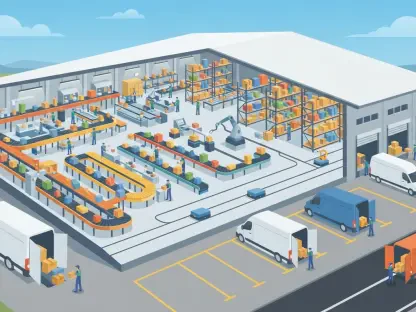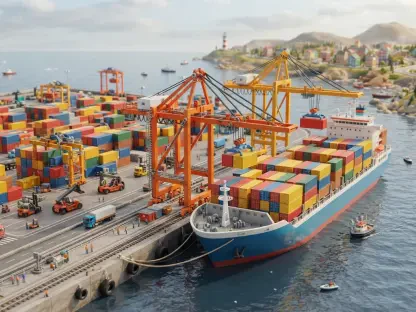

The tectonic shift of global supply chains toward the North American corridor has transformed Mexico into a critical manufacturing artery, but this rapid industrial expansion has also exposed deep-seated vulnerabilities in the nation’s logistical backbone. As manufacturing centers relocate from distant shores to closer geographic proximity, the efficiency of the Mexican trade corridor has become a focal point for international investors. The current environment demands more than just strategic location; it requires a seamless integration of infrastructure and technology to maintain the momentum of cross-border commerce.
The assessment of this sector has undergone a significant transformation, moving toward the World Bank’s LPI 2.0 framework. This transition replaced subjective perceptions with hard operational data, providing a clearer picture of how maritime shipping, aviation, and postal networks function. By analyzing 21 specific indicators, the industry can now identify exactly where friction occurs within the supply chain. This shift is essential for supporting “Just-in-Time” manufacturing models that rely on high-performance logistics to keep production lines moving without the burden of excessive inventory.
The Current Landscape of Mexican Logistics and Global Integration
Mexico stands as a premier global manufacturing hub, serving as the primary gateway for trade between North America and the rest of the world. Its logistics sector is a complex tapestry of maritime ports on two oceans, a growing aviation cargo network, and an international postal system that links small businesses to global buyers. The integration of these segments determines the nation’s ability to absorb the ongoing influx of industrial investment.
The rising demand for transparency has pushed the industry to adopt more rigorous tracking and performance benchmarks. Reliable logistics are no longer just a support function but a core competitive advantage for the automotive and electronics sectors. As trade volumes increase, the pressure on terminal handling and customs coordination has intensified, highlighting the need for a more synchronized approach to supply chain management.
Connectivity Strengths and Market Performance Indicators
Emerging Trends: The Breadth of International Trade Networks
Mexico’s maritime reach is impressive, maintaining direct connections with 52 global economies, which allows for significant supply chain diversification. This broad connectivity enables manufacturers to source components and ship finished goods across a variety of trade lanes, reducing the risk of regional disruptions. Moreover, the growth of B2B postal connectivity, now reaching 84 partner nations, provides a critical foundation for the e-commerce surge and small-scale commercial exports.
The shift toward data-centric logistics management is becoming the standard for the industry. Real-time cargo tracking is no longer an optional feature but a necessity for managing the complexities of nearshoring. This trend ensures that stakeholders can monitor the flow of goods through international networks with greater precision, allowing for more agile responses to potential delays.
Data-Driven Assessment: Cargo Throughput and Growth Projections
Recent data reveals that while connectivity scores remain high, actual operational output is struggling to keep pace with theoretical capacity. Maritime connectivity continues to provide a stable foundation for trade, yet the efficiency of the throughput is what determines the final cost of goods. Statistical trends in air cargo also indicate a growing reliance on time-sensitive transit for high-value components.
Looking ahead, logistics demand is projected to rise steadily from 2026 to 2030 as North American industrial integration deepens. Performance benchmarks suggest that Mexico must optimize its existing assets to handle the anticipated volume increases. Achieving long-term trade stability will require a focused effort to ensure that actual cargo throughput matches the robust connectivity potential the country currently offers.
Identifying Critical Operational Bottlenecks and Supply Chain Friction
A primary concern for the industry is the 9.3-day maritime import dwell time, which creates a systemic drag on industrial productivity. This delay represents the total time a container sits at the port from arrival to inland departure. Such extended wait times are often the result of terminal handling inefficiencies and gaps in coordination between customs and inland transportation providers.
These delays introduce hidden costs that erode the savings gained through geographic proximity. Companies face higher inventory carrying costs, expensive demurrage fees, and the constant threat of production disruptions. Furthermore, the slight degradation in aviation cargo processing times, which moved from 1.8 to 2.0 days, poses a specific risk to high-value sectors like aerospace and pharmaceuticals. Even the domestic postal network has seen delivery windows lengthen, complicating the “last mile” for international arrivals.
The Regulatory Environment and Administrative Soft Infrastructure
The efficiency of Mexico’s “soft infrastructure” is largely dictated by customs protocols and mandatory inspection regimes. While security measures are necessary for international compliance, the speed at which these processes are executed directly influences overall cargo velocity. Administrative hurdles at ports of entry can often become more significant barriers to trade than the physical limitations of the docks themselves.
Effective coordination between private terminal operators and federal regulatory bodies remains a critical area for improvement. Streamlining these administrative hurdles is essential for reducing the friction that currently hampers the movement of goods. Government policy must continue to evolve to support faster processing times while maintaining the necessary security and compliance standards for North American trade.
Future Horizons: Innovation and Strategic Optimization
The industry is reaching a point where physical infrastructure expansion must be coupled with process optimization and digitalization. Integrating AI and automation in port and warehouse management offers a path to clear current bottlenecks without massive construction projects. Digital tools can better predict arrival times and optimize the allocation of terminal resources, leading to a more fluid logistics ecosystem.
There is also a growing preference among manufacturers for greener and more transparent supply chains. As environmental standards become more stringent, the logistics sector must adopt sustainable practices that align with global expectations. Enhancing domestic delivery networks will also be vital to ensure that international shipments move quickly from the border to the final consumer or factory floor.
Concluding Viewpoint on Navigating Mexico’s Logistics Evolution
The evaluation of Mexico’s logistics performance demonstrated a clear dichotomy between its vast international reach and the internal operational constraints that slowed down progress. LPI 2.0 findings provided a roadmap for targeted infrastructure and policy reforms that addressed the specific causes of port and postal delays. Investors recognized that while connectivity remained a strength, the true value of the Mexican corridor depended on the consistency and speed of its internal processing.
Authorities and private stakeholders identified that systemic efficiency gains were necessary to solidify the nation’s status as a top-tier logistics hub. Actionable steps focused on the digitalization of customs and the improvement of terminal coordination to mitigate the risks associated with dwell times. This shift toward operational optimization ensured that the logistics network could finally support the high volume of trade that nearshoring promised. Future growth depended on the ability to transform these data-driven insights into a more reliable and predictable supply chain.