
The RTS Link project remains a top national priority for Malaysia, with leadership asserting that bilateral contracts and professional management will ensure progress despite any shifts in the federal Cabinet. As the cross-border rail network enters its final phase of preparation this year, the focus has shifted from heavy civil engineering to the intricate details of operational readiness. Spanning four kilometers, this system is designed to connect Bukit Chagar in Johor Bahru to Woodlands North in Singapore, offering a modern solution to the perennial congestion found on the traditional causeway. The revised launch target of February 2027 incorporates a deliberate one-month buffer, a decision that underscores a commitment to safety and systems optimization. This period in 2026 is critical for fine-tuning the passenger experience and ensuring that all logistical components, from immigration to ticketing, are fully synchronized before the first commercial trains begin their journey.
Strategic Timing and Regulatory Milestones
Ensuring Operational Reliability: The Role of Systemic Testing
The decision to target February 2027 as the official launch date, rather than sticking to an aggressive January schedule, highlights a sophisticated approach to infrastructure management. This strategic one-month buffer is specifically designed to accommodate the rigorous testing of signaling and telecommunications systems that are currently being integrated across the four-kilometer span. Engineering teams are focused on ensuring that the automated train control systems can communicate seamlessly across the international border, a task that requires precision to prevent any operational downtime. This phase is characterized by a shift from the heavy machinery of civil engineering to the intricate work of software synchronization and hardware stress-testing. By allocating this additional time, project managers are mitigating the risks associated with large-scale transit launches, ensuring that the first wave of commuters experiences a smooth and reliable service.
Beyond the technical aspects of the rail system itself, the testing phase encompasses the full passenger experience, from electronic ticketing gates to emergency evacuation protocols. High-frequency transit systems like the RTS Link require thousands of simulated runs to verify that the rolling stock interacts correctly with the platform screen doors and the power supply. These simulations are vital for identifying potential bottlenecks in passenger flow or technical glitches in the automated driving system. The extra month of preparation allows for these variables to be addressed without the pressure of an immediate public deadline. This commitment to quality assurance serves as a foundational pillar for public trust, as a successful launch is essential for encouraging car-reliant commuters to transition to rail. The meticulous nature of this testing ensures that the integration between the Malaysian and Singaporean segments of the line is both robust and fail-safe.
Navigating Cross-Border Approval: Compliance and Safety Standards
The commencement of the RTS Link is strictly governed by the regulatory frameworks of both Malaysia’s Land Public Transport Agency (APAD) and Singapore’s Land Transport Authority (LTA). These agencies are tasked with verifying that every aspect of the rail system adheres to stringent safety and operational guidelines. The process involves a massive volume of technical submissions, which were largely initiated earlier to allow for a multi-year review period that continues through 2026. Both nations must sign off on the safety certifications, which are often provided by independent third-party assessors who specialize in international rail standards. This dual-jurisdiction oversight ensures that neither country compromises on the quality of the infrastructure, creating a unified standard of excellence. The regulatory phase is the most critical part of the current schedule, as it requires the reconciliation of different legal and technical codes.
The collaborative nature of this regulatory oversight is setting a new benchmark for future transboundary infrastructure projects within the region. It is not merely about physical safety; it also involves the synchronization of customs and immigration protocols to facilitate a seamless passenger flow. The agencies are working together to ensure that the co-located Customs, Immigration, and Quarantine facilities operate as a single efficient unit, reducing the time spent on border formalities. This requires sophisticated data-sharing agreements and integrated security systems that have been vetted by the respective home ministries of both Malaysia and Singapore. As the project nears its final regulatory milestones, the focus is on a holistic safety audit that covers everything from structural integrity to cybersecurity. This comprehensive approach guarantees that when the first trains roll out in early 2027, they will be operating within a highly secure and legally compliant ecosystem.
Infrastructure Completion and Urban Integration
Progress of Station Facilities: Architectural and Functional Readiness
Physical progress at the Bukit Chagar station indicates that the primary architectural and structural milestones have been successfully achieved. The core infrastructure, which includes the massive Customs, Immigration, and Quarantine complex, is now a permanent fixture of the Johor Bahru skyline. In contrast to the heavy construction that dominated the site in previous years, the current work is concentrated on the finishing touches that transform a construction site into a world-class transit hub. This includes the installation of glass facades, the completion of internal climate control systems, and the finalization of the commercial spaces within the station. The station has been designed to serve as a multi-functional anchor for the surrounding district, featuring integrated retail and dining options that will cater to the daily flow of thousands of passengers. This stage of development marks the transition from structural engineering to functional interior design.
Supporting infrastructure such as the multi-story car parks and dedicated passenger drop-off zones is also nearing the final handover stage. These facilities are critical for managing the transition between private vehicles and the rail system, providing ample space for commuters from the wider Johor region. The delivery of the rolling stock, which consists of modern train sets specifically designed for high-capacity short-haul transit, is the final physical component expected before full-scale trials begin. These trains are equipped with advanced propulsion systems and passenger amenities that reflect the modern nature of the project. Project managers have indicated that while the hard infrastructure is ready, the focus now shifts to the soft aspects of station management, including the training of station staff and the deployment of customer service personnel. This ensures that the Bukit Chagar terminus is not just a building, but a fully operational and welcoming environment.
Enhancing Last-Mile Connectivity: Johor Bahru’s Transport Overhaul
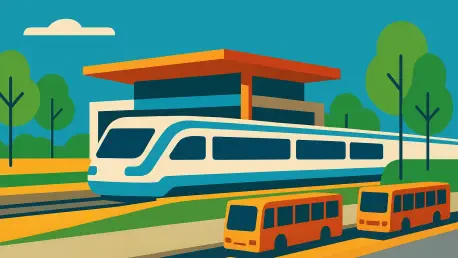
To prevent the RTS Link from becoming a bottleneck within the city, the local government is implementing a series of aggressive transport enhancements aimed at improving the urban flow. A cornerstone of this strategy is the pedestrianization of Jalan Jim Quee, which will be closed to private vehicles to serve as a dedicated corridor for public transit and pedestrian traffic. This shift is designed to prioritize buses and shuttles, ensuring that they have unimpeded access to the Bukit Chagar station. The expansion of the regional bus fleet under the BAS.MY initiative is another critical component, with the number of vehicles increasing significantly by the end of 2026. This expansion addresses the need for high-frequency feeder services that can reliably transport commuters from residential suburbs to the rail terminus. By investing in these last-mile solutions, authorities are creating a cohesive network that reduces the heavy reliance on private cars.
The transition toward a rail-centric transport philosophy in Johor Bahru was accelerated by the comprehensive planning that accompanied the RTS Link. Stakeholders focused on creating a seamless digital ticketing environment that allowed passengers to move between buses and trains using a single unified platform. This integrated approach eliminated many of the traditional barriers to public transport usage, such as fragmented payment systems and long transfer times. The focus then shifted to the long-term maintenance of the infrastructure, where authorities established predictive maintenance protocols to ensure the rail system remained at peak performance. These steps were essential for maintaining the high standards of reliability that commuters expected from an international service. By prioritizing the user experience and the integration of diverse transit modes, the region successfully laid the groundwork for a more sustainable and efficient urban mobility future.