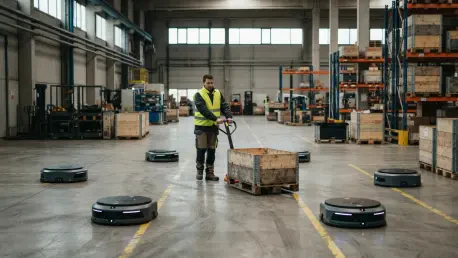

Global logistics leaders like DHL have demonstrated that scale no longer requires rigidity by expanding active robot fleets by 30 percent during periods of high demand. This shift marks a significant departure from the traditional supply chain model, which relied on predictable, calendar-driven peaks. In the current landscape, consumer behavior is influenced by instantaneous viral trends and unpredictable global events, meaning a surge can happen at any moment. To remain competitive, operators must transition from static systems to dynamic, elastic capacity that adjusts to real-time needs. This evolution requires a fundamental rethinking of how technology is purchased and deployed. Rather than investing in permanent, monolithic structures that sit idle during slow periods, the modern warehouse prioritizes modularity. The goal is to create a responsive ecosystem that scales seamlessly without requiring massive structural overhauls or a permanent increase in the workforce. This agility is forcing a reevaluation of robotic investments across the global logistics sector.
Scaling Through Modular Robotics
Flexible Hardware: Adopting Collaborative Models
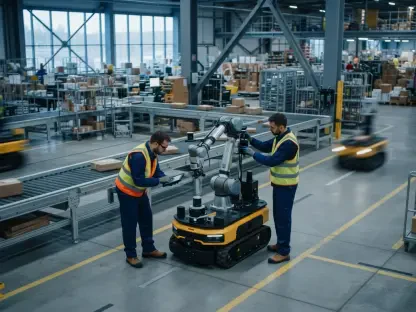
Global leaders are turning to collaborative robots and autonomous mobile units to replace fixed, monolithic conveyor systems. By utilizing a modular fleet, companies like DHL have proven they can scale operations with unprecedented precision. This robotic scalability is essential because it allows a facility to handle a 30 percent increase in volume without a corresponding increase in long-term capital expenditure. Unlike traditional high-density storage systems, which are bolted to the floor and take months to install, mobile robots can be deployed in a matter of days. This shift ensures that the physical limitations of a warehouse no longer dictate its maximum output. Furthermore, the ability to rapidly integrate these machines into existing workflows allows human workers to focus on complex tasks while robots handle repetitive movement. This hybrid approach has become the gold standard for high-performance facilities looking to maintain operational flexibility and respond to sudden spikes in demand without the usual lag.
Beyond immediate scalability, the modular approach to hardware offers significant advantages in terms of inter-facility mobility. When a specific region experiences a localized demand spike, robotic assets can be physically moved from a slower facility to a high-demand one, ensuring equipment is never sitting idle. This strategy effectively turns robotics into a seasonal resource that can be reallocated based on real-time data rather than rigid annual forecasts. The economic implications are profound, as it allows companies to maintain a higher overall utilization rate across their entire network. In the current market, paying for idle capacity is no longer a viable business model. By treating robotics as a mobile and flexible asset, warehouse operators can achieve a much faster return on investment. This mobility also provides a safety net against local labor shortages, as the robotic fleet can be surged into areas where staffing is particularly challenging. This creates a resilient and responsive ecosystem that adapts to market shifts.
Market Divide: Bridging the Industrial Adoption Gap
While the success of major players is well-documented, a significant divide persists within the broader logistics market regarding automation maturity. Recent data indicates that only a small fraction of North American warehouses are classified as highly automated, while the majority still rely heavily on manual processes. This gap is largely driven by the massive scale and capital of industry giants like Amazon and Walmart, who have set a high bar for robotic integration. For mid-sized warehouse operators, the challenge is not just about adopting technology, but about finding solutions that are affordable and compatible with diverse SKU sets. The previous generation of automation was often too rigid and expensive for facilities with shorter customer contracts or high product variability. However, the emergence of more accessible robotic platforms is beginning to level the playing field. These smaller systems allow third-party logistics providers to offer high efficiency without the need for multibillion-dollar investments or massive infrastructure.
Bridging this adoption gap requires a fundamental change in how smaller firms perceive the cost and complexity of robotics. Many operators are now exploring robotics-as-a-service models, which allow them to pilot automated systems with minimal upfront risk. This shift is critical because it enables warehouses with diverse client portfolios to adapt to changing requirements on the fly. As the cost of sensors and artificial intelligence continues to decrease, the technology is becoming viable for even specialized facilities. The goal is to move beyond the all-or-nothing approach to automation and instead implement targeted solutions that address specific bottlenecks. By focusing on incremental improvements and modular upgrades, smaller players can build the necessary infrastructure to support future growth. This democratization of technology is essential for maintaining a competitive logistics landscape where speed and accuracy are expected. Successful adoption now hinges on aligning these robotic tools with specific operational goals.
Redefining Throughput and Efficiency
Strategic Metrics: Prioritizing Flexibility Over Max Volume
The traditional metrics used to evaluate warehouse performance, such as maximum theoretical throughput and storage density, are no longer sufficient in a volatile market. Today, the focus has shifted toward flexible throughput, a metric that measures how effectively a facility can vary its output based on demand. A warehouse designed for a permanent peak capacity often suffers from extreme inefficiency during slower months, leading to wasted energy and underutilized space. Conversely, a modular facility that uses robotics to flex its capacity can maintain high efficiency throughout the year. This approach ensures that capital is not tied up in machinery that only provides value during a narrow window. By prioritizing flexibility, operators can achieve a more stable financial performance and a better overall return on investment. The focus is no longer on how much volume a warehouse can handle at its limit, but on how efficiently it can transition between different volume levels without a loss in productivity or accuracy.
This strategic shift also requires executives to reevaluate the technical infrastructure supporting their automation. To achieve true elasticity, a facility must have the networking, power, and charging capabilities to support a sudden increase in hardware. If the physical infrastructure cannot keep up with the robotic fleet, then the investment in modular hardware is effectively neutralized. Therefore, modern warehouse design now incorporates scalable power grids and robust wireless connectivity as foundational elements. Beyond the hardware, the speed at which additional capacity can be activated is becoming a key performance indicator. Leading organizations are testing their ability to integrate new robotic units within hours. This level of readiness ensures that the supply chain can respond to social media-driven sales spikes or sudden disruptions before they impact the customer experience. Ultimately, the ability to activate and deactivate capacity at will provides a competitive edge that traditional, rigid facilities simply cannot match.
System Intelligence: Orchestrating Hardware and Software
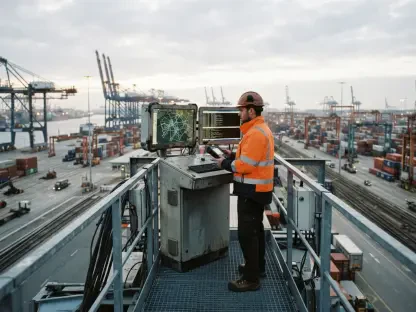
The physical presence of robots is only effective if they are managed by a sophisticated Warehouse Management System that acts as the central brain. As more autonomous mobile robots are introduced into a facility, the complexity of coordinating their movements with human staff and existing machinery grows exponentially. True operational elasticity requires AI-based orchestration software that can rebalance task allocations in real-time. If a bottleneck begins to form at the packing stations, the software must be able to instantly reroute robots or reprioritize picking sequences to alleviate pressure. This level of intelligence ensures that the entire warehouse scales in unison, rather than just moving congestion from one point to another. In the current era of logistics, the software’s ability to provide end-to-end visibility is just as important as the speed of the robots. The most successful operators are those who have integrated their robotic control systems directly with their broader supply chain management platforms.
The industry has moved toward a model where resilience is built into the very architecture of the software. Leaders recognized that static programming could not handle the dynamic nature of modern commerce, so they implemented machine learning algorithms that learned from historical patterns to predict surges. Companies adopted these intelligent orchestration layers to ensure that human workers and robotic fleets collaborated without friction, maximizing the strengths of both groups. This transition allowed organizations to view their automation not as a fixed asset, but as a fluid resource that responded to the pulse of global demand. They prioritized systems that could be updated and integrated with new hardware in a matter of hours. By focusing on software-driven agility, warehouse managers successfully navigated the challenges of a fluctuating global market and maintained consistent service levels. They ultimately proved that the most valuable return on investment was the ability to flex and adapt, securing their place in the future of commerce.