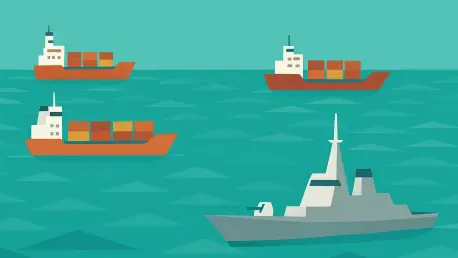

Operation Aspides faces a critical shortfall of high-end frigates equipped with the air-defense systems necessary to counter sophisticated Houthi attacks. The maritime security landscape in the Red Sea has reached a critical turning point as the gap between the European Union’s strategic goals and its actual naval presence continues to widen. Launched in early 2024, Operation Aspides was intended to serve as a defensive shield for commercial vessels navigating the dangerous waters near the Bab al-Mandab Strait. However, top officials, including Italian Defense Minister Guido Crosetto, have raised alarms that the current deployment is insufficient to counter the evolving threats posed by Houthi forces. This resource deficit places one of the world’s most vital trade arteries at significant risk, threatening the stability of global supply chains and highlighting the limitations of collective European defense. The mission currently struggles to maintain a consistent presence in high-risk zones, leading to a palpable sense of vulnerability among merchant mariners who rely on these corridors.
Navigational Challenges and the Resource Gap
The Quantitative Deficit in EU Naval Strategy
The disparity between the mandate of Operation Aspides and its operational reality suggests a deep-seated political reluctance among member states to commit expensive military hardware to a high-stakes environment. While the European Union’s foreign policy leadership, including High Representative Kaja Kallas, suggests a minimum of ten warships is necessary to maintain a safe corridor, only six are currently on station. This 40% deficit in naval assets is not merely a numerical oversight but a reflection of the competing priorities facing European capitals. Nations like Belgium and the Netherlands are debating further contributions, yet the current piecemeal approach fails to provide a consistent deterrent against sophisticated maritime threats. Without a sustained increase in the number of sophisticated air-defense vessels, the mission remains in a state of perpetual under-performance, leaving commercial shipping vulnerable to persistent attacks that threaten the safety of crews and the integrity of cargo.
Qualitative Requirements for High-End Frigates
Beyond the raw number of vessels, the qualitative nature of the deployment remains a central point of contention among military analysts and regional leaders. The mission requires high-end frigates capable of managing multi-domain threats, rather than standard patrol boats that lack the electronic warfare suites and missile interception capabilities necessary for the Red Sea theater. Frustrated by the slow pace of collective European decision-making and the persistent strategic gap, Italy has signaled a potential shift toward unilateral action. The Italian government is considering the deployment of up to four additional ships independently to bridge the shortfall that collective efforts have failed to close. This move underscores a growing impatience within Rome regarding the European Union’s inability to reconcile its naval commitments with its geopolitical ambitions. Such independent actions may secure Italian interests but risk fragmenting the unified front needed for long-term regional stability.
Economic Consequences and the Path Forward
Regional Instability and Global Trade Disruption
The ongoing conflict in Yemen and the resulting insecurity at sea have triggered a massive shift in global logistics, forcing shipping companies to bypass the Suez Canal entirely in favor of longer routes. By rerouting vessels around the Cape of Good Hope, the shipping industry faces soaring insurance premiums and extended delivery schedules that contribute directly to global inflation. This shift is not merely a temporary adjustment but a fundamental realignment of trade patterns that penalizes regional economies and increases the carbon footprint of global commerce. For many shipping firms, the risk of a missile strike or a drone attack far outweighs the costs of additional fuel and time required for the African circumnavigation. While international attention has shifted toward the Red Sea, the security vacuum has inadvertently revitalized piracy near Somalia, as Operation Atalanta struggles with limited resources to monitor the vast stretches of the Indian Ocean effectively.
Strategic Integration and Future Maritime Security
In light of these challenges, the European Union recognized that maritime security required more than just symbolic presence; it demanded a fundamental restructuring of how naval resources were pooled and deployed. To address the persistent shortfall, experts suggested that member states should have prioritized the development of a permanent, rotating maritime strike group dedicated specifically to protecting critical trade nodes. This approach sought to move beyond piecemeal contributions, ensuring that high-end frigates remained on station regardless of individual national political shifts. Furthermore, the integration of unmanned surface vessels and advanced aerial surveillance was identified as a necessary step to augment the physical presence of manned warships. By adopting these technological solutions and fostering deeper military integration, the EU aimed to close the gap between its strategic ambitions and its operational capacity. Ultimately, the lessons learned from the Red Sea crisis emphasized that securing international waters required a proactive stance.