
The unprecedented surge in diesel prices to nearly five dirhams per liter is fundamentally dismantling the financial equilibrium that once allowed the United Arab Emirates to enjoy a nearly frictionless culture of free doorstep delivery. As of October 2026, the nation has reached a significant economic milestone where diesel prices hit Dh4.80 per liter, marking an 11.6% increase from the previous month. This rapid escalation is not merely an isolated statistic for freight operators; it serves as a massive catalyst for a broader structural shift within the local logistics sector. For a region that has long prioritized convenience and speed, the rising cost of energy is forcing a transparent recalculation of the value chain.
The State of UAE Logistics Amidst Escalating Fuel Prices
The monthly adjustments governed by the Fuel Price Committee now carry more weight than ever as they ripple through the logistics infrastructure of Dubai and the surrounding Emirates. These price updates align domestic operational costs with global oil indices, creating a dynamic environment where shipping companies must constantly recalibrate their margins. The impact is most visible in the freight and transportation sectors, which form the backbone of the domestic economy, yet the burden is increasingly shared by the retail and last-mile segments.
Industry segments are currently navigating a climate where fuel has transitioned from a manageable variable expense to a dominant operational hurdle. While large freight carriers may have the scale to negotiate long-term contracts, the high-frequency nature of the last-mile sector makes it uniquely vulnerable to these monthly shifts. Regulatory frameworks continue to ensure that domestic pricing remains fair relative to global benchmarks, but the sheer speed of recent price hikes has left many logistics providers scrambling to maintain service levels without passing costs directly to the end consumer.
Evolving Market Dynamics and Economic Indicators
Global Drivers and Shifting Consumer Expectations
Geopolitical volatility remains a primary driver of the current energy landscape, with regional conflicts and disruptions in Red Sea maritime corridors contributing to a staggering 60% rise in fuel costs over recent months. These external pressures have essentially ended the era of cheap energy, forcing UAE businesses to rethink the “convenience at any cost” model. For years, consumers have been conditioned to expect instant, no-cost delivery, but the psychological impact of escalating fuel prices is finally beginning to penetrate the consumer consciousness.
Technological influences are playing a critical role in mitigating these variable costs through the rapid deployment of route optimization software and AI-driven logistics. By analyzing traffic patterns and delivery windows in real-time, firms are attempting to squeeze every possible efficiency out of their existing fleets. However, technology can only compensate for so much when the underlying fuel price surges by double digits in a single month. The convenience paradigm is shifting toward a model that values reliability and sustainability over sheer speed.
Market Data and Growth Projections
Current statistical indicators reveal an 11.6% surge in diesel costs, which has created a direct and measurable correlation with declining logistics profit margins across the Emirates. Businesses are now looking at forward-looking forecasts that suggest a move away from traditional fuel-dependent models is no longer optional. As the delivery sector continues to grow, the companies that succeed will be those that have decoupled their growth from the volatility of the oil market through aggressive diversification.
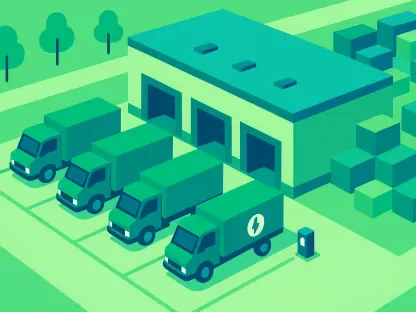
The adoption of electric vehicle fleets has transitioned from an environmental goal to a financial necessity. Integration of alternative energy vehicles is accelerating as a hedge against future price spikes, with many logistics firms planning to convert significant portions of their fleets between 2026 and 2028. This transition represents a fundamental shift in capital allocation, where the high initial cost of electric mobility is viewed as a safeguard against the unpredictable nature of global energy indices.
Overcoming Operational and Financial Obstacles
The high-frequency, low-density nature of last-mile parcel delivery represents a major point of vulnerability in the current economic climate. Delivering a single small package to a residential villa requires nearly the same fuel expenditure as a bulk drop-off, making the “free delivery” model increasingly unsustainable. To combat this, companies are implementing aggressive shipment consolidation strategies and focusing on reducing failed deliveries, which effectively double the carbon and cost footprint of a single transaction.
Specialized transport services, such as chauffeur providers and premium delivery apps, have reported up to a 40% increase in fuel-related expenses. For companies like Ride Skipper, which operate high-mileage fleets, the dilemma involves balancing capital expenditure against ongoing margin erosion. Choosing to invest in a new, fuel-efficient fleet requires significant liquid capital, yet staying with traditional diesel vehicles leads to a continuous drain on operational profits that could eventually threaten business viability.
Regulatory Landscape and Global Compliance Standards
Global freight complexity has intensified as logistics providers navigate longer transport routes and alternative gateways necessitated by regional instability. These changes often result in higher fuel burn and increased labor costs, making compliance with international shipping standards more expensive. To maintain transparency, many firms have adopted market-indexed surcharges for jet and bunker fuel, ensuring that price increases are clearly linked to global benchmarks rather than arbitrary internal adjustments.
Environmental regulations in the UAE are further accelerating the pivot away from heavy diesel reliance as the nation aligns with global carbon standards. These sustainability mandates are no longer just about corporate social responsibility; they are becoming hard regulatory requirements that influence everything from vehicle procurement to warehouse operations. The move toward a greener supply chain is viewed as the only viable path to long-term compliance and financial stability in an energy-expensive world.
The Future of Retail Fulfillment in the UAE
The concept of “free delivery” is being redefined through the implementation of higher minimum order thresholds and the migration of express services behind premium paywalls. Retailers are finding that they can no longer absorb the full cost of delivery, leading to a shift where consumers are incentivized to choose slower, consolidated shipping methods. This change reflects a growing trend toward “green delivery” loyalty programs, where customers receive rewards for making choices that reduce the logistical burden on the provider.
Innovation in fulfillment is also taking the form of autonomous delivery solutions and the expansion of micro-fulfillment centers. By decentralizing the supply chain and placing goods closer to the end consumer, businesses can significantly reduce the physical distance of the last mile. This logistical evolution minimizes the impact of fuel price volatility while simultaneously reducing the carbon footprint of every order, creating a more resilient retail ecosystem that is less dependent on traditional transportation methods.
Sustaining the Delivery Ecosystem in a High-Cost Era
The transition from a passive observation of market trends to active operational restructuring became the defining characteristic of the UAE logistics sector during this period. Businesses realized that the era of predictable energy costs had passed, and the most successful organizations were those that prioritized technological resilience and asset-light modeling. The industry recognized that maintaining the status quo was no longer a viable strategy for long-term growth or profitability.
Strategic recommendations for the coming years focused on the necessity of data-driven decision-making and the integration of sustainable infrastructure. The investment outlook remained positive for companies that embraced logistics technology and sought a new economic equilibrium independent of fuel spikes. These shifts suggested that the delivery ecosystem could indeed be sustained, provided that providers and consumers alike accepted a more disciplined approach to the costs of convenience.