
The silence of a forty-ton semi-truck navigating a high-speed interstate without a human occupant marks the definitive end of the experimental era for autonomous logistics. This shift represents a fundamental transformation in how goods move across the global supply chain, moving beyond simple pilot programs into the realm of mission-critical infrastructure. As the industry matures, the focus has shifted from whether a vehicle can drive itself to how effectively these systems can be integrated into the existing complex web of retail and industrial operations.
The Autonomous Freight Logistics sector serves as a response to the compounding pressures of labor shortages, rising fuel costs, and the relentless demand for faster delivery cycles. By removing the constraints of human rest requirements, autonomous systems offer a level of asset utilization that was previously impossible. This review examines the current state of the technology, specifically focusing on the leaders who have successfully moved from supervised trials to unsupervised commercial operations.
Evolution and Fundamentals of Autonomous Trucking
The journey toward fully autonomous freight began with simple Advanced Driver Assistance Systems (ADAS) and has rapidly progressed toward Level 4 automation, where the vehicle can perform all driving functions within specific conditions. In the early stages, the technology was largely experimental, characterized by bulky sensor arrays and limited operational domains. However, the maturation of machine learning and the plummeting costs of high-resolution LiDAR have turned these experiments into viable commercial products.
At its core, autonomous trucking relies on a fusion of disparate sensor data to create a real-time, three-hundred-sixty-degree view of the environment. Unlike passenger cars, heavy-duty trucks require significantly longer look-ahead distances due to their massive braking requirements. Consequently, the evolution of this field has been defined by the development of long-range perception systems and the processing power necessary to make split-second decisions at seventy miles per hour. This context is vital for understanding why recent breakthroughs in “driver-out” operations are considered the most significant milestone in the history of transportation since the invention of the internal combustion engine.
Core Architectural Components of the Kodiak Driver
Modular Hardware and Retrofit Integration
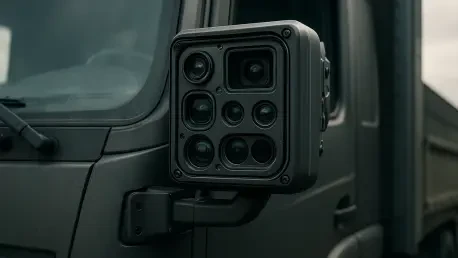
One of the most significant hurdles in autonomous logistics has been the difficulty of maintaining a specialized fleet of vehicles. Kodiak has addressed this by developing a modular hardware system known as SensorPods. These units are designed to replace the standard side-view mirrors of a truck, housing all the necessary sensors, including cameras, LiDAR, and radar. This architectural choice is brilliant because it utilizes a pre-existing mounting point on the truck, simplifying the retrofit process and ensuring that sensors are positioned for an optimal field of view.
The modularity extends to the maintenance cycle, which is a critical factor for logistics companies operating on razor-thin margins. If a sensor fails or is damaged by road debris, the entire pod can be replaced in minutes rather than days. This differs significantly from many competitors who integrate sensors directly into the vehicle’s bodywork or roofline, making repairs a specialized and time-consuming endeavor. By prioritizing serviceability, the technology becomes a practical tool for fleet managers rather than a fragile laboratory prototype.
AI-Enhanced Software and Driver-as-a-Service Models
The software layer of the autonomous driver acts as the cognitive center, utilizing deep learning to predict the behavior of other road users. Kodiak utilizes a “thin” software stack that prioritizes efficiency and reliability, allowing the system to process massive amounts of data with minimal latency. This AI does not just follow a pre-programmed path; it understands the intent of surrounding vehicles, such as a car merging aggressively or a pedestrian lingering near an on-ramp. This predictive capability is what allows the truck to operate safely in the chaotic environments of Texas interstates.
Furthermore, the implementation of a Driver-as-a-Service (DaaS) model has redefined the economic relationship between technology providers and freight carriers. Instead of selling a one-time hardware package, providers offer the autonomous “driver” as a recurring service. This ensures that the software is constantly updated with the latest safety patches and mapping data. For the end-user, this model shifts the cost from a massive capital expenditure to a predictable operational expense, making the transition to automation far more accessible for established retail chains.
Current Trends in Unsupervised Long-Haul Logistics
The current year has seen a decisive move away from safety-driver-monitored trials toward “driver-out” or unsupervised operations. This trend is driven by a growing confidence in safety validation frameworks and a desperate need for efficiency in the mid-mile segment. Industry leaders are no longer satisfied with proof-of-concept runs; they are now demanding fully autonomous loops where the truck manages the entire highway portion of the journey. This shift is particularly visible in regions with favorable weather and legislative environments, such as the American Sunbelt.
Moreover, there is a visible trend toward the hybridization of human and machine labor. In this model, human drivers handle the complex “first” and “last” miles, navigating cramped urban streets and loading docks, while autonomous trucks manage the long, monotonous highway stretches. This approach maximizes the strengths of both parties: the human’s superior spatial reasoning in tight spots and the machine’s unwavering attention during hours of interstate cruising.
Real-World Implementations Across Industrial and Retail Sectors
The Texas Freight Corridor and IKEA Global Strategy
The partnership between IKEA and Kodiak on the Texas freight corridor stands as a primary example of how autonomous technology is being integrated into global retail strategies. By utilizing the 220-mile stretch between Dallas and Houston, IKEA has effectively automated a vital artery of its supply chain. This is not merely a technical test; it is a live operational environment where merchandise is moved daily to meet consumer demand. The success here has provided a blueprint for how IKEA might scale these operations across other markets between 2026 and 2028.
For IKEA, the value proposition goes beyond simple cost savings. Autonomous trucks provide a level of predictability that human drivers cannot match. The trucks do not require breaks, they maintain consistent speeds for optimal fuel efficiency, and they provide a constant stream of data that allows for precise inventory management. This integration has allowed the retailer to move toward a more “fluid” supply chain model, where inventory is in constant motion, reducing the need for massive, static warehouse storage near retail centers.
Mid-Mile Expansion in Major Retail Chains
While long-haul trucking often gets the most attention, the “mid-mile” expansion is where the most immediate impact is being felt. Companies like Walmart and PepsiCo have aggressively deployed autonomous box trucks to handle the shuttle runs between distribution centers and retail outlets. These routes are often repetitive and predictable, making them the perfect candidates for early-stage full automation. By focusing on these hub-to-hub movements, retailers can eliminate the most expensive and labor-intensive segments of the logistics chain.
The uniqueness of this implementation lies in the sheer frequency of the runs. Unlike a long-haul truck that might be on the road for days, mid-mile autonomous vehicles often perform multiple round trips in a single shift. This high frequency generates a massive amount of data, which is then used to refine the AI models even further. This creates a virtuous cycle where the more a truck drives, the safer and more efficient it becomes, eventually leading to a point where the cost per mile is significantly lower than any human-driven alternative.
Technical Barriers and Safety Validation Challenges
Despite the rapid progress, several technical hurdles remain, particularly regarding “edge cases”—those rare, unpredictable events that occur on the road. Navigating a sudden flash flood in Texas or responding to a multi-vehicle accident that has closed all lanes requires a level of reasoning that still challenges current AI systems. While sensors can see through some obstructions, the ability to interpret a complex scene and make a safe “fail-to-safe” maneuver is still being refined through millions of miles of simulation and real-world testing.
Regulatory hurdles also persist, as there is currently no unified federal framework for autonomous trucking in the United States. Companies must navigate a patchwork of state laws, which complicates the process of cross-border freight. Furthermore, public perception remains a challenge. Proving that an eighty-thousand-pound driverless vehicle is safer than one with a human behind the wheel requires an unprecedented level of transparency and data sharing. Ongoing efforts to standardize safety validation metrics are critical to overcoming these market obstacles.
The Future of Autonomous Supply Chain Infrastructure
Looking ahead, the infrastructure itself will likely evolve to accommodate autonomous fleets. We are moving toward a period between 2026 and 2030 where “autonomous-only” lanes and specialized transfer hubs become the norm. These hubs will act as the hand-off points where autonomous long-haul trucks drop off trailers to be picked up by human-driven local trucks. This specialized infrastructure will reduce the complexity that autonomous systems have to handle, thereby speeding up the timeline for widespread adoption.
Furthermore, the integration of Vehicle-to-Everything (V2X) communication will allow trucks to “talk” to the road and each other. Imagine a scenario where a truck several miles ahead encounters a hazard and instantly broadcasts that data to every other autonomous vehicle in the vicinity. This collective intelligence will make the entire logistics network safer and more resilient. The long-term impact will be a supply chain that is essentially “invisible” and “always-on,” capable of adjusting to demand fluctuations in real-time without the limitations of human labor cycles.
Final Assessment of Autonomous Freight Progress
The transition of autonomous freight from a series of high-profile experiments to a functional pillar of the retail industry successfully proved the viability of Level 4 technology. The partnership between Kodiak and IKEA established that driverless operations could be safe, reliable, and economically superior to traditional methods. By focusing on modular hardware and flexible software models, the industry overcame the initial barriers of maintenance and integration, allowing for a smoother adoption curve among traditional logistics providers.
The move toward unsupervised operations in the Texas corridor demonstrated that the technology had finally caught up with the industry’s ambitions. While challenges regarding edge cases and regulatory uniformity remained, the data collected from hundreds of thousands of incident-free miles provided a compelling case for the future. Moving forward, the focus must shift toward creating the physical and digital infrastructure necessary to support these fleets at scale. The success of these early implementations indicated that the autonomous supply chain was no longer a distant possibility, but an active reality that would continue to redefine global commerce for decades to come.