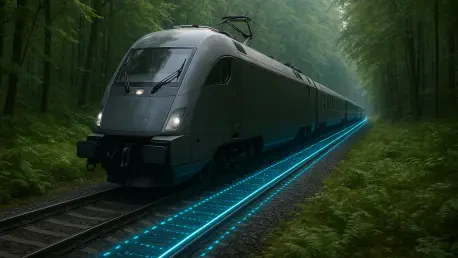

The once-unassailable reputation of German engineering faces a historic crossroads as passengers navigate a rail network defined more by structural decay than by the legendary precision of the past. Deutsche Bahn, the national operator, is currently grappling with a legacy of underinvestment that has transformed its trains into symbols of unpredictability across the European continent. To address this crisis, the company is betting heavily on artificial intelligence and automation to modernize operations that have remained stagnant for decades. This pivot represents a fundamental shift in strategy, aiming to replace manual processes with high-tech solutions while attempting to regain public trust. However, the path to a digitized railway is paved with more than just software updates; it requires a massive overhaul of physical assets. The success of this transition will determine whether Germany can maintain its role as a logistics hub in an automated economy.
High-Tech Aspirations: The Drive for Rail Automation
Automated Depot Operations: Precision Sensors in Practice
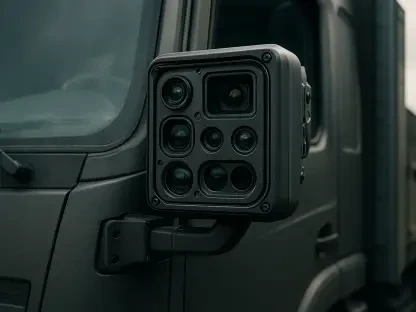
At the heart of this digital overhaul lies the “Automated Train” project, a sophisticated prototype designed to navigate rail depots without human intervention at speeds up to 40 kilometers per hour. This system utilizes a complex array of hardware, including LiDAR scanners, infrared cameras, and ultrasonic sensors, to create a real-time digital map of the environment and detect potential hazards on the tracks. By integrating these various data streams, the locomotive can execute automated braking maneuvers and precise positioning during shunting operations, which are traditionally labor-intensive and prone to human error. This technological leap is not merely about replacing the driver but about enhancing the safety and throughput of terminal operations where bottlenecks frequently occur. Developers are focusing on making these systems robust enough to handle diverse weather conditions, ensuring that these sensors can improve the time required to prepare trains.
Economic Growth: Financial Efficiency and Predictive Analytics
The financial implications of successfully implementing artificial intelligence in the rail sector are staggering, with industry analysts suggesting a potential global cost reduction of nearly 79 billion dollars. This economic windfall is primarily driven by predictive maintenance, a strategy where AI algorithms analyze data from thousands of sensors on trains and tracks to identify wear and tear before a failure occurs. Instead of following a rigid maintenance schedule, operators can perform targeted repairs exactly when needed, thereby extending the lifespan of expensive equipment and reducing the frequency of service interruptions. For a company like Deutsche Bahn, which manages an immense fleet of locomotives, the ability to anticipate mechanical issues represents a major shift toward operational stability. This proactive approach not only saves money on parts and labor but also ensures that more trains remain in active service during peak travel periods for passengers in the region.
Systemic Barriers: Infrastructure and Labor Realities
Infrastructure Deficits: The Digital Signaling Prerequisite
Despite the optimism surrounding AI, Germany’s rail modernization is currently hampered by a digital foundation that remains remarkably thin compared to its international peers. While countries like China have been operating high-speed autonomous trains for years, less than two percent of the German network is currently equipped with the European Train Control System. This critical technology is the prerequisite for advanced automation, as it allows trains to communicate with the track and each other without relying on physical signals. Without a widespread rollout of this digital signaling infrastructure, the most sophisticated AI software remains largely ineffective, unable to exert real-time control over train movements. The current state of the network reflects decades of prioritized road construction and deferred maintenance, leaving a patchwork of systems that often fail to interact correctly. This lack of standardization complicates the introduction of technology.
Labor Relations: Bridging the Gap Between AI and Humans
The shift toward automation has sparked a complex debate within the labor force, particularly among the ranks of train drivers and maintenance technicians who fear for their professional future. Organizations like the train drivers’ union have expressed skepticism regarding the motives behind digitalization, suggesting that the drive for efficiency might serve as a pretext for cutting jobs and reducing employee benefits. While startups focused on rail automation argue that AI will actually assist drivers by taking over repetitive tasks, the fear of complete displacement remains a central friction point in labor negotiations. This tension highlights the necessity of a social contract that includes retraining programs and career pathways for workers whose roles are being transformed by technology. Rather than eliminating positions, the goal should be to repurpose human expertise toward oversight and managing complex anomalies that AI is not yet equipped to handle at this stage of development.
Strategic Roadmaps: Ensuring Global Competitiveness
The journey toward a revitalized German rail system required a fundamental reassessment of how technology and policy intersected on the national stage. Leaders recognized that while 100 billion euros in funding provided a necessary financial boost, the real solution lay in restructuring the regulatory environment to foster faster innovation cycles. Stakeholders prioritized the rapid expansion of the digital signaling backbone, which served as the essential platform for all subsequent AI applications. This technological foundation allowed for more flexible scheduling and significantly higher reliability, which eventually restored the public’s confidence in rail travel. Furthermore, a new framework for public-private partnerships emerged, enabling tech firms to integrate their solutions directly into the state-owned infrastructure with fewer bureaucratic delays. This approach shifted the focus from merely maintaining the status quo to pioneering new standards across the Union.