
With decades of leadership in the global logistics sector, Rohit Laila has developed a keen eye for the infrastructure shifts that dictate the flow of world trade. From the intricacies of supply chain management to the cutting-edge innovations in port automation, his expertise provides a unique lens through which we can view the massive scale of modern maritime operations. In this discussion, we analyze the ambitious roadmap of Tianjin Port, a facility that serves as the lifeblood of North China’s trade and is currently undergoing a transformative expansion. We explore the strategic drivers behind their massive capacity targets, the technological leap toward zero-carbon operations, and the physical engineering required to host the world’s largest vessels.
Tianjin Port has set a staggering goal to reach an annual capacity of 35 million TEU by 2035; how does such an ambitious leap from its current 24.03 million TEU baseline redefine its role in the global supply chain?
This jump of nearly 11 million TEU represents a fundamental shift in how North China interacts with the global market. By aiming for 35 million TEU, the port is positioning itself as a critical coastal pivot that can handle the relentless pressure of modern cross-border trade. It is an exhilarating challenge that requires a complete overhaul of how we think about berthing ultra-large ocean-going vessels. When you see the sheer scale of the 24.03 million TEU handled in 2025, you realize that moving to the next level requires more than just space—it requires a strategic vision that secures Tianjin’s spot as a globally influential maritime hub for decades to come.
To support this massive expansion, the port is undertaking significant physical upgrades including new terminals and waterway projects; what are the most critical components of this technical transformation?
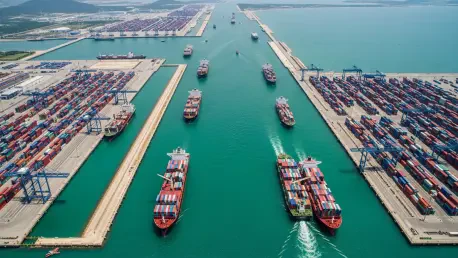
The blueprint is incredibly comprehensive, involving six functional zones and the management of over 220 existing berths. We are looking at three brand-new terminal construction projects and the renovation of ten existing ones, which will ultimately add ten new berths to the port’s footprint. Perhaps the most impressive feat is the dredging of waterways to accommodate 300,000-ton vessels, ensuring that even the most massive container ships have all-weather entry and departure. Building five new navigation channels is a massive undertaking that will eliminate the bottlenecks that often plague aging ports. It’s about creating a seamless flow where the largest ships on the ocean can dock without being held back by tides or depth limitations.
Tianjin is gaining attention for its smart, zero-carbon container terminal; how does integrating this kind of innovative technology change the operational reality for a port of this magnitude?
The development in the Beijiang port area feels like stepping into the future of logistics because it hosts the world’s first smart zero-carbon container terminal. It proves that high-volume throughput doesn’t have to come at the expense of the environment, leading the industry in green and digital development. This intelligent transformation means using data to optimize every move of a container, reducing waste and energy consumption simultaneously. It’s a sensory shift where the old, loud, diesel-fumed docks are replaced by quiet, efficient, and technologically advanced systems that work around the clock.
With connections to over 500 ports worldwide, Tianjin is clearly a dominant force; how does its strategic location on the Bohai Sea enhance its influence over international trade routes?
The port’s location makes it the indispensable gateway for North China, acting as a heartbeat for the region’s economy. Currently, it operates 145 container shipping routes that stretch across more than 180 countries and regions, creating a massive web of connectivity. This level of reach means that Tianjin isn’t just a local player; it’s a vital node that keeps the global supply chain moving smoothly. When a port links up with 500 different locations, it creates a resilient network that can adapt to the shifting tides of international commerce.
What is your forecast for the future of maritime hubs as they approach the mid-2030s?
I believe we will see a dramatic polarization between ports that embrace the Tianjin model of intelligent, high-capacity growth and those that fail to modernize. By 2035, the standard for a global hub will include the ability to handle 300,000-ton ultra-large vessels as a baseline requirement, not a luxury. We will see the zero-carbon label move from being a pioneer’s badge to a mandatory regulatory standard for entering international waters. The success of Tianjin’s 35 million TEU target will likely inspire a new wave of smart hubs that prioritize digital efficiency and environmental stewardship over mere physical size. It’s a bright, albeit demanding, future where technology finally catches up to the massive physical demands of global trade.