
Rohit Laila brings a wealth of knowledge to the table, having spent decades navigating the complexities of global supply chains and the nuances of the logistics sector. His passion for innovation is particularly relevant as we witness a transformative period for Europe’s trade routes, where environmental shifts are rewriting the rules of the game. Currently, the Rhine River, a vital artery for the continent’s industrial heartland, is facing a crisis of unprecedented proportions. With water levels at the Kaub gauge dropping to historic lows, the very foundation of barge-based transport is being shaken, forcing a massive logistical pivot that impacts everything from energy security to chemical production across Germany, Switzerland, and the Netherlands. Understanding the gravity of these shifts is essential for any professional looking to maintain resilience in a volatile market.
The Kaub gauge recently hit a record low of six centimeters, though the navigable channel is deeper. What does this specific measurement represent for the physical reality of moving freight along the Rhine?
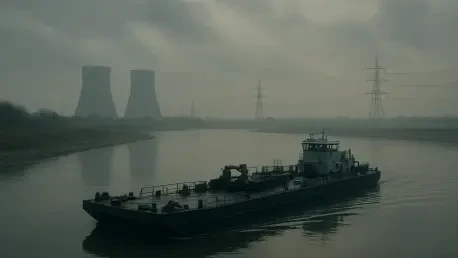
The 6cm reading at the Kaub gauge is a staggering departure from the previous 25cm low recorded back in 2018, and it fundamentally alters the logistics landscape of the Middle Rhine. While the actual navigable channel remains roughly one meter deeper than the gauge suggests, the margin for operational safety has essentially evaporated for most heavy-duty vessels. You can sense the palpable tension among barge captains as they calculate draughts down to the last centimeter, knowing that the slightest miscalculation could lead to a grounding that blocks the entire channel. This isn’t merely a weather anomaly; it is a physical logistics shift that forces ships to travel with significantly lightened loads, often carrying only a fraction of their usual capacity to stay afloat. This reduction in volume means that many more sailings are required to move the same amount of fuel or chemicals, causing freight charges to skyrocket as vessel availability tightens across the entire network.
As water levels fall and barges are forced to carry smaller loads, many companies are looking toward road and rail as alternatives. What are the primary obstacles preventing a seamless shift to these other transport modes?
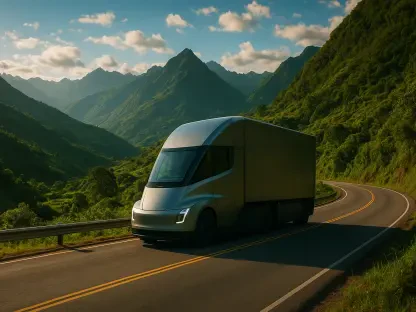
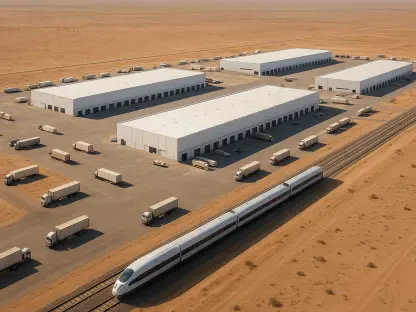
Shifting freight to road and rail sounds like a simple solution on paper, but in reality, it is a frantic scramble for finite resources that were never designed to handle this kind of sudden surge. Road transport is generally far more expensive for bulk goods like minerals, grain, and steel inputs, and the environmental cost is reflected in the heavy scent of diesel and the sight of endless truck queues clogging the highways. Rail networks face their own set of rigid constraints, as locomotives, specialized wagons, and qualified drivers cannot be summoned out of thin air to replace the massive carrying capacity of a single inland barge. We are seeing a fierce competition for terminal space and rail paths, where the cost of logistics is no longer just a line item but a central threat to the viability of the entire supply chain. This bottleneck effect means that even if you have the goods ready to move, there is simply no physical “pipe” large enough to transport them efficiently once the river fails to provide the necessary depth.
How is this crisis currently manifesting within high-exposure sectors like chemical production and energy distribution, and why is the consequence described as gradual rather than binary?
The consequences for the chemical and energy sectors are especially profound because these industries operate on a rhythmic, “just-in-time” basis that relies on the Rhine’s high-volume throughput. Instead of a binary “on-off” switch where everything stops at once, the crisis manifests as a gradual erosion of margins; the first signs are not empty warehouses but ballooning logistics bills that plants along the river must somehow absorb. Energy companies are particularly exposed as they struggle to move fuels and commodities to distributors who are losing the flexibility they need to heat homes or power industrial furnaces. We see traders and manufacturers desperately trying to secure land-based capacity before their competitors do, creating a high-stakes environment where the smallest delivery delay can ripple through a global production line. It is a grueling test of endurance for industrial centers in Germany and Belgium, where the focus has shifted from growth to simple survival in a resource-constrained environment.
Given that the Rhine is an ecological system and not a simple canal, what long-term strategies should governments and industries prioritize to adapt to these recurring low-water events?
Moving forward, we have to treat the Rhine’s vulnerability as a core pillar of industrial policy rather than an occasional seasonal headache that we can just ignore during the rainy months. This involves a massive investment in vessel design, specifically developing barges that can carry commercially viable loads at much shallower draughts to maintain resilience during these periods of extreme drought. However, we must also recognize that the Rhine is a delicate ecological system and an international waterway, not a man-made canal where we can simply dredge our way out of every problem without considering the environmental fallout. Better forecasting and digitized inventory management will help companies adjust their bookings earlier, but the real solution lies in strengthening the “intermodal” connections at every port to allow for seamless transitions between water and rail. The current 6cm record at Kaub is a clear warning that our infrastructure must adapt to a new climate reality if we want to preserve the competitiveness of the European heartland.
What is your forecast for the Rhine’s role in European logistics over the next few years?
I forecast that by 2028, the Rhine will transition from a reliable highway to a high-tech “variable-capacity” corridor where logistics is managed by AI-driven predictive modeling. Companies will no longer rely on a single mode of transport; instead, they will utilize a resilient “syncromodal” strategy that automatically reroutes cargo to rail or smaller, specialized shallow-water vessels the moment the Kaub gauge dips below 30cm. We will likely see the emergence of “logistics buffers”—strategic stockpiles located at key rail-river junctions—to absorb the shocks of these increasingly frequent low-water events. While the Rhine will remain the lifeblood of European industry, its role will be supported by a much more robust and flexible land-based infrastructure that can take the strain when the water recedes. The high cost of this adaptation will be the new baseline for doing business in the region, but it is a necessary price to pay for securing the supply chains against the volatility we are seeing today.