
Rohit Laila has spent decades navigating the complexities of the global supply chain, witnessing firsthand the transformation of how goods move across continents. With a deep passion for innovation and a keen eye for logistics strategy, he understands the delicate balance between legacy technology and modern market demands. In this conversation, we delve into the strategic expansion of freighter fleets, the impact of maritime crises on air cargo volumes, and the emerging dominance of new trade routes connecting Asia to Africa.
The Boeing 747-400 has long been a staple of the skies, but why does it remain the undisputed primary choice for heavy-lift operations in today’s modern logistics landscape?
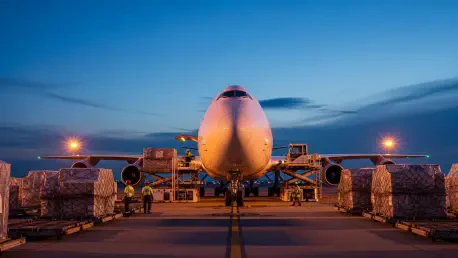
The Boeing 747-400 is often referred to as the workhorse of the industry for a very specific reason: its sheer capability to handle high-volume general cargo and oversized freight is simply unmatched. When Network Airline Management added their fifth B747-400 converted freighter to the fleet this past July, it wasn’t just about increasing numbers; it was about securing a platform that can manage specialized shipments that other aircraft might struggle with. There is a certain confidence that comes with this aircraft’s heavy-lift capacity, allowing operators to handle the most demanding global routes with ease. Watching one of these giants take off from a hub like Liege reminds you that, despite newer models entering the market, the 747 remains the backbone of reliable, large-scale air logistics.
Given the recent volatility in global shipping, how have disruptions in maritime corridors like the Red Sea influenced the shift back toward air cargo?
The volatility we’ve seen recently, particularly the Red Sea missile crisis and the closure of the Strait of Hormuz, has created a sense of urgency that only air cargo can address. We’ve observed a fascinating trend where exporters of perishables, specifically those shipping flowers from Nairobi back to Europe, have abandoned their plans to switch to ocean freight. The uncertainty of container shipping forced these businesses to prioritize speed and reliability to ensure their delicate products didn’t wither away in a stalled ship. This shift has sustained and even boosted regular business for Boeing 747-400 freighter operations, proving that air cargo is the essential safety net when sea routes become too risky.
With changing regulations in the US and Europe, how are e-commerce giants adapting their logistics strategies, and what role does Africa play in this shift?
E-commerce remains a powerhouse of growth, but it is definitely entering a new phase as the US ends the de minimis exemption and the EU prepares for a €3 charge on imports. These policy changes have prompted online retailers to look beyond traditional Western markets and target alternative regions like Africa to maintain their momentum. We are seeing this manifest in new scheduled charter routes between Hong Kong and Johannesburg, which commenced in 2026 to capture this rising demand. The volumes remain incredibly strong, and by diversifying into the African market, these retailers are effectively finding new ways to grow despite the introduction of new duties in the West.
How does the addition of a fifth freighter specifically enhance the operational flexibility and reach of a global air cargo network?
Adding that fifth aircraft to the fleet, all of which are Boeing 747-400Fs operated by Air Atlanta, is a massive statement of intent regarding operational capability. It allows for a much higher frequency of service to critical destinations such as Sharjah, Lagos, Accra, Entebbe, and Nairobi. This expansion isn’t just about moving more boxes; it’s about having the flexibility to handle charter and scheduled services simultaneously without compromising on delivery times. Having that extra capacity means the network can react instantly to customer demand, ensuring that robust and reliable capacity is always available in an unpredictable market.
What is your forecast for the future of specialized air freight fleets?
I anticipate that we will see a continued reliance on converted freighters like the 747-400 as long as global supply chains face geopolitical instability and the e-commerce boom persists. Companies will likely continue to expand their fleets to keep pace with demand, but they will do so with a focus on strategic hubs like Liege that offer the best connectivity to emerging markets. The heavy-lift sector will remain vital, and we should expect more carriers to look toward versatile aircraft that can bridge the gap between volatile sea routes and the need for rapid global distribution.