
Rohit Laila has spent decades navigating the complexities of global supply chains, witnessing the evolution of logistics from simple freight movement to high-tech data ecosystems. As the industry faces a pivotal moment in labor relations and operational safety, his insights into the latest multi-billion dollar investments reveal a shift toward a more human-centric, technology-augmented delivery model. This conversation explores how massive financial injections are being translated into daily improvements on the ground, covering the nuances of driver compensation, the deployment of augmented reality in the “last mile,” and the integration of predictive safety systems within massive electric vehicle fleets.
With Amazon investing $1.9 billion into the Delivery Service Partner program, how will these funds be distributed between driver wage increases and operational infrastructure? What specific metrics will determine if this 16% pay growth over three years is keeping pace with regional cost-of-living shifts?
The distribution of the $1.9 billion investment is designed to give small business owners the flexibility to address the unique economic pressures of their specific regions. While a significant portion is earmarked to push the national average driver wage to nearly $24 an hour, these funds also cover the rising costs of maintaining a modern, high-tech fleet. We are seeing an expected average pay increase of about $1 per hour, which contributes to a cumulative 16% growth in earnings over the three-year period starting from the recent past. To ensure this keeps pace with the real world, partners look at local labor market data and retention rates as their primary metrics. When you see a driver feeling the tangible relief of a higher paycheck while driving a van equipped with better safety tech, you know the investment is hitting the mark.
Surround-view cameras and road hazard alerts are being integrated into half of the electric van fleet by the end of this year. How do these automated routing adjustments improve driver safety during inclement weather, and what training protocols help drivers transition to using hands-free smart glasses and headlamps?
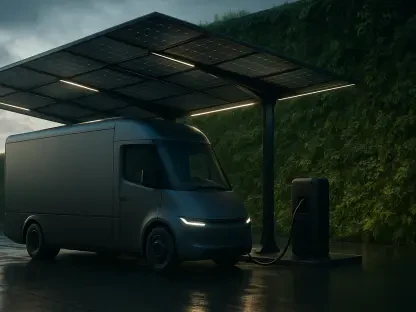
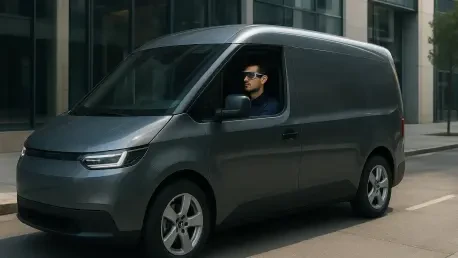
The integration of surround-view cameras into the Rivian electric fleet creates a protective digital cocoon around the driver, specifically designed to detect the sudden movements of cyclists and pedestrians in crowded areas. When the weather turns sour, the navigation system doesn’t just show a map; it actively reroutes the driver away from flooded streets or construction zones without them ever having to touch a screen. This hands-free approach is vital for maintaining focus when visibility is low and the roads are slick. Transitioning to smart glasses and headlamps involves specialized “on-the-job” training where drivers learn to trust the digital overlays for navigation and address checks. It feels like a futuristic leap, but once a driver experiences the ease of having their hands free to carry a heavy parcel while their glasses illuminate the path and verify the house number, they rarely want to go back to the old ways.
Serious vehicle crashes reportedly fell by 23% through the use of camera-based coaching. How do delivery partners use specific driving patterns to mentor their teams, and what role does the identification of 202 million parking locations play in reducing on-road incidents?
The 23% reduction in serious crashes is a direct result of moving away from generic safety lectures to data-driven, personalized coaching. Using Netradyne camera systems, delivery partners can identify specific habits like late braking or distracted glances and turn those moments into constructive learning opportunities. The psychological weight of searching for parking is also a major factor in accidents, which is why identifying 202 million precise parking locations is such a game-changer. When a driver knows exactly where to pull over, they spend less time making risky U-turns or double-parking in dangerous spots. It replaces the frantic scanning of a busy street with a calm, pre-planned stop, which significantly lowers the stress levels that lead to collisions.
Smart delivery glasses now feature address checks and hands-free scanning to assist with navigation. How does this technology specifically reduce the cognitive load for drivers in high-density downtown areas, and what is the step-by-step process for integrating these devices into daily routes?
In a dense downtown environment, a driver’s brain is often overtaxed by the need to watch for traffic, find parking, and verify complex delivery instructions all at once. By moving navigation and address verification directly into the driver’s line of sight through smart glasses, we eliminate the “constant glance” at a handheld device, which is a major source of mental fatigue. The integration process starts at the warehouse, where the driver syncs the device to their route, followed by a hardware check of the built-in headlamp and scanner. As they move through their shift, the glasses provide a seamless flow of information that makes the last 100 feet of a delivery feel intuitive rather than a puzzle. With over 20,000 devices expected to be in active use by the end of next year, this is quickly becoming the new standard for urban logistics.
Mapping tools have identified millions of building entrances and mailrooms to streamline the delivery process. How does this data-driven approach account for visibility issues after sunset, and what impact does precise entrance data have on the overall efficiency of a standard delivery shift?
Efficiency in logistics is often won or lost in the minutes spent wandering around a large apartment complex looking for the right door. By mapping 2.8 million building entrances and 85,000 mailrooms, the system provides a “digital breadcrumb trail” that guides the driver directly to the drop-off point, even when it is pitch black outside. The mapping tools now account for reduced visibility after sunset, prioritizing routes and entrances that are well-lit or more accessible during evening hours. This level of precision can save a driver significant time over an eight-hour shift, reducing the physical strain of unnecessary walking and the frustration of missed turns. It’s about making the work predictable and smooth, regardless of the time of day or the complexity of the building layout.
Amazon has committed $70 million to community initiatives like the Local Good program. How do delivery partners select which nonprofits to support, and what logistical challenges arise when balancing commercial deliveries with community-focused philanthropic missions?
The $70 million commitment allows delivery partners to act as local anchors, choosing nonprofits that resonate with the specific needs of their neighborhoods. These selections are often grassroots-driven, focusing on organizations where the partner’s delivery fleet can provide the most tactical help, such as transporting food or essential supplies. The primary logistical challenge is “route density balance”—the art of weaving a nonprofit delivery into a standard commercial route without compromising speed for the customer. It requires sophisticated scheduling to ensure that a van dropping off supplies at a local shelter is also positioned perfectly for its next Prime delivery. When done right, it creates a sense of pride for the drivers who see their work directly benefiting the streets they drive every day.
What is your forecast for the future of the Delivery Service Partner model?
I forecast that the DSP model will evolve into a fully tech-integrated micro-entrepreneurship ecosystem where the line between a “delivery driver” and a “technology operator” becomes increasingly blurred. We will see the $1.9 billion investment serve as a foundation for even deeper automation, where AI doesn’t just suggest routes but actively manages the health and well-being of the driver in real-time. As pay scales continue to rise to meet the complexities of the job, these small businesses will become the primary testing grounds for autonomous support tools and green energy infrastructure. Ultimately, the model will shift from high-volume package moving to a high-precision service industry, where the driver is supported by an invisible, intelligent safety net that makes the job safer and more rewarding than ever before.