
Rohit Laila stands as a pillar in the logistics and aviation world, having navigated the complexities of global supply chains for over two decades. His expertise in technology and operational innovation makes him the ideal voice to analyze the recent rescue of a major cargo operation. Today, he breaks down the ambitious plan to revitalize a fleet of Airbus A340s, transforming what was once a struggling venture into a streamlined, profitable asset in the 2026 landscape. We discuss the technical hurdles of maintaining wide-body aircraft, the strategic pivot toward regional hubs, and the financial restructuring necessary to survive in a volatile global market.
European Aviation has reacquired 16 A340 aircraft, including seven flight-ready freighters and a large stock of Rolls-Royce Trent engines. What specific maintenance protocols and logistical hurdles must you clear to return these planes to active service, and how do you prioritize the 14,000 spare parts items?
Returning a fleet of 16 wide-body aircraft to the sky is a monumental task that requires more than just a fresh coat of paint and some fuel. Our first priority is the seven “flight-ready” freighters, where we are performing deep-system inspections and verifying the airworthiness of those Rolls-Royce Trent 553 and 556 engines. With over 14,000 line items of spares, we use a data-driven inventory system to prioritize components that have the highest failure rates or the longest lead times for procurement. There is a specific focus on engines with little time since their last overhaul, as these are the heart of our operational reliability. It is a high-stakes puzzle where our technicians are working around the clock in the hangars, ensuring every gasket and turbine blade meets our rigorous safety standards before a single wheel leaves the tarmac.
These A340-600s utilize a permanent cargo configuration without a traditional main deck cargo door. How does this specific design impact your ground handling speed and efficiency compared to standard freighters, and what unique loading techniques are required to manage the 76t payload capacity?
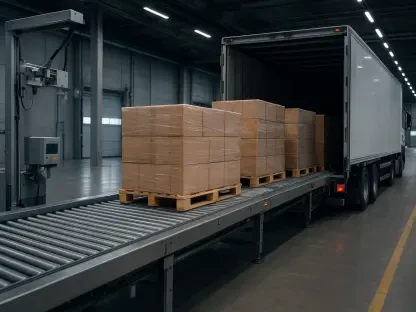
Operating a freighter without a main deck cargo door certainly introduces a unique set of challenges, but it also creates a specialized niche for us. Because we cannot roll large pallets directly onto the main deck, we have optimized our ground handling for e-commerce parcels and smaller bulk items that fit through standard passenger doors. To manage the full 76-ton payload capacity, we utilize specialized conveyor systems and a highly trained ground crew that can manually stabilize the load in the cabin. The smell of fresh jet fuel and the rhythmic hum of the loaders become the backdrop of an intense four-hour turnaround window. This manual intensive process actually works in our favor for e-commerce, where the cargo is often high-volume but lower density, allowing us to maximize every cubic inch of the airframe.
The airline previously struggled when a major customer requested a 30% price reduction amid rising fuel costs and geopolitical tensions. How are you restructuring the company’s cost base to withstand volatile fuel margins, and what strategies will you use to diversify the client base beyond a single dominant partner?
The previous collapse was a sobering lesson in the dangers of over-reliance on a single partner, especially when they demand a 30% price cut during a period of rising fuel costs. We are completely rebuilding the cost base by implementing aggressive fuel hedging and optimizing flight paths to avoid the expensive detours caused by regional conflicts. To diversify, we are moving away from the “one big client” model and instead building a portfolio of dozens of mid-sized e-commerce distributors and freight forwarders. This ensures that no single negotiation can threaten our survival, and it gives us the leverage to walk away from deals that don’t respect our margins. There is a renewed sense of discipline in our boardroom as we balance the need for volume with the absolute necessity of maintaining a healthy profit per flight hour.
Recent financial records showed annual net losses exceeding $25 million despite high revenues from e-commerce routes between China and the UK. What specific operational metrics are you targeting to reach profitability, and how will the integration with the parent company reduce overhead costs compared to the previous administration?
Losing $26 million on $136 million in revenue is a clear sign that the previous overhead was bloated and unsustainable. Our strategy for 2026 is to integrate back-office functions directly with the parent company, which immediately slashes redundant administrative costs and leverages existing HR and legal infrastructure. We are laser-focused on three specific metrics: the cargo load factor, fuel burn efficiency per ton, and the “time on ground” metric, which we need to minimize to keep the assets earning. By consolidating these operations, we are creating a much leaner organization that can turn those high revenues into actual net profit. It feels like we are trimming the fat and hardening the muscle of the company to ensure we never see those eight-figure losses again.
E-commerce shipments were a primary driver for flights into regional hubs like Bournemouth and Teesside. What are the advantages of utilizing these secondary airports for large-scale cargo operations, and how do you plan to scale these routes given the current soft global cargo volumes?
Secondary hubs like Bournemouth and Teesside are our secret weapons because they offer a level of agility that massive airports like Heathrow or Gatwick simply cannot match. At these regional airports, we experience zero congestion, significantly lower landing fees, and a customs clearance process that is lightning-fast, which is critical for “next-day” e-commerce delivery. To scale these routes in a soft market, we are positioning ourselves as the “boutique” alternative for shippers who are tired of their cargo sitting in a warehouse for three days at a major hub. Seeing a massive A340-600 touch down on a regional runway and having the cargo on trucks within sixty minutes is a powerful testament to why this model works. We are betting that speed and personalized service will win out over the sheer scale of our larger competitors.
The current conversion allows these aircraft to potentially return to passenger service in the future. How does this flexibility influence your long-term fleet strategy, and what step-by-step criteria would trigger a decision to revert these airframes back to a passenger configuration?
Retaining the ability to revert to passenger service is a masterful bit of “future-proofing” for our fleet. It provides us with a strategic exit ramp; if the cargo market remains soft while global tourism or business travel sees a massive spike, we can pivot these assets to meet that demand. The criteria for such a conversion are strictly financial: we would need to see a sustained 20% higher yield in passenger revenue per block hour compared to cargo over a 12-month trailing period. Additionally, we would look at the availability of long-term wet-lease contracts that could guarantee the costs of the cabin re-installation. This flexibility gives our investors peace of mind, knowing that we aren’t locked into a single market segment if global economics shift unexpectedly.
What is your forecast for the A340 cargo market?
I believe the A340 cargo market is entering a specialized renaissance, particularly as a bridge for the e-commerce explosion between Asia and Europe. While critics point to the four engines as a fuel liability, the low acquisition cost of these airframes and their massive internal volume make them incredibly profitable when managed with modern logistics technology. Looking ahead from 2026 to 2028, I expect these aircraft to remain the workhorses of the mid-tier cargo market, providing a much-needed “middle ground” between small narrow-body freighters and the massive, expensive 777Fs. As long as consumers continue to demand rapid delivery of online purchases, the A340-600 will have a vital, profitable role to play in the global sky.