
Rohit Laila is a veteran of the logistics world, possessing a career that spans decades and covers every facet of the supply chain from the warehouse floor to global delivery networks. As an expert who has witnessed the industry’s shift from manual tracking to high-speed digital ecosystems, he is deeply passionate about how innovation can solve modern challenges. Today, he shares his insights on the delicate balance between cutting-edge technology and the indispensable human element that keeps global trade moving.
Our conversation explores the major shifts currently reshaping the logistics landscape, specifically focusing on how the integration of artificial intelligence and robotics is transforming the nature of work. We delve into the concept of the augmented workplace, where employee well-being and belonging are prioritized alongside technological efficiency. Furthermore, the discussion covers the critical need for ethical AI governance and the industry’s relentless pursuit of sustainability through electrification and circular supply chain models.
How are wearable sensors and collaborative robotics fundamentally changing the day-to-day experience and safety for frontline logistics workers?
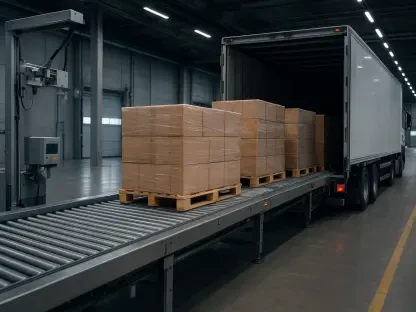
These technologies are finally stripping away the physical “grind” that has historically defined warehouse work. When an employee puts on a wearable sensor or begins their shift alongside collaborative robots, they aren’t just performing a task; they are becoming part of an augmented system designed to protect their health. We are seeing these “cobots” take over the repetitive, heavy lifting that used to lead to burnout, allowing people to transition into roles that require high-level problem-solving and operational oversight. It is a sensory shift for the worker, moving from a physically exhausting environment to one where they act as the intelligent conductor of a high-tech orchestra. By reducing the monotony of moving boxes, we give our people the space to focus on the high-value activities that machines simply cannot replicate.
With AI taking on more autonomous responsibilities in the warehouse, how can leaders ensure that employees still feel a sense of belonging and value?
The rise of the “Augmented Workplace” means that we must treat technology as a partner rather than a replacement for our staff. We are currently reshaping hundreds of roles, spanning from frontline operations to highly technical professions, to ensure that as AI takes the lead on data, humans take the lead on strategy. For a business leader, the challenge is no longer just about the initial rollout of a new tool, but about providing the continuous training and emotional support needed to build real confidence. When an employee sees a digital workplace assistant helping them make a faster decision, they feel empowered rather than sidelined. The goal is to create a culture where technology is seen as a way to enhance human expertise, ensuring that every individual remains the driving force behind the supply chain’s success.
As intelligent systems become embedded in demand forecasting and inventory planning, what steps must be taken to ensure these tools are used responsibly?
As we integrate AI into critical operations like transport decision-making and inventory management, “Responsible AI” must move from a buzzword to a business imperative. This involves a rigorous focus on AI Ethics and what we call Cybersecurity 2.0 to balance our rapid innovation with strict governance and resilience. We cannot simply set these systems on autopilot; robust safeguards and human oversight are more important now than the algorithms themselves. It is about creating a transparent environment where we can audit decisions to ensure they are secure and fair, protecting both the organization and the customers we serve. By building these frameworks today, we ensure that our digital infrastructure remains a trusted foundation for global trade for years to come.
In the push toward a greener future, how is the logistics sector moving beyond simple vehicle upgrades to embrace true circularity and decarbonization?
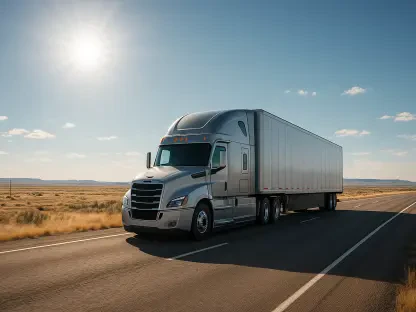
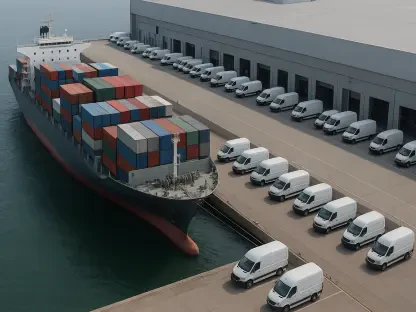
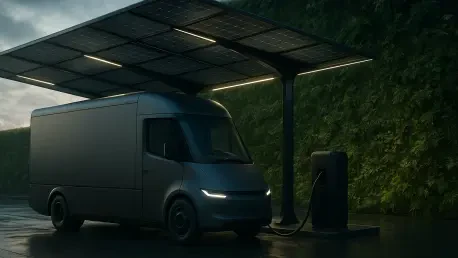
Sustainability has become a core driver of innovation, pushing us to redesign entire supply chains for reuse and resource efficiency. We are scaling up the use of sustainable fuels and expanding both heavy vehicle electrification and light vehicle electrification to drastically cut our carbon footprint. It is no longer enough to just change the fleet; we are looking at circularity, where we rethink how products move back and forth to minimize waste. This transition requires a massive deployment of electric delivery fleets and a commitment to lower-carbon operations that change the very air quality of our logistics hubs. It is an ambitious, long-term commitment that proves we can grow the global economy while still protecting the planet.
What is your forecast for the evolution of the global supply chain over the next decade?
I believe we are entering a period where the “human-plus-machine” model will reach its full maturity, leading to a supply chain that is significantly more resilient and compassionate. Over the next ten years, the trends we are tracking in the Logistics Trend Radar 8.0 will move from emerging innovations to the standard way of doing business, with AI-powered assistants being as common as a forklift once was. We will see the realization of truly circular economies where waste is virtually eliminated through smart logistics and green energy. Ultimately, the successful organizations will be those that realize the future is not about human versus AI, but about how effectively we can combine human intuition with the incredible speed of modern technology. The next decade will prove that even in a world of robots, logistics remains a people business.