
Rohit Laila is a seasoned logistics veteran with decades of experience in supply chain innovation and freight delivery systems. He is a leading voice on how strategic infrastructure investments revitalize local economies, streamline global trade, and integrate emerging technologies into traditional shipping corridors. Our conversation today focuses on the recent $750,000 grant awarded to Fairwinds Terminal Services in Norfolk, Virginia—a move that highlights the growing importance of rail in modernizing maritime logistics and securing the future of the East Coast energy sector.
The following discussion explores the impact of rehabilitating 12,000 feet of track at Fairwinds Landing and its critical role in Virginia’s broader “truck diversion” strategy. We examine the shift toward multi-modal hubs that serve niche markets like defense and offshore wind, the massive scale of the $200 million waterfront upgrade project, and the long-term economic benefits, including the creation of 250 new jobs and the significant reduction of highway congestion across the commonwealth.
How does rehabilitating 12,000 feet of rail at a facility like Fairwinds Landing fundamentally alter its operational capacity and strategic value for the region?
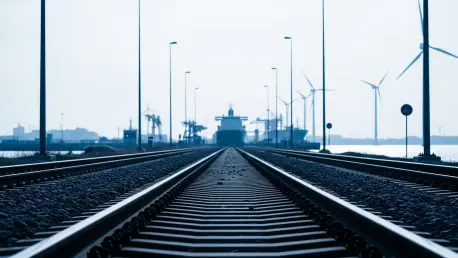
Rehabilitating 12,000 feet of track is essentially like upgrading the main artery of a terminal’s logistics system. With the support of this $750,000 grant, Fairwinds is positioned to move an additional 310 carloads every year, which represents a massive leap in operational efficiency. When you translate those carloads into truck traffic, you are looking at pulling 1,054 heavy vehicles off our local roads and highways annually. This project is a cornerstone of the larger $200 million upgrade designed to turn this 131-acre waterfront facility into a sophisticated multi-function hub that can handle the rigors of modern international trade.
Beyond the immediate track repairs, how does this project illustrate the success of Virginia’s broader Rail Industrial Access Program in terms of statewide growth?
This project is a perfect snapshot of a much larger success story where the Commonwealth Transportation Board has funded 29 projects across Virginia since 2018. The cumulative impact is staggering, with over 193,000 trucks diverted from our highways, which significantly eases the burden on our public infrastructure and lowers maintenance costs. By leveraging nearly $1.5 billion in capital investments, the program is building a foundation for sustainable industrial growth and more resilient supply chains. In Norfolk specifically, this initiative is a key driver in creating 250 new jobs, providing a direct economic boost to the local veteran-owned business community and the surrounding region.
Fairwinds specializes in niche cargo like electrical transformers and locomotives; why is dedicated rail infrastructure so critical for these specific heavy-duty markets?
Moving niche, non-containerized cargo like massive electrical transformers from international waters to domestic suppliers requires specialized heavy-lift capabilities that standard roads simply cannot handle. These items are often far too heavy or oversized for traditional trucking, making on-dock rail served by Norfolk Southern an absolute necessity for the energy and defense sectors. When we talk about shipping locomotives to destinations around the world, the precision and weight-bearing capacity of that 12,000 feet of rehabilitated track become the difference between a bottleneck and a seamless flow. This infrastructure allows Fairwinds Landing to act as a vital bridge, connecting global maritime trade directly to Midwestern markets through efficient railcar transloading.
Given the involvement of partners like Dominion Energy and the significant federal backing, what role will this facility play in the future of the offshore wind and defense sectors?
The vision for Fairwinds Landing is incredibly ambitious, backed by a $200 million upgrade initiative and a $39.3 million federal Port Infrastructure Development Grant. By positioning Dominion Energy as a flagship tenant, the facility is being primed as a world-class maritime operations center specifically tailored for the offshore wind and defense industries. You can sense the momentum building as stakeholders break ground on a site that will significantly expand terminal capabilities and operations volumes. It is a strategic transformation that ensures Norfolk remains at the cutting edge of energy logistics, providing the heavy-duty infrastructure needed to support the next generation of power projects.
What is your forecast for the future of rail-integrated maritime hubs in Virginia?
I expect to see a dramatic surge in these multi-modal centers as the demand for efficient truck diversion and specialized cargo handling continues to grow. The success of the Fairwinds project will likely serve as a blueprint for other coastal facilities, proving that a targeted rail investment can unlock hundreds of millions in private capital and thousands of diverted truck trips. As our supply chains face more pressure from global volatility, the integration of on-dock rail with maritime shipping routes will be the primary factor that determines which regional hubs thrive. Investing in the “last mile” of rail connectivity is no longer optional; it is the fundamental requirement for any terminal aiming to compete on a global scale.