
The sight of a veteran wide-body jet descending toward a runway often signals the end of a long journey, yet for many airframes, this arrival marks the beginning of a decade-long professional transformation into a heavy-lift cargo asset. As global trade patterns continue to evolve and the demand for rapid fulfillment reaches unprecedented levels, the aviation industry has moved away from the traditional model of retiring older planes in favor of a more sustainable and financially lucrative approach. Passenger-to-freighter conversions are no longer a niche market for secondary operators but have become a central pillar of fleet strategy for the world’s largest logistics providers and airlines. By stripping away the amenities of passenger travel and replacing them with robust industrial capabilities, carriers are effectively doubling the useful life of their most reliable machines while stabilizing their balance sheets against the volatility of ticket sales in an era where agility is the primary driver of success.
Economic Drivers and Strategic Lifecycle Extensions
Maximizing the Value of Existing Airframes
When a commercial aircraft reaches the midpoint of its operational lifespan, its ability to remain competitive in the passenger market often declines due to the introduction of more fuel-efficient, next-generation models like the Boeing 787 or the Airbus A350. However, the underlying structural integrity of these mid-life airframes, particularly those in the Boeing 767 and Airbus A330 families, frequently remains excellent despite their age in terms of flight cycles. Engineers and analysts have observed that the primary structures of these aircraft are often capable of performing safely for several decades beyond their initial passenger service cabin certifications.
Instead of sending these durable machines to desert storage facilities or scrapping them for parts, operators are choosing to invest in comprehensive conversion programs that breathe new life into the metal. This approach allows airlines to retain their existing capital investments while avoiding the astronomical costs of purchasing brand-new freighters. By shifting these planes into cargo service, companies are essentially taking advantage of the fact that freight does not require the latest cabin technology or ultra-quiet engines to be profitable. This lifecycle extension turns potential financial liabilities into active assets that contribute to long-term profitability.
Responding to the Global Logistics Boom
The surge in passenger-to-freighter conversions is primarily fueled by the growing disparity between the volatile nature of the passenger market and the remarkably resilient demand for global logistics. While airline ticket sales can fluctuate wildly based on economic shifts or seasonal trends, the global appetite for rapid goods delivery has established a new baseline of consistent demand that shows no signs of slowing down in the current market. The expansion of digital marketplaces has created a permanent shift in how goods move across borders, requiring a massive increase in dedicated air cargo capacity that passenger belly-hold space can no longer satisfy on its own.
E-commerce platforms have redefined consumer expectations, making overnight shipping a standard requirement rather than a premium service, which in turn necessitates a massive, reliable fleet of medium and heavy-lift aircraft. Logistics giants are increasingly looking toward these converted airframes to bolster their regional networks, providing the capacity needed to move millions of packages across continents efficiently. By transporting high-value goods like pharmaceuticals and precision electronics, cargo operators can absorb higher fuel costs more effectively than passenger carriers who must constantly compete on ticket prices to fill seats during off-peak seasons.
Engineering Challenges and Market Necessities
The Technical Realities of Structural Overhaul
Converting a commercial airliner into a dedicated cargo freighter is an intensive engineering undertaking that involves far more than simply removing the passenger seats and overhead storage bins. The process begins with a total stripping of the interior, including the removal of galleys, lavatories, and the complex inflight entertainment systems that add unnecessary weight to the airframe. Because freight is significantly denser and more concentrated than human passengers, the existing floor structures are generally insufficient to support the weight of heavy pallets and containers without significant reinforcement from specialized engineering and maintenance teams.
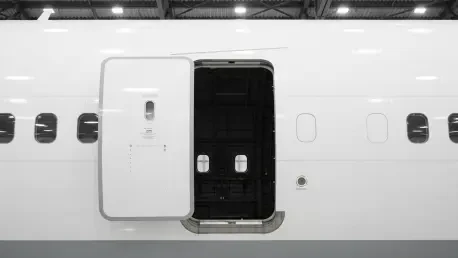
Engineers must install reinforced floor beams and a sophisticated motorized cargo-handling system equipped with rollers and ball-mats to facilitate the efficient loading of goods into the main deck. This structural hardening ensures that the aircraft can withstand the immense stresses of transporting up to sixty tons of cargo over long distances repeatedly. The most critical part of this process involves cutting into the fuselage to install a massive main-deck cargo door, followed by a rigorous recertification process to meet international safety standards. This ensures that the airframe remains structurally sound and pressurized throughout its new operational life.
Addressing the Global Supply Gap and Future Outlook
The reliance on converted aircraft has become a strategic necessity due to the ongoing supply chain bottlenecks that have hampered the production of brand-new cargo planes at major manufacturing facilities. Currently, both Boeing and Airbus are facing massive backlogs for their newest freighter models, with some customers facing wait times that extend several years into the future. This production lag has created a critical gap in the market that can only be filled by the rapid deployment of conversions, which can be completed much faster than the time required to build a new plane from scratch. This agility allows logistics firms to scale their operations in real-time.
Aviation leaders recognized that the path forward required a more sustainable approach to asset management, emphasizing the reuse of existing airframes over new production. They implemented these conversion strategies to ensure that the lifecycle of every aircraft was maximized, reducing the environmental impact of manufacturing. Looking ahead, companies should continue to monitor the structural health of their fleets to identify prime candidates for cargo transitions. By investing in these technical overhauls, the industry established a resilient and flexible logistical network that remained capable of meeting shipping needs. This shift fundamentally changed the aviation landscape.