
The historical blueprint of Latin American infrastructure, long characterized by fragmented corridors designed solely for the outward flow of raw materials, is finally undergoing a radical metamorphosis as nations prioritize internal connectivity over isolated export routes. For over a century, the geographic landscape was defined by an archipelago of rail networks that served foreign interests rather than regional growth. These tracks, largely established during the late 19th and early 20th centuries, were built with the singular purpose of moving copper, coffee, and beef from the deep interior to coastal ports. Because these lines were never intended to connect neighbor to neighbor, they left a legacy of incompatible gauges and truncated paths that effectively stifled intra-continental trade for decades.
This current era marks a decisive pivot away from those extractive models as modern sovereign integration becomes the primary driver of infrastructure policy. The pressure on global maritime routes, coupled with the volatility of international supply chains, has forced a reappraisal of rail as a vital component of economic resilience. This report examines how the region is moving toward a more cohesive logistics network, shifting from a collection of export-oriented silos to an integrated bloc. The transition is not merely a matter of laying new steel; it is a fundamental restructuring of how Latin American economies interact with each other and the global market.
From Extractive Corridors to Regional Cohesion: The State of Latin American Rail
The legacy of disconnected rail lines remains one of the most significant barriers to regional development today. Most existing infrastructure was funded by foreign capital with a focus on bulk commodity transport, resulting in a system where tracks in one country often lead to a port but never to a neighboring border. This fragmentation is particularly evident in South America, where the lack of a transcontinental link has forced businesses to rely on circuitous maritime routes or expensive road haulage. To achieve regional cohesion, current projects are focusing on bridging these gaps to allow for the seamless movement of high-value manufactured goods alongside traditional bulk commodities.
The move toward modern sovereign integration is fueled by a desire to reduce the heavy reliance on global maritime chokepoints. In recent years, the vulnerability of the Panama Canal to climate-related disruptions has underscored the need for land-based alternatives. Rail is increasingly seen as the backbone of a new intermodal efficiency strategy that combines sea, land, and air transport to insulate the region from external shocks. By creating sovereign-controlled logistics corridors, nations are attempting to capture a larger share of the value chain, ensuring that infrastructure serves domestic industrialization as much as it serves international trade.
Key industry segments are evolving as the demand for rail transport shifts from simple ore and grain movements to more complex logistics. While bulk transport remains a cornerstone, there is a growing push for high-speed freight that can handle electronics, automotive parts, and consumer goods. This diversification requires a more sophisticated approach to infrastructure, incorporating multimodal terminals and real-time tracking systems. The influence of global supply chain volatility continues to drive rail demand, as businesses seek more predictable and fuel-efficient ways to move inventory across a continent that has historically been divided by its own geography.
Economic Drivers and Market Horizons for Transcontinental Connectivity
Shifting Trade Paradigms and the Rise of Nearshoring
The transition from carbon-intensive road haulage to fuel-efficient rail logistics is no longer just an environmental aspiration; it is a core economic necessity. Road transport across the difficult Andean and Amazonian terrains is notoriously expensive and slow, often accounting for a disproportionate share of the final product price. Rail offers a compelling alternative, as a single freight train can move the equivalent of several hundred trucks with a significantly lower carbon footprint. This shift is being accelerated by the adoption of green finance mechanisms that prioritize climate-aligned infrastructure, making rail projects more attractive to international investors and multilateral development banks.
The phenomenon of nearshoring is also reshaping the demand for cross-border transit, particularly in Mexico and the northern Andean countries. As manufacturers relocate production facilities closer to the North American market to avoid the risks associated with long-distance trans-Pacific shipping, the need for robust rail links has intensified. These new manufacturing hubs require reliable, high-volume transport for both raw materials and finished products. Evolving industrial behaviors now favor supply chains that are not only sustainable but also highly resilient to the kind of disruptions that have plagued maritime shipping in the current decade.
Emerging opportunities in green finance are providing the capital necessary to fund these massive undertakings. Investors are increasingly looking for projects that align with global decarbonization goals, and rail fits this profile perfectly. By leveraging climate-aligned investment, Latin American governments are finding new ways to bankroll projects that were previously considered too costly. This influx of capital is helping to modernize aging networks and support the construction of new, high-tech corridors that can handle the increased volume of trade generated by the nearshoring boom and the overall growth of regional manufacturing.
Market Projections and the Cost of Fragmented Logistics
The so-called logistics tax continues to be a major drag on Latin American competitiveness. On average, logistics costs in the region range from 18% to 35% of the total product value, which is nearly four times higher than the 8% average seen in OECD countries. This disparity makes regional goods more expensive on the global market and discourages intra-regional trade. Current performance indicators suggest that without significant investment in rail integration, export volumes could stagnate as neighboring countries find it cheaper to trade with distant partners than with each other. The high cost of road transport is the primary culprit behind these inflated logistics expenses.
Data-driven growth projections for the current year show a clear divide between nations that have embraced rail and those that remain dependent on trucking. Fuel efficiency remains one of the strongest arguments for rail investment; moving a ton of freight 500 miles on a single gallon of fuel provides a level of cost-effectiveness that road transport simply cannot match. For the Mexican Interoceanic Corridor, projections for the remainder of this year indicate a steady increase in container traffic as it begins to function as a viable land bridge. Similarly, South American corridors are seeing renewed interest as governments realize that fragmented logistics are an unsustainable burden on their national budgets.
The economic cost of inaction is becoming increasingly clear to policymakers across the continent. If the current trends of fragmented logistics persist, the region risks losing out on the gains promised by nearshoring and the global transition to a green economy. Successful integration requires a commitment to data-driven planning and a focus on reducing the structural costs that have historically hindered growth. By prioritizing rail, Latin American nations can lower their logistics tax, boost their intra-regional trade, and position themselves as more competitive players in the global supply chain, turning a historical weakness into a strategic advantage.
Overcoming the Continental Divide: Technical and Geographical Obstacles
One of the most persistent technical hurdles to a unified rail network is the gauge problem, where different countries utilize incompatible track widths. This historical lack of standardization means that cargo often has to be physically moved from one train to another at national borders, leading to significant delays and increased labor costs. Strategies to reconcile these differences include the installation of dual-gauge tracks or the use of variable-gauge axles, both of which require substantial capital investment. Solving this issue is essential for creating a seamless flow of goods across the continent, yet it remains a complex engineering challenge that requires high levels of international cooperation.
Navigating the formidable geography of Latin America presents its own set of unique obstacles, from the towering peaks of the Andes to the delicate ecosystems of the Amazon. Constructing a transcontinental railway requires specialized engineering to handle steep gradients and fragile soils, all while minimizing environmental impact. Environmental sensitivities are particularly acute in the Amazon basin, where any large-scale infrastructure project faces intense scrutiny from local communities and international environmental organizations. Balancing the need for economic connectivity with the imperative of conservation is a delicate act that defines the planning process for every major rail project in the region today.
The digital deficit in Latin American rail networks further complicates the push for modernization. Many existing tracks still rely on analog traffic control systems and manual cargo tracking, which are insufficient for the demands of a modern, high-speed logistics network. Implementing real-time tracking and unified digital traffic management is necessary to improve safety and efficiency. However, these upgrades require a level of technological investment that many state-owned rail companies struggle to afford. Addressing this deficit is a priority for projects seeking international funding, as digital integration is now a standard requirement for ensuring the bankability and long-term viability of infrastructure assets.
The Geopolitics of Rail: Regulatory Frameworks and International Finance
Harmonizing cross-border regulations is as important as laying the physical tracks themselves. For a transcontinental rail link to be effective, there must be a unified system of electronic documentation and customs procedures to prevent bottlenecks at the border. Currently, the lack of regulatory alignment means that a train can be delayed for days by administrative red tape, negating the speed advantages of rail over sea. Efforts are underway to create common standards for rail transit, but progress is often slowed by political volatility and the complexities of national sovereignty. Success in this area depends on the ability of regional blocs to prioritize long-term economic gains over short-term political concerns.
The financing landscape for these projects is a complex mix of Chinese capital and multilateral bank support. Chinese investment has been a major driver for many of the most ambitious rail projects, offering large-scale funding that is often tied to the use of Chinese technology and construction firms. In contrast, multilateral institutions like the Inter-American Development Bank (IDB) and the Development Bank of Latin America (CAF) focus on feasibility studies and ensuring projects meet rigorous social and environmental standards. This dual-track financing environment provides nations with choices but also creates geopolitical tensions as different actors compete for influence over the region’s strategic infrastructure.
Environmental standards and green regulations are becoming increasingly influential in determining the bankability of rail projects. To secure funding from Western institutional investors, projects must demonstrate a clear plan for minimizing their carbon footprint and protecting biodiversity. This has led to the adoption of more stringent environmental impact assessments and a focus on sustainable construction practices. However, these requirements can also increase the total cost of a project and extend the timeline for completion. Ensuring compliance with international standards is now a non-negotiable aspect of project development, as the global financial community moves toward a model that equates economic viability with environmental responsibility.
The Next Frontier: Strategic Corridors and Future Disruptors
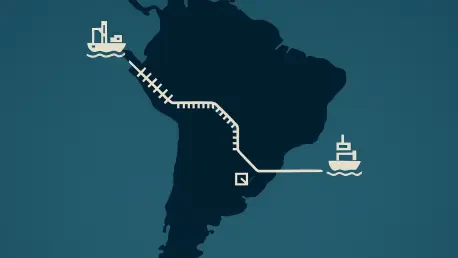
The Bioceanic Railway Corridor stands as one of the most ambitious infrastructure projects in South American history, aiming to link the Atlantic coast of Brazil with the Pacific ports of Peru. By traversing the Bolivian interior, this corridor would provide a direct route for South American commodities to reach Asian markets, bypassing the need for long maritime voyages around Cape Horn or through the Panama Canal. While the project faces significant geographical and financial hurdles, its potential to transform regional trade patterns is immense. Current assessments focus on the alignment with the new mega-port at Chancay, which could serve as a primary gateway for trans-Pacific commerce.
In Mexico, the Interoceanic Corridor of the Isthmus of Tehuantepec (CIIT) has already transitioned into a functional reality, offering a viable commercial alternative to the Panama Canal. This project links the Pacific port of Salina Cruz with the Gulf port of Coatzacoalcos, providing a high-capacity rail bridge for containerized freight. The success of this corridor is closely tied to the creation of industrial development zones along the route, attracting manufacturers who value the speed and reliability of a rail-based crossing. By coupling transport with industrial capacity, the CIIT is demonstrating how infrastructure can act as a catalyst for broader regional development rather than just a transit point for global goods.
Social innovation is also a key component of the new rail frontier, with projects like the Tren Maya leveraging rail for more than just freight. By integrating passenger service with logistics, these projects aim to redistribute tourism revenue and improve labor mobility in historically underserved regions. This dual-purpose approach helps to build local support for large-scale infrastructure and ensures that the benefits of rail integration are felt by more than just the export sector. Looking forward, the role of rail in insulating regional trade from climate-related disruptions, such as the recurring El Niño events that impact maritime shipping, will be a critical factor in maintaining economic stability across the continent.
Realizing the Continental Coupling: A Final Outlook on Economic Transformation
The report demonstrated that the strategic pivot from extractive isolation to internal rail connectivity was the most essential step for Latin America’s economic evolution. The transition toward a more integrated network allowed nations to overcome the historical legacy of fragmented infrastructure that had long prioritized global commodity flows over regional trade. This shift required more than just the physical construction of tracks; it demanded a fundamental change in how governments approached cross-border cooperation and technical standardization. By focusing on sovereign integration, the region moved closer to realizing its potential as a cohesive economic bloc capable of competing in a rapidly changing global market.
The 2025-2026 window served as a decisive period for the major projects that defined this transformation. During this time, the operational success of the Mexican Interoceanic Corridor provided a blueprint for how land bridges could effectively complement and compete with traditional maritime routes. Simultaneously, the progress made on the Bioceanic Corridor in South America highlighted the importance of balancing economic ambition with environmental and social responsibility. These projects showed that rail was not merely a tool for transport, but a primary engine for unlocking the economic frontier and reducing the crippling logistics costs that had hindered the region for decades.
Regional cooperation and technical standardization emerged as the critical pillars for the long-term success of these initiatives. The report highlighted that overcoming the gauge problem and harmonizing regulatory frameworks were necessary actions that required sustained political will and a commitment to shared goals. Without these efforts, the physical infrastructure would have remained a collection of disconnected segments rather than a unified network. The implementation of digital tracking and unified customs procedures also played a vital role in ensuring that rail could provide the speed and efficiency demanded by modern global supply chains.
Ultimately, the future of Latin American rail depended on a continued commitment to sustainable and inclusive development. The shift toward green finance and the integration of social objectives into project planning ensured that rail networks provided broad-based benefits to the communities they traversed. By insulating regional trade from the vulnerabilities of maritime chokepoints and climate-related disruptions, rail integration provided a foundation for long-term economic resilience. The continental coupling was more than an engineering feat; it was a strategic reimagining of the region’s geography that paved the way for a more prosperous and connected Latin America.