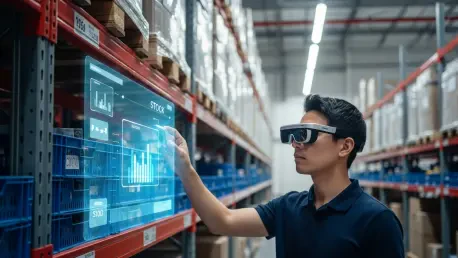

The modern frontline worker is currently navigating a digital paradox where the very tools meant to simplify warehouse and retail operations have instead created a suffocating layer of technical friction. In the modern retail and logistics landscape, enterprises have reached a critical tipping point of over-digitalization, where the sheer volume of software has begun to erode the efficiency gains it was intended to create. This shift indicates that the industry is moving away from the simple provision of mobile hardware and toward the sophisticated orchestration of the software environment. By focusing on the reduction of digital noise and the implementation of intelligent interfaces, companies are attempting to reclaim lost productivity and empower their staff. This analysis examines the transition from fragmented application ecosystems to unified super apps, the rise of artificial intelligence-directed workflows, and the future of non-intrusive technology on the frontline.
Quantifying the Shift Toward Operational Consolidation
Data Analysis of App Overload and the Rise of the Super App
Statistical evidence from the current enterprise landscape reveals a startling reality for the average associate, who must often manage between 75 and 80 disparate applications and alerts on a single handheld device. This constant influx of notifications necessitates frequent context-switching, a process that significantly degrades focus and introduces cognitive fatigue. When a worker has to jump between a dedicated inventory app, a separate communication tool, and a third-party scheduling platform, the resulting friction creates massive delays in physical movement. Consequently, there is an aggressive trend toward software reduction, as companies look to consolidate these functions into a singular, unified “super app” environment that serves as a one-stop shop for all operational needs.
The growth of the orchestration layer market is a direct response to this complexity, acting as a central hub between heavy backend enterprise systems and the end-user. Rather than forcing the worker to go looking for information, these platforms filter data to ensure that only the most relevant tasks are surfaced. This architectural shift allows organizations to maintain their complex legacy systems while providing the employee with a clean, manageable interface. By minimizing the cognitive load required to navigate technology, businesses are finding that workers can spend more time on high-value physical tasks and customer service rather than troubleshooting their own devices.
Operational Success Stories in Retail and Warehouse Environments
The practical implementation of orchestration platforms, such as the Workcloud IO system, demonstrates the power of integrating over 250 different data streams into a manageable workflow. These platforms translate raw data from security cameras, sensors, and inventory databases into specific, actionable tasks for the nearest qualified employee. For example, if a shelf sensor detects a stockout, the system does not just send a generic alert to a manager; it identifies the closest worker with the appropriate permissions and sends a direct instruction to restock the item. This precision eliminates the time-consuming process of manual task delegation and ensures that operational gaps are filled in real-time.
A compelling case study in food safety illustrates how AI-driven guidance has replaced traditional, manual checklists with camera-verified troubleshooting. In high-stakes environments like grocery delis, workers are guided through safety protocols by an interface that uses the device camera to verify that tasks, such as temperature checks or cleaning cycles, are performed correctly. Furthermore, parcel delivery pilots have shown that AI-assisted tools can increase workflow speeds by as much as 55%. By automatically scrubbing sensitive information from proof-of-delivery photos and verifying package placement, the technology allows drivers to complete their routes with significantly fewer manual inputs, proving that streamlined software is the key to handling increased delivery volumes.
Expert Perspectives on the Transition to Directed Workflows
Industry leadership within the technology sector has identified a strategic move from simple “information surfacing” toward the more advanced concept of “directed work.” Historically, digital tools were used merely to provide workers with data, such as a digital manual or a list of orders, leaving the execution entirely up to human memory. However, current insights from Zebra Technologies suggest that the goal should be a system that acts as a constant companion, providing step-by-step guidance based on the current situation. This approach ensures that even less experienced workers can perform complex tasks with the same accuracy as veterans, effectively mitigating the challenges posed by high turnover rates.
There is a growing consensus that AI and automation are essential responses to macro-economic labor shortages rather than a means for staff reduction. As the labor market remains constrained, companies must find ways to do more with the staff they already have, making efficiency the only viable path to growth. By automating administrative workflows, such as the labor-intensive process of managing product recalls, organizations can free up human intervention for high-level oversight. For instance, what used to require dozens of corporate employees to parse documents and distribute tasks can now be handled by a small team of reviewers who oversee an AI-driven distribution system, ensuring that critical safety updates are deployed across thousands of stores in minutes.
Projecting the Long-Term Impact of Non-Intrusive Tech
The evolution of the frontline workspace is moving toward a philosophy of “forward-deployed engineering,” where technology is refined in real-time alongside workers during active pilot phases. This collaborative approach ensures that engineers can witness the nuances of a warehouse environment firsthand, adjusting the software to meet the physical realities of the job. This method reduces the likelihood of deploying tools that look good in a lab but fail on the floor. Moreover, the industry is preparing for a projected 20% increase in parcel volumes over the next three years, a surge that can only be managed if the technology used by drivers and sorters becomes significantly more efficient and less distracting.
The ultimate goal for the next generation of enterprise tools is the creation of “invisible technology” that provides situational awareness without the need for a handheld screen. Innovations such as wearable sensors and projection systems are currently being developed to display information directly onto physical work surfaces, such as boxes or shelves. By projecting a “pick” location or a shipping label directly onto the object the worker is handling, companies can keep the employee’s hands free and their eyes focused on their surroundings. This move toward non-intrusive tech represents a future where the digital and physical worlds are so seamlessly integrated that the technology becomes a natural extension of the worker’s own capabilities.
Conclusion: Streamlining the Digital Frontier for Maximum Productivity
The transition from a fragmented app landscape to a streamlined orchestration layer represented a fundamental shift in how enterprises approached frontline productivity. It became clear that the most effective digital strategies prioritized the human experience by filtering out unnecessary noise and focusing on directed tasks. Organizations that successfully integrated these AI-driven workflows reported significant improvements in both operational speed and employee satisfaction. The shift toward non-intrusive, situational tools provided a clear roadmap for handling the increasing demands of the global supply chain. Ultimately, the industry learned that the true value of technology was not found in the number of features offered, but in the ability to make the digital interface disappear into the background of a well-executed physical operation. Moving forward, the successful deployment of these orchestration layers established a new standard for operational excellence that balanced high-tech automation with the essential role of the human worker.