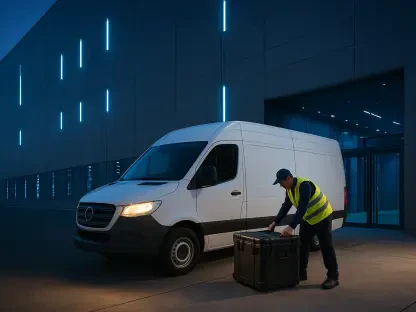

In the fiercely competitive grocery market, the illusion of convenience often shatters when a customer finds their preferred brand of milk is out of stock or when the produce delivered to their door has lost its crispness. While many retailers have poured investment into slick mobile interfaces and biometric checkout lanes to dazzle shoppers, these front-facing innovations are essentially cosmetic if the underlying infrastructure cannot guarantee consistency. The modern consumer, increasingly savvy and less brand-loyal, demands a level of reliability that manual labor alone can no longer sustain. Consequently, the industry is witnessing a pivot where the most successful brands are those treating their logistics centers not merely as storage units, but as the heartbeat of their customer retention strategy. By moving the focus from the retail aisle to the distribution warehouse, grocers are discovering that automation is the silent architect of loyalty, ensuring that the promises made in marketing are realized on the kitchen table.
Designing a Seamless Supply Chain
Integrating Hardware and Digital Orchestration
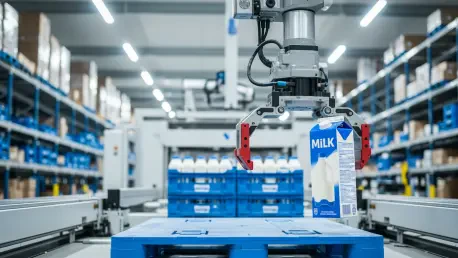
A significant shift in warehouse philosophy has occurred, moving away from isolated task automation toward integrated, end-to-end ecosystems that provide a unified flow of goods. Traditional systems often focused on automating a single function, such as palletizing or sorting, but modern logistics automation is defined by its ability to synchronize various complex movements across the entire facility. This ecosystem comprises various hardware technologies, including mixed case palletizing, high-speed sortation, automated guided vehicles, and autonomous mobile robots, all working in tandem to move products efficiently. By connecting these physical components, retailers can ensure that the movement of inventory is not just fast but perfectly aligned with the real-time demands of the storefront. This holistic approach prevents the creation of internal bottlenecks that typically occur when one automated machine outpaces another, creating a smooth transition from receiving to shipping.
Synchronizing Robotic Flow with Intelligence
The intelligence driving these physical machines is a two-tiered digital architecture that ensures every move is calculated for maximum productivity and accuracy. At the primary level, a Warehouse Control System acts as the central nervous system, analyzing real-time data regarding product dimensions and order priorities to command the robots. At the secondary level, a Warehouse Execution System harmonizes these disparate components, ensuring that various activities work in a coordinated symphony across the entire facility. This synergy eliminates the friction common in legacy systems, providing a platform for fulfillment speed that was previously unattainable through human coordination. Beyond just moving items, this software layer anticipates potential delays and adjusts workflows dynamically, ensuring that the warehouse remains responsive to sudden shifts in order volume. The result is a digital orchestration that allows retailers to promise narrower delivery windows, directly translating to a more reliable experience.
Fulfilling the Customer Quality Promise
Prioritizing Reliability and Peak Freshness
The primary friction point for a grocery customer remains the empty shelf or the incorrect order scenario, making reliable delivery the absolute cornerstone of a successful business. Automation addresses this critical issue by drastically reducing the human error inherent in manual picking and handling processes. By minimizing the number of manual touches required to move an item, retailers can eliminate the fatigue-related mistakes that traditionally slow down the fulfillment cycle and lead to order inaccuracies. The precision of robotic systems ensures that the right products reach the proper store locations within narrow delivery windows, preventing the frustration that drives shoppers to local competitors. This level of reliability builds a foundation of trust that is far more valuable than any temporary marketing promotion. When a customer knows they can rely on their grocer for every item on their list, they are significantly more likely to remain loyal over the long term, regardless of competing offers.
Ensuring Product Integrity Through Automation
For the modern consumer, the quality of perishables—such as produce, dairy, and baked goods—is a primary factor in deciding where to shop for their weekly essentials. Logistics automation directly impacts this by accelerating the transit time of goods through the distribution center to ensure they spend more time on retail shelves than in static storage. Crucially, these automated systems prioritize sophisticated inventory management principles like First In, First Out, guaranteeing that products reach the store at their peak freshness. Furthermore, automation allows for the creation of store-friendly pallets that facilitate faster shelving at the retail level, ensuring the quality promised in marketing is realized on the consumer’s plate. By optimizing the cold chain and reducing the time sensitive items spend in transit, retailers can offer a longer shelf life at home for the end user. This tangible benefit creates a superior product experience that reinforces the brand’s commitment to quality.
Managing Growth and Complexity
Implementing Modularity and High-Density Optimization
Consumer demand is rarely static; it is subject to seasonal peaks, sudden buying shifts, and long-term business growth that can strain traditional infrastructure. To manage this inherent volatility, retailers are turning to modular automation constructed from standardized, pre-engineered blocks that can be integrated into virtually any existing facility layout. This approach allows for internal scalability, enabling a retailer to add modules or modify workflows to increase capacity without a complete operational overhaul or significant downtime. It also creates network-wide consistency, ensuring a uniform brand experience regardless of the store’s regional location or size. As the market shifts, these modular systems can be reconfigured to meet new challenges, providing a level of agility that manual warehouses cannot match. This flexibility ensures that the grocer remains competitive during peak periods without the need for temporary labor surges that can often lead to decreased accuracy.
Managing SKU Expansion in Constrained Spaces
As shoppers expect a vast assortment of flavors and specialty items, managing the resulting explosion of Stock Keeping Units often leads to extreme inefficiency in traditional warehouses. High-density, floor-based storage solutions—combined with overhead gantry robotics—solve this problem by maximizing the existing facility footprint to its fullest potential. By storing products in crates directly on the warehouse floor and eliminating the need for wide aisles required by forklifts, retailers can keep every SKU immediately accessible. This model ensures that grocers can expand their product variety to meet specific consumer tastes without sacrificing speed or increasing overhead costs. The ability to manage a massive inventory in a smaller space allows for distribution centers to be located closer to urban hubs, further reducing delivery times and costs. This optimization of space and accessibility means that even the most niche products are readily available, supporting a comprehensive shopping experience.
Achieving Competitive Differentiation
Transforming Fulfillment into Strategic Success
The effectiveness of these advanced strategies was best illustrated by major retailers that successfully integrated modular warehouse automation to minimize handling times. For instance, several leading supermarket chains utilized automated systems to prepare complex orders for over a thousand stores in mere six-hour windows, eliminating the need for secondary downstream processing. Scaling this technology across multiple sites created a resilient supply chain capable of handling massive volumes with record-breaking speed and accuracy. This transition from manual to automated logistics represented a paradigm shift where operational excellence became a primary driver of lasting customer loyalty. By removing the traditional constraints of labor availability and facility size, these companies were able to maintain a consistent flow of goods even during periods of extreme global supply chain stress. The results were clear: those who invested in the backend were able to maintain their market share.
Operational Excellence as a Foundation for Trust
To capitalize on these technological advancements, grocery executives moved beyond viewing automation as a capital expense and started treating it as a core pillar of customer service. By prioritizing the health of the supply chain, organizations established a framework where the logistics department served as the true guardian of the brand reputation. This proactive stance ensured that the physical manifestation of the brand—the product on the shelf—met the highest standards of availability and quality. Ultimately, the successful grocer of this era is the one that recognized that the path to a shopper’s heart is paved with efficient conveyor belts and precise robotic arms, turning warehouse complexity into a competitive edge. These next steps will involve deeper integration of AI-driven forecasting with physical sorting to ensure that the supply chain is not just reactive but predictive, meeting consumer needs before they are even articulated in a digital shopping cart.