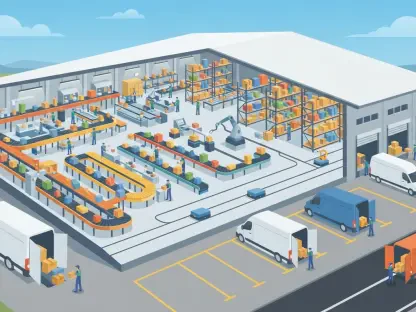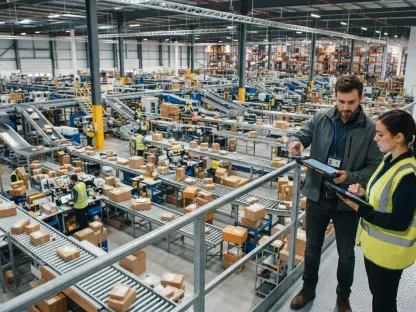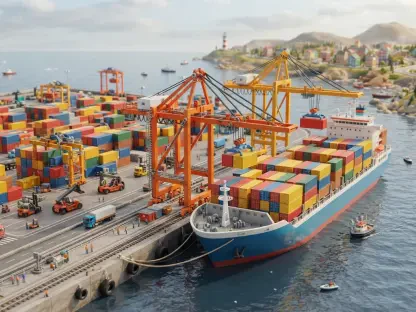

As the current global supply chain landscape undergoes a massive structural realignment, Mexico has emerged as the definitive nexus of North American trade, capturing over a quarter of the entire Latin American logistics market with a valuation surpassing $100 billion. The sector is currently experiencing a period of intense modernization, transitioning from a traditional transport model to a sophisticated, tech-driven network capable of supporting the most complex manufacturing demands on the continent. By 2026, the industry has solidified its status as a premier logistics hub, fueled by an intricate synergy between international trade policy and local industrial capacity. This analysis explores the forces driving this expansion and how the country is preparing to handle the massive influx of capital expected during the 2026 to 2030 period.
The Strategic Evolution of Mexico’s Industrial Backbone
To understand the current trajectory of this market, one must evaluate the foundational shifts initiated by the United States-Mexico-Canada Agreement. This framework replaced earlier trade structures and provided a more robust legal and economic environment for long-term industrial planning across the region. Traditionally, the country served as a low-cost manufacturing hub, but recent global supply chain disruptions have accelerated a pivot toward regional resilience and reliability. These historical developments in automotive assembly and cross-border trade laid the groundwork for the modern era, creating a mature ecosystem of industrial parks that now serve as the launchpad for high-value expansion.
Historical Context and the Catalyst of the USMCA
The shift from global manufacturing models to regionalized operations is the essential driver behind the current economic story. Multinational corporations are increasingly relocating production closer to the end consumer to mitigate the risks associated with transpacific shipping and geopolitical instability. This shift has led to a surge in demand for third-party logistics providers and value-added services such as bonded warehouses and regional stock positioning. While this presents an opportunity for growth, it also introduces challenges, such as the need for rapid infrastructure development to prevent bottlenecks at border crossings and major maritime ports.
The Engines of Expansion: Manufacturing and Regional Integration
Driving Growth Through Automotive and Electronics Specialization
A critical aspect of this ascent is the dominance of specific high-value sub-sectors, most notably the automotive and electric vehicle industries. As global manufacturers pivot toward green energy, existing supply chains are being retrofitted to support complex component production for zero-emission transit. Supported by the tariff-free environment of the USMCA, this sector benefits from immediate proximity to the United States. Additionally, the electronics and semiconductor industry is seeing a consolidation of assembly and testing operations. These industries demand sophisticated, climate-controlled, and highly secure logistics solutions, which in turn drive up the market value and the complexity of services provided.
The Nearshoring Phenomenon and Supply Chain Resilience
The transition from just-in-time global models to just-in-case regional systems has redefined the logistical requirements for modern companies. Local storage and regional stock positioning are no longer optional but are treated as strategic assets that safeguard against volatility. This shift has fueled the expansion of industrial real estate, particularly in areas capable of handling large-scale warehousing and rapid cross-docking operations. Consequently, the focus of the sector has moved from mere transportation to the creation of resilient, multi-layered supply networks that can withstand external shocks while maintaining speed to market.
Geographic Concentration and Regional Disparities
While the national outlook is positive, the logistics boom is not uniformly distributed across the territory. Investment is becoming increasingly concentrated in northern and central industrial states like Nuevo Leon and Queretaro, which have seen triple-digit growth in new foreign direct investment recently. These regions offer the robust industrial infrastructure necessary for modern manufacturing and rapid export. However, this concentration reveals a widening gap, as southern states face different capital dynamics. Addressing these regional imbalances is vital for maintaining the projected 7.4% annual growth rate and ensuring the entire country benefits from the logistics windfall through 2030.
Future Trends and Technological Disruptions
Looking toward 2030, several emerging trends will shape the logistics landscape and redefine how goods move across borders. The integration of supplier parks, where component manufacturers are situated immediately adjacent to final assembly plants, is expected to become the industry standard for high-efficiency production. Furthermore, technological shifts such as the adoption of automated warehousing and AI-driven route optimization will likely counteract rising labor costs. There is also an anticipation of a significant regulatory focus on green logistics, as companies look to meet environmental targets by decarbonizing heavy-duty truck fleets and optimizing rail transport between 2026 and 2030.
Strategies for Navigating the 2030 Landscape
For businesses and investors, the primary takeaway is that the domestic market is now a critical component of the broader North American industrial machine. To capitalize on this, organizations should focus on just-in-case inventory strategies, utilizing local storage to safeguard against global volatility. Best practices include partnering with established third-party logistics providers who possess deep knowledge of customs and regional regulations. For professionals in the sector, gaining expertise in electric vehicle supply chain management and digital logistics platforms will be essential. Stakeholders must also stay agile, monitoring regional investment shifts to identify the next high-growth industrial corridors.
Conclusion: A New Era for North American Trade
The analysis demonstrated that the logistics market successfully transitioned into a fundamental pillar of regional economic stability. The synthesis of nearshoring and trade agreement advantages created a protective environment for the sector, allowing it to withstand broader market fluctuations. As the country cemented its role as the primary gateway for commerce, the focus shifted from simple transportation to complex, technology-enabled integration. Future considerations must prioritize the expansion of the energy grid to support electrified logistics fleets and the development of multimodal transport hubs in the south. By diversifying infrastructure and embracing digital transparency, the industry ensured its long-term resilience and modernized the framework for global distribution.