
The rapid transformation of global trade routes has turned traditional shipping into a high-stakes race where logistics speed is no longer a luxury but a core requirement for survival. As the industry moves away from simple port-to-port transport, the focus has shifted toward integrated, end-to-end logistics solutions that offer seamless visibility. Singapore has emerged as the definitive nexus for this evolution, leveraging its status as a premier center for international commerce to anchor regional distribution networks. The strategic placement of large-scale infrastructure here allows companies to bridge the gap between global production lines and the diverse markets of Southeast Asia.
Maersk’s $200 million investment in World Gateway II serves as a vital link that strengthens the connection between manufacturing and immediate consumption. This massive facility is specifically designed to handle the nuances of fast-moving consumer goods, high-end technology, and luxury fashion, which all require specialized handling and rapid turnover. By establishing such a significant footprint, the company effectively captures the momentum of regional trade growth. These core sectors are currently driving the demand for warehouses that can do more than just store goods; they must act as active processing hubs that add value at every stage.
The Evolving Landscape of Global Trade and Maersk’s Strategic Footprint in Asia
Traditional logistics models are being replaced by sophisticated ecosystems that prioritize agility and data integration over sheer volume. The shift toward a unified supply chain model means that providers are now responsible for the entire journey of a product, from the factory floor to the customer doorstep. Within this context, Singapore provides the regulatory stability and geographic advantage necessary to manage these complex flows. The city-state acts as a laboratory for logistics innovation, where new methods of distribution are tested and scaled for the rest of the world.
The concentration of wealth and industrial activity in the Asia-Pacific region has necessitated a move toward high-specification facilities that can handle sensitive cargo. World Gateway II meets this need by offering specialized environments for electronics and luxury items that demand climate control and high-level security. This investment signals a long-term commitment to the region, ensuring that the supply chain remains resilient even as consumer behaviors change. By focusing on these high-demand sectors, the facility ensures a steady stream of high-value cargo that justifies the significant capital expenditure.
Catalysts for Change: Why Integrated Distribution Centers Are Dominating the Market
The Surge of E-Commerce Fulfillment and High-Tech Warehouse Automation
The transition from bulk B2B shipping to high-velocity B2C e-commerce has forced a radical redesign of warehouse operations. Modern fulfillment centers must now process thousands of individual orders daily, a task that is impossible to manage through manual labor alone. This has led to the adoption of Automated Storage and Retrieval Systems and various autonomous robots that can navigate the vast aisles of a 1.1 million-square-foot facility with precision. These technologies drastically reduce lead times, allowing retailers to meet the increasingly short delivery windows expected by modern consumers.
Beyond simple automation, the use of multi-shuttle systems and digital twinning has revolutionized inventory management for international brands. Digital twins allow operators to simulate different scenarios and optimize the flow of goods before a single pallet is moved. This level of technical sophistication ensures that inventory is always in the right place at the right time, minimizing the costs associated with overstocking or stockouts. Consequently, high-tech automation is no longer an optional upgrade but a necessary component for any company looking to compete in the digital economy.
Mapping the Economic Trajectory of the Asia-Pacific Logistics Corridor
Economic indicators show that the contract logistics sector is entering a period of sustained growth, particularly within the Southeast Asian digital economy. From 2026 to 2028, the regional hub requirements are expected to intensify as more businesses move their operations closer to their customer base. This trajectory is supported by a stable regulatory environment and a growing middle class with significant purchasing power. As a result, the demand for sophisticated distribution centers that can act as regional command centers is at an all-time high.
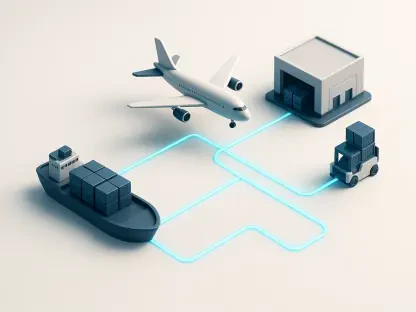
The success of these strategies relies heavily on the physical infrastructure that connects Singapore to the rest of the world. Tuas Mega Port and Changi Airport serve as the two critical pillars that enable rapid speed-to-market for both sea and air freight. By locating World Gateway II in close proximity to these assets, Maersk creates a seamless transition between different modes of transport. This connectivity is essential for maintaining the fluidity of global supply chains and ensuring that disruptions in one area do not paralyze the entire network.
Overcoming Structural Bottlenecks and Navigating the Complexities of Global Supply Chains
One of the most persistent challenges in the logistics industry is the global shortage of skilled labor, which has hindered the expansion of traditional warehouses. Maersk has addressed this issue by creating 500 digital-first roles that focus on the management of automated systems rather than physical exertion. This shift not only solves a recruitment problem but also elevates the quality of employment within the sector. By fostering a workforce that is comfortable with high-tech tools, the company ensures that its operations remain efficient and adaptable to new technological breakthroughs.
Mitigating supply chain disruptions requires a strategy of co-location, where logistics, distribution, and value-added services are housed under one roof. This approach reduces the number of handovers between different providers, which are often the primary points of failure in a supply chain. However, integrating disparate automation systems within a facility of this scale presents unique technical hurdles that require constant monitoring and software updates. Maintaining the high throughput necessary for tech-sensitive cargo while ensuring the precision required for luxury goods is a delicate balance that defines the modern logistics challenge.
Setting New Benchmarks for Compliance, Security, and Environmental Stewardship
Environmental stewardship has become a core competitive advantage as global brands look to decarbonize their entire value chains. World Gateway II addresses this by achieving LEED Platinum and Green Mark Platinum certifications, which reflect the highest standards of sustainable building design and operation. These certifications are not merely badges of honor; they represent a commitment to reducing the carbon footprint of every package that passes through the facility. In a market where ESG performance is scrutinized by investors and consumers alike, such sustainability credentials are indispensable.
Security compliance is equally critical, especially when handling high-value assets like luxury fashion and advanced electronics. Achieving TAPA Class A certification ensures that the facility meets the most stringent global standards for asset protection, providing peace of mind to international partners. Navigating the regulatory landscape of the Singapore Economic Development Board and the Maritime and Port Authority requires a high level of transparency and cooperation. This alignment with national interests ensures that the facility remains a cornerstone of the regional economy while meeting the security needs of a global clientele.
The Future of Freight: Pioneering Next-Generation Connectivity and Supply Chain Resilience
The next wave of logistics innovation will likely be driven by AI-powered predictive analytics that can anticipate market shifts before they occur. Regional distribution hubs will evolve into intelligent nodes that can redirect cargo in real-time based on weather patterns, political shifts, or sudden spikes in demand. This shift toward decentralized, “mega-hub” supply chains will provide the resilience needed to survive future global shocks. As these technologies mature, the importance of strategic geographic locations like Singapore will only increase, serving as the physical anchors for a digital trade network.
Anticipating market disruptors such as drone delivery and hyper-automated sorting will be essential for staying ahead of the competition. The integration of these technologies into the existing maritime and land-based logistics framework will require significant investment and public-private cooperation. By planning for these advancements today, leaders in the industry can ensure that their infrastructure remains relevant for decades. The synergy between government policy and private enterprise continues to shape a future where freight moves with the same speed and ease as digital information.
Reimagining the Global Value Chain Through World Gateway II
The completion of World Gateway II demonstrated that the integration of high-capacity storage and sophisticated automation was the only viable path forward for global trade. It provided a scalable blueprint for how future distribution centers could balance the need for high-speed throughput with rigorous environmental standards. Investors recognized that the facility’s proximity to major shipping lanes and its advanced security features offered a level of reliability that was previously unavailable in the region. This project effectively redefined the standard for what a modern logistics hub should achieve in terms of both efficiency and sustainability.
Retailers and manufacturers who utilized these integrated services saw a marked improvement in their ability to respond to market fluctuations and consumer demands. The collaboration between private enterprise and Singaporean authorities proved that strategic public policy could drive significant private investment into critical infrastructure. In the end, the facility served as a catalyst for broader economic growth, encouraging other players in the industry to adopt similar digital-first strategies. These developments ensured that the global value chain became more resilient, agile, and prepared for the next era of international commerce.