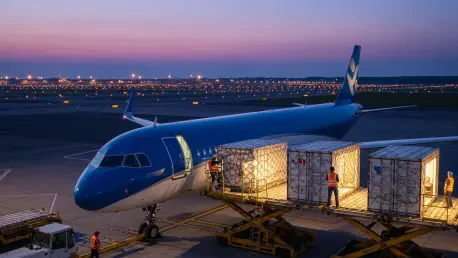

The transformation of the South American skyline is currently being written by the rhythmic hum of specialized freighter engines that connect the Amazonian basin to the industrial hearts of the Andes. Azul Logística manages a massive scale of 100,000 daily shipments across more than 800 flights, yet the carrier is just beginning its most ambitious transformation. The shift from a primarily domestic Brazilian operator to a dominant intra-American logistics powerhouse hinges on a high-stakes fleet overhaul. By moving away from older regional models toward a dedicated, high-capacity freighter network, Azul positions itself to dictate the speed of commerce across the Southern Hemisphere.
The Dawn of a Modern Logistics Corridor in Latin America
This evolution represents more than a simple increase in aircraft numbers; it is the construction of a seamless trade bridge. The integration of the domestic Brazilian market with broader continental routes allows for a level of cargo fluidity previously unseen in the region. As the airline replaces passenger-focused “preighters” with purpose-built cargo jets, the reliability of express shipping has reached a critical tipping point for international retailers.
Furthermore, this expansion focuses on turning the Viracopos hub into a central nervous system for Latin American trade. By synchronizing hundreds of daily flights with dedicated freighter schedules, the airline ensures that a parcel from a remote Amazonian town can reach a major capital in a neighboring country with unprecedented speed. This logistical synchronization serves as the backbone for the next era of regional economic integration.
Bridging the Infrastructure Gap: Why Fleet Modernization Matters Now
The South American cargo market has long struggled with aging aircraft and inefficient configurations that limited volume and reliability. Azul’s transition to the Airbus A321 freighter marks a decisive end to the era of retired Boeing 737 classics and temporary Embraer E195 conversions. This modernization responds directly to the explosive growth of e-commerce and the urgent need for express delivery services that can navigate the continent’s complex geography with greater fuel efficiency and cargo density.
Moreover, the A321’s technical superiorities allow for a significant reduction in operational costs, which is vital in a market characterized by high fuel prices and varied terrain. The ability to carry larger payloads without sacrificing the speed required for “next-day” delivery provides a competitive edge over traditional ground transport. This shift effectively addresses the historical infrastructure deficit that has hampered the growth of high-value trade between South American nations.
Scaling Capacity and Connectivity Across the Andean Region
Between 2026 and 2027, the addition of four Airbus A321 freighters fundamentally alters the logistics map by connecting the Viracopos hub in Campinas to vital international markets. While existing routes to Santiago and Buenos Aires provide a foundation, the expansion into Montevideo and the high-priority Lima connection established this year creates a new trade artery. This network facilitates the movement of high-value industrial goods and sensitive cargo, effectively linking European supply chains with the burgeoning markets of Peru and Brazil.
The Lima corridor, in particular, serves as a strategic gateway for the Andean region, offering a direct link to the Brazilian consumer base. This route is optimized for the transport of electronics, pharmaceuticals, and automotive components that require controlled environments and rapid transit. By narrowing the distance between these economic hubs, the fleet expansion fosters a more resilient and interconnected regional supply chain.
Leveraging CargoTech and Analytics for Regional Dominance
To manage the complexities of a multi-national freighter network, Azul integrates advanced data analytics through its partnership with Global GSA Group. By utilizing specialized CargoTech solutions, the airline optimizes routes during peak-demand cycles and ensures its massive domestic footprint feeds seamlessly into international departures. This technological layer allows the carrier to maintain high-frequency service to remote hubs like Manaus and Belém while simultaneously coordinating trans-continental shipments with precision.
The use of real-time data permits the airline to adjust capacity based on fluctuating market needs, reducing the frequency of empty “deadhead” flights. In contrast to traditional logistics models, this digital-first approach provides transparency for global partners who require exact tracking of high-value assets. This precision ensures that the increased capacity of the new fleet is utilized to its maximum potential, driving profitability and operational excellence.
Strategies for Navigating the New Intra-American Logistics Landscape
For businesses and logistics planners, capitalizing on this fleet expansion required a shift toward high-frequency, data-driven distribution models. Organizations benefited by centering regional operations around the Viracopos hub to take advantage of the A321’s superior capacity for express parcels. The modernization effort proved that focusing on fuel-efficient, high-density aircraft was the most effective way to mitigate the volatility of the South American logistics market.
Furthermore, companies began aligning their 2027 supply chain strategies with the Lima corridor, which promised to significantly reduce transit times for industrial components moving between the Andean region and global markets. The transition toward a more integrated freighter network allowed for a reduction in inventory holding costs and improved the responsiveness of regional supply chains. This evolution ultimately redefined the standards for speed and reliability in the Southern Hemisphere.