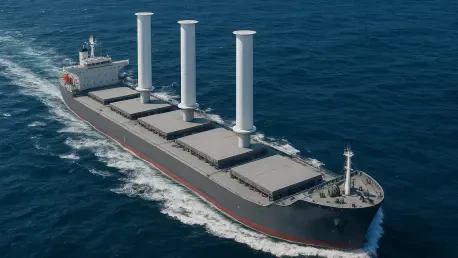

The maritime industry is currently witnessing a massive transformation as massive Newcastlemax bulkers incorporate sophisticated tri-fuel propulsion systems and automated rotor sails to redefine the environmental footprint of global heavy transport logistics. This shift represents a significant advancement, moving beyond experimental phases into large-scale commercial application. Exploring green technology reveals how performance metrics are now linked to trade partnerships and net-zero goals.
The Shift Toward Next-Generation Maritime Propulsion
The transition from heavy fuel oils to low-carbon alternatives is a regulatory necessity. Modern Newcastlemax designs focus on modularity to accommodate a changing energy landscape, ensuring that fleet modernization remains viable over decades. This approach allows operators to comply with international emission standards while maintaining the massive capacity required for dry bulk trade.
Primary Technical Innovations in Modern Bulk Carriers
Tri-Fuel Engine Systems and Fuel Flexibility
Tri-fuel systems allow ships to switch between methanol, ethanol, or conventional fuels, hedging against volatile energy costs. This versatility is essential for long-term contracts where fuel availability remains uncertain over a twenty-year horizon. It provides a unique competitive edge by allowing vessels to utilize the most cost-effective or lowest-carbon fuel available at any global port.
Rotor Sail Technology and Wind-Assisted Propulsion
Mechanical rotor sails utilize the Magnus effect to generate forward thrust, reducing engine workload and lowering emissions. By modernizing wind-power with automated sensors and lightweight materials, shipping firms achieve measurable efficiency gains through advanced engineering. These systems operate independently of the main engine, providing a fail-safe layer of propulsion that significantly cuts fuel consumption.
Future-Proofing through Ammonia and LNG Readiness
Designing hulls for ammonia and LNG readiness involves pre-installing specific piping and structural reinforcements to ensure future retrofits require minimal changes. This scalability prevents asset obsolescence as global bunkering infrastructure matures under tightening carbon caps. It allows a vessel to evolve alongside fuel technology rather than becoming a stranded asset.
Industry Trends Influencing Green Fleet Adoption
Current developments favor multi-decadal partnerships that stabilize financial risks associated with expensive green technology. Cargo owners increasingly view high-efficiency vessels as strategic assets to protect against market volatility. Consequently, environmental criteria have shifted from secondary concerns to a fundamental component of chartering agreements and long-term shipbuilding investments.
Practical Implementation: The HMM-Vale Partnership
The deployment of eight Newcastlemax bulkers for iron ore transport illustrates the success of this approach. This collaboration between South Korean and Brazilian interests demonstrated that environmental stewardship and profitability coexist in heavy industry. By securing supply chain reliability through high-tech tonnage, these firms established a roadmap for large-scale industrial decarbonization.
Technical and Regulatory Challenges to Widespread Adoption
High initial expenditures remain a barrier for smaller operators, while global bunkering infrastructure for alternative fuels is still evolving. International safety standards for handling toxic or low-flashpoint fuels must also adapt to provide a clearer framework for widespread adoption. Ongoing research is required to reduce the cost of these systems and standardize bunkering procedures globally.
The Future of Sustainable Maritime Engineering
The trajectory of naval engineering suggests a move toward carbon-neutral fleets powered by hydrogen or ammonia. Future breakthroughs in AI-driven route optimization will likely refine how wind-assisted systems interact with weather patterns to maximize fuel savings. These advancements will redefine global trade routes based on the availability of green energy hubs and charging infrastructure.
Comprehensive Assessment of Green Shipping Progress
The successful integration of these technologies established a new benchmark for balancing ecological responsibility with financial stability. It became clear that the adoption of tri-fuel engines functioned as a strategic shield against trade volatility. Moving forward, stakeholders prioritized modular designs that allowed for rapid fuel switching as global bunkering networks matured. Ultimately, the industry favored a model where long-term technological adaptability served as the primary driver for achieving resilient supply chains.