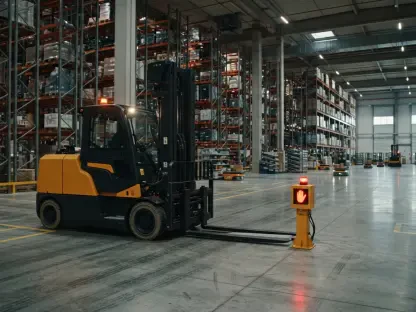

Directing supervisors to provide coaching in the moment creates a continuous improvement loop that is far more effective than reviewing mistakes weeks later. In the current logistics landscape of 2026, this shift toward immediate feedback mirrors the broader acceleration seen across the entire supply chain sector, where decision cycles have compressed from years into mere weeks. Organizations are finding themselves at a critical crossroads where the traditional, reactive methods of warehouse management are no longer sufficient to offset the rising costs of labor, energy, and global trade compliance. The modern facility has evolved into a complex ecosystem where digital and physical realities overlap, requiring a level of agility that was previously unattainable for large-scale operations. As the industry grapples with the aftermath of structural shifts in global sourcing, the focus has moved squarely onto the synchronization of diverse technological assets with a workforce that demands higher levels of transparency and engagement. Leaders must now account for a variety of invisible variables, ranging from the micro-fluctuations in localized labor markets to the macro-economic pressures of evolving trade agreements. This transition requires a fundamental rethinking of how data is collected, processed, and utilized on the floor to ensure that every operational decision is backed by real-time insights. By prioritizing visibility and unified data models, organizations can bridge the widening performance gap that often separates top-tier performers from those struggling to maintain profitability in an increasingly volatile and competitive landscape.
Navigating Global and Regional Shifts
Trade Policy: Managing Geopolitical Volatility and Network Complexity
International trade policy has transformed into a dynamic and often unpredictable variable, moving away from the static hurdles of previous decades toward a model of constant adjustment. Tariffs and trade restrictions are now frequently updated, forcing warehouse leaders to treat compliance and duty management as real-time operational costs rather than quarterly financial line items. This volatility has sparked a massive shift in inventory strategies, with roughly 87% of retail supply chain organizations significantly expanding their safety stock levels to hedge against sudden policy changes. This surge in buffer inventory has a cascading effect on warehouse operations, leading to higher carrying costs and a sudden, intense demand for additional footprint. Beyond just space, the complexity of managing these goods has increased as companies split shipments across multiple regions to mitigate exposure to specific duties or political risks. Consequently, SKU counts have climbed, and inbound receiving processes have become more labor-intensive, requiring advanced slotting strategies to prevent bottlenecks. To navigate this, facilities are moving toward live costing models that integrate current tariff rates and transportation surcharges directly into their operational planning. This allows managers to understand the true cost to serve a specific order at the exact moment it hits the dock, replacing the outdated reliance on historical averages that can no longer keep pace with the speed of global economic shifts.
Nearshoring Revolution: The Impact of Regionalization on Network Density
The transition toward nearshoring has moved from a theoretical corporate objective to a physical reality, with a significant portion of manufacturing and distribution infrastructure now established in Mexico and the U.S. Southeast. This regionalization effort is designed to shorten transit times and reduce the risks associated with long-haul transoceanic shipping, yet it brings a unique set of operational challenges that can undermine these benefits if not managed correctly. One of the most pressing hurdles is the creation of productivity in “greenfield” sites located in emerging markets that often lack established labor pools or deep institutional knowledge. Building a high-performing team from scratch in a new geographic region is a high-risk endeavor that frequently results in a noticeable performance gap between mature facilities and these new installations. To address this disparity, the industry has widely adopted the Targeted Cost to Serve (TCTS) metric, which offers a nuanced way to evaluate facility health. Unlike raw productivity numbers, TCTS recalculates expected output and costs based on the specific order profiles, localized labor rates, and process complexities of each individual site. This methodology ensures that a high-complexity facility in a high-cost labor market is not unfairly compared to a simple, low-cost node in a different state. By utilizing these localized benchmarks, network leaders can identify which sites are truly efficient and which require additional training or capital investment, ensuring that the move closer to the customer remains a financially viable strategy.
Optimizing Human Capital and Automation
Labor Productivity: Identifying Invisible Hours and Enhancing Efficacy
Despite the rapid integration of advanced technologies, labor remains the primary financial driver within the warehouse environment, typically accounting for 50% to 70% of total operating expenditures. The primary challenge for modern logistics leaders is no longer just securing a sufficient volume of labor, but rather maximizing the productivity and efficacy of every available hour. A significant portion of the typical workday remains invisible to traditional Warehouse Management Systems, which are often designed to track the movement of inventory rather than the movements of people. These systems frequently fail to account for travel time, indirect tasks, and the small process delays that aggregate into substantial productivity leaks over the course of a shift. Forward-thinking organizations are now moving beyond simple labor supply strategies and focusing intensely on labor productivity by unifying their labor, operational, and financial data into a single visibility layer. This integrated approach allows managers to pinpoint exactly where time is being lost, whether it is due to inefficient warehouse layouts or delays at the packing stations. By gaining a granular view of every second spent on the floor, companies can protect their margins even when consumer demand fluctuates or labor costs rise. This focus on visibility also allows for more competitive pricing strategies, as firms can accurately forecast their labor requirements and costs with a degree of precision that was previously impossible when so much human activity went unmonitored.
Collaborative Symbiosis: Integrating Robotics with Skilled Human Labor
The narrative of automation replacing the human workforce has been largely superseded by a more complex reality of human-machine collaboration. As warehouses move toward robot-centric designs, the role of the human operator has evolved from performing repetitive manual tasks to managing sophisticated systems and handling complex exceptions. High-speed robotics are excellent at standardizing routine movements, but they rely on human judgment for quality control, problem-solving, and managing high-complexity picking environments that machines cannot yet navigate efficiently. In this integrated environment, human inefficiency actually becomes more expensive because it can lead to the underutilization of multi-million dollar robotics infrastructure; if a human picker is slow to respond to an automated shuttle, the entire system’s throughput is compromised. To manage this, operational leaders are implementing integrated return-on-investment tracking that monitors the performance of the robotics fleet alongside the productivity of the human staff. This provides a comprehensive view of the facility’s cost to serve, accounting for the depreciation and maintenance of machines alongside the wages of operators. The goal is to create a seamless symbiosis where the strengths of both assets are maximized. When humans are freed from the most physically taxing and mundane aspects of the job, they can focus on higher-value activities that require cognitive flexibility, ultimately leading to a more resilient and scalable operation that can adapt to the changing needs of the modern consumer.
Achieving Operational Excellence Through Data
Digital Infrastructure: Transitioning to Real-Time Decision Systems
The era of relying on intuition or “gut feeling” in warehouse management has definitively ended, replaced by an absolute requirement for rigorous, data-driven decision making. However, many logistics operations still struggle with the legacy problem of data fragmentation, where critical information is trapped in silos across different software platforms. This often leads to a significant latency in reporting, with managers frequently reviewing productivity dips or cost spikes that occurred 24 to 48 hours in the past. By the time these issues are identified, the window for correction has closed, and the financial impact has already been felt. To overcome this, top-performing organizations are integrating their Warehouse Management Systems, Enterprise Resource Planning platforms, and timekeeping software into a unified source of truth. This integration enables the deployment of advanced analytics and AI-powered network analysts that can autonomously scan the entire operation for cost-saving opportunities and delivery bottlenecks. These digital agents are capable of processing vast amounts of data in real-time and providing managers with actionable insights in plain language, allowing for immediate adjustments to workflows or labor allocations. Establishing this rigorous data foundation is a prerequisite for any meaningful technological advancement, as the accuracy and reliability of automated systems are entirely dependent on the quality of the underlying data. Without a unified and clean data stream, even the most advanced AI tools will fail to provide the strategic edge needed to thrive in today’s competitive market.
Workforce Engagement: Fostering Performance Through Direct Transparency
With the cost of replacing an hourly employee often reaching several months of their annual salary, retention has become a vital operational pillar rather than just a secondary human resources metric. Modern warehouse workers, particularly those from younger demographics, place a high value on transparency and fairness in the workplace. When employees have real-time access to their own key performance indicators and understand exactly how their productivity is being measured, it creates a culture of accountability that significantly boosts morale. Data-driven standards eliminate the perception of favoritism or arbitrary management, as every worker can see where they stand relative to the facility’s goals. This level of visibility also allows supervisors to shift their focus from reactive “firefighting” to proactive and constructive coaching. Instead of disciplining a worker for a mistake that happened days ago, managers can provide immediate guidance that helps the employee improve their performance in the moment. This approach not only enhances productivity but also fosters a sense of professional development and respect, which are critical factors in reducing turnover rates. By utilizing a robust labor management system that provides clear and fair benchmarks, organizations can build a more loyal and engaged workforce. In an industry where labor shortages remain a persistent threat, the ability to maintain a high-performing and satisfied team is a significant competitive advantage that directly impacts the bottom line and ensures long-term operational stability.
Formulating the Path Forward
Unified Visibility: Practical Approaches to Data Integration
To achieve success in the current logistics environment, warehouse leaders must prioritize the adoption of unified data models that effectively bridge the gap between financial, operational, and labor data. This strategic integration is the only reliable way to calculate an accurate Targeted Cost to Serve and protect business margins against the ongoing volatility of the global market. The process begins with identifying and breaking down the digital silos that prevent a holistic view of the operation, ensuring that information flows seamlessly between the front office and the warehouse floor. Rather than relying on aggregate averages that obscure the unique challenges of different facilities, leaders must implement site-specific metrics that account for local labor conditions, facility layout, and the complexity of the product mix. This granular approach allows for more precise budgeting and forecasting, enabling the organization to allocate resources where they will have the greatest impact. Furthermore, a unified data strategy provides the necessary transparency to justify capital investments in new technologies or facility expansions. When stakeholders can see the direct link between operational improvements and financial outcomes, it becomes much easier to secure the support needed for long-term strategic initiatives. Moving away from fragmented reporting and toward a single, real-time source of truth is no longer a luxury but a fundamental requirement for any organization that intends to remain profitable and resilient in an era of rapid structural change.
Predictive Readiness: Leveraging AI for Autonomous Facility Analysis
The most successful logistics operations are those that have moved beyond reactive reporting and embraced proactive intelligence tools that can anticipate disruptions before they occur. By utilizing AI-powered platforms that provide plain-language insights and autonomous analysis, managers can identify emerging cost leaks and productivity bottlenecks in real-time. These tools act as a force multiplier for warehouse supervisors, allowing them to oversee larger teams and more complex operations without a corresponding increase in administrative burden. Proactive intelligence also plays a crucial role in managing the human-machine interface, as it can optimize the utilization of both robotics and human labor based on current order volumes and priority levels. The organizations that thrive are not necessarily those with the largest budgets or the most advanced hardware, but those that can most effectively turn their vast amounts of operational data into a strategic asset. By establishing a comprehensive view of performance that encompasses every aspect of the warehouse, leaders can achieve the clarity needed to navigate a world where the only constant is change. This commitment to total visibility and data-driven optimization ensures that the facility remains agile, capable of scaling up during peak periods and streamlining operations during slower cycles. In the end, the ability to see what was previously invisible and measure what was previously untracked is what separates the industry leaders from the rest of the field.
Strategic Evolution: Achieving Resilience in a Dynamic Logistics Market
The logistics industry successfully navigated a period of extreme structural transition by prioritizing data integration and human-centric management strategies. Organizations that invested in unified visibility models achieved a higher level of operational resilience, allowing them to adapt to shifting trade policies and the complexities of regionalization with minimal disruption to their bottom lines. The move toward nearshoring was effectively managed through the use of Targeted Cost to Serve metrics, which provided the necessary context to optimize greenfield sites and mature facilities alike. Leaders who focused on bridging the performance gap through real-time coaching and transparent KPIs saw a marked improvement in both productivity and employee retention rates. The integration of robotics was handled with a focus on collaborative synergy, ensuring that capital investments in automation were fully supported by a skilled and engaged human workforce. By moving away from reactive “firefighting” and embracing predictive intelligence, these organizations turned their operational data into a powerful competitive moat. The transition to a unified performance model proved to be a survival imperative, providing the clarity required to maintain profitability in a high-stakes global environment. Ultimately, the industry demonstrated that success was achieved not through sheer scale, but through the precise and proactive application of real-time insights to every facet of the warehouse ecosystem.