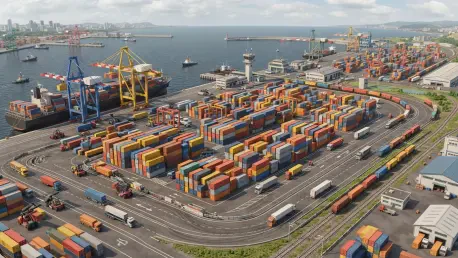

The Strategic Resurgence of America’s Primary Gateway
The global supply chain currently navigates a period of unprecedented volatility that has effectively forced logistics managers to rethink traditional maritime routes across the entire planet. As of late 2026, the Port of Los Angeles transitioned from a standard transit point into a vital “safety valve” for international commerce. This article explores how a combination of climate-driven canal delays and geopolitical instability has funneled record-breaking cargo volumes toward the U.S. West Coast. By examining the recent operational milestones and the strategic shifts of major shippers, it becomes possible to uncover whether this surge is a temporary reaction to crisis or a permanent realignment of global trade patterns.
Historical Context and the Shift Toward the West Coast
For decades, the Port of Los Angeles served as the premier entry point for trans-Pacific trade, yet it often competed with the Suez and Panama Canals for East Coast-bound cargo. Historically, the expansion of the Panama Canal led many shippers to favor “all-water” routes to the Atlantic seaboard to reduce overland rail costs. However, recent years have seen a dramatic reversal of this trend. The foundational concepts of “just-in-time” delivery are being replaced by “just-in-case” strategies, shaped by the memory of pandemic-era bottlenecks and the current reality of environmental constraints. Understanding this shift is essential, as it marks a departure from cost-optimization toward a model that prioritizes reliability and transit speed above all else.
Navigating Environmental and Geopolitical Bottlenecks
The Impact of Drought: Volatility on Traditional Canal Routes
One of the most critical factors driving trade toward Los Angeles is the deteriorating reliability of the Panama Canal. Persistent El Niño-related drought conditions forced authorities to restrict vessel drafts and transit slots, leading to unpredictable wait times throughout the year. In 2026, data revealed that the percentage of vessels waiting over 100 hours to transit spiked significantly compared to the previous year. This volatility makes it nearly impossible for manufacturers to maintain lean inventories. By diverting cargo to the San Pedro Bay, shippers bypass these hydrologic risks entirely, utilizing the Port of LA as a predictable alternative that keeps the flow of goods moving regardless of rainfall patterns in Central America.
Geopolitical Pressures: The Rising Cost of Maritime Transit
Beyond environmental hurdles, the global political landscape has made traditional long-haul routes prohibitively expensive. Ongoing conflicts in the Middle East disrupted the Suez Canal corridor, leading to a doubling of vessel fuel prices within a short eight-month window. Carriers are passing these “war risk” premiums and fuel surcharges directly to cargo owners. In this high-cost environment, the shorter transit time from Asia to the U.S. West Coast offers a double benefit: it reduces fuel consumption and minimizes exposure to high-risk zones. Consequently, third-party logistics providers (3PLs) are increasingly allocating cargo to Los Angeles at the point of origin to safeguard their margins and ensure timely delivery.
Operational Excellence: The Record-Breaking Surge in TEU Volume
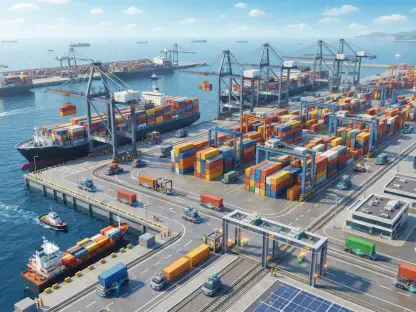
The Port of Los Angeles has responded to these pressures by demonstrating remarkable throughput capacity, recently handling over one million Twenty-Foot Equivalent Units (TEUs) in a single month. This surge is not merely a result of more ships, but of higher efficiency in handling loaded imports and a record number of empty containers. This “frontloading” behavior is a calculated move by retailers to replenish stocks before the holiday season and ahead of major international deadlines. The ability of the port to absorb this massive influx without the crippling congestion seen in years past suggests that infrastructure improvements and better labor-management coordination are paying off.
Future Projections and Emerging Trade Deadlines
Looking toward 2027, several factors suggest that the Port of Los Angeles will remain under high demand. The industry is currently bracing for an early Lunar New Year in February, which typically triggers a pre-holiday rush as Asian factories pause production. Furthermore, the looming expiration of trade agreements between major economies is prompting supply chain managers to accelerate shipments to avoid potential tariff hikes. Technological innovations in port automation and real-time tracking will become even more critical as the facility manages this sustained volume. Expert predictions suggest that the “safety valve” role will evolve into a permanent regional preference if canal reliability does not stabilize in the near term.
Strategic Takeaways: The Global Logistics Industry
The current landscape offers clear lessons for businesses involved in international trade. First, diversification of entry points is no longer optional; relying on a single maritime route introduces unacceptable risk. Companies should consider “frontloading” their inventory during periods of relative stability to avoid the peak-season surcharges and delays that are becoming the new normal. For logistics professionals, the performance of the port serves as a benchmark for how infrastructure can adapt to global disruptions. By utilizing the West Coast’s intermodal rail networks and advanced terminal processing, businesses mitigate the impacts of high fuel costs and environmental unpredictability found elsewhere.
Resilience in a Changing Maritime Landscape
In conclusion, the Port of Los Angeles solidified its status as the indispensable safety valve for global trade. By providing a reliable alternative to drought-stricken canals and high-risk maritime zones, it captured a significant share of global cargo allocations. The transition witnessed was a move toward a more resilient, albeit more complex, supply chain. As long as environmental and geopolitical variables remained volatile, the speed and reliability of the San Pedro Bay continued to draw the world’s cargo. This development ensured that Los Angeles remained at the heart of the global economy for the long term and offered a blueprint for future infrastructure resilience.