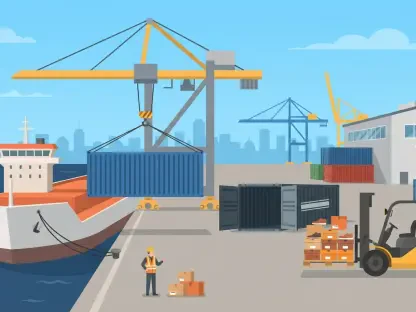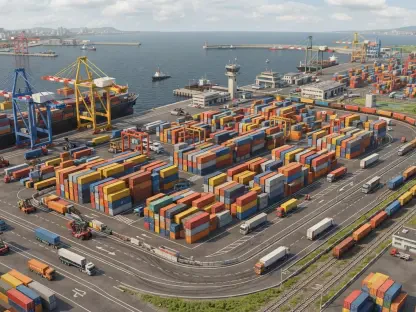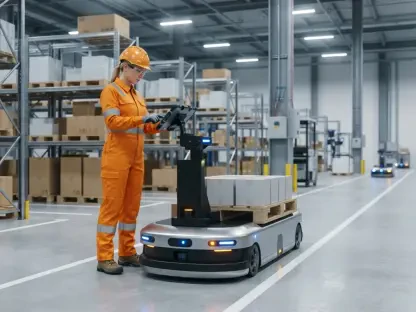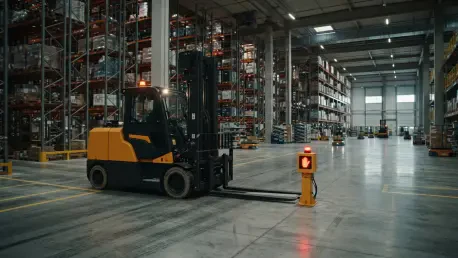

The transition of artificial intelligence from the static confines of digital servers into the dynamic, unpredictable realm of heavy machinery has fundamentally altered the industrial landscape. As smart machines step out of the laboratory and onto the factory floor, the focus is shifting from simple automation toward the complex necessity of absolute control. While the intelligence of these systems continues to grow, the risks associated with a potential failure have become significantly more profound, demanding a new standard for operational safety.
The Invisible Guardrail for the New Machine Age
The rapid migration of artificial intelligence into heavy equipment has created a paradox where smarter machines are becoming more dangerous. As autonomous robots move into bustling warehouses and unpredictable construction sites, the industry is prioritizing reliability over pure capability. The central challenge is no longer just how to make a machine move, but how to ensure it can be stopped instantly when the unexpected occurs.
This shift toward safety-first engineering recognizes that high-speed autonomy requires an equally high-speed intervention method. In dynamic environments, a machine must be able to perceive obstacles, but it also needs a hard-wired safety system that can override its own logic. Establishing these invisible guardrails allows for a more fluid interaction between humans and robots, fostering an environment where innovation does not come at the cost of physical security.
The High Stakes of the Physical AI Revolution
In the traditional software world, a glitch results in a frozen screen, but in the world of physical AI, a glitch can result in a catastrophic collision. As industries like logistics and defense integrate autonomous systems, the primary barrier to massive deployment is no longer intelligence. Trust has become the final hurdle that global enterprises must overcome before they can fully commit to the wide-scale use of robotic fleets.
Without a standardized, independent layer of security that exists outside of a robot’s primary navigation system, the risk of deployment remains too high for most organizations. This independent layer acts as a buffer against software conflicts and sensor failures, providing the necessary assurance that the machine remains under human oversight. The physical AI revolution depends on this foundational trust to move from experimental pilots to permanent industrial infrastructure.
Building the Trust Layer: FORT’s Strategic Approach to Autonomy
The core of current innovation involves the development of an independent safety infrastructure that operates separately from a robot’s primary navigation and logic systems. This “Trust Layer” provides a fail-safe communication framework, ensuring that a reliable human-in-the-loop or automated safety override remains functional. By securing over $20$ million in new funding led by Tiger Global and Mark Cuban Companies, the company is scaling this architecture to meet an urgent global demand.
This strategic injection of capital allows for the expansion of a safety protocol that is as essential as the hardware itself. The goal is to provide a robust, non-negotiable security standard that functions even if the robot’s main processor experiences a total system lockout. This approach ensures that connectivity remains prioritized, allowing for remote emergency stops and real-time situational awareness across diverse mechanical platforms.
Validation from the Titans of Tech and Industry
The necessity of a dedicated safety layer is reflected in the rapidly expanding footprint of these systems, with over $19,500$ units already deployed. Industry leaders such as Google DeepMind, Agility Robotics, and Zoox have integrated this technology to manage the inherent risks of autonomous machinery. These partnerships demonstrate a clear market consensus that a dedicated safety layer is a non-negotiable component for any enterprise scaling its robotic operations.
Investors and partners view this technology not just as a peripheral tool, but as a critical enabler for the entire sector. By providing a uniform safety standard, it allows companies to deploy heterogeneous fleets with the confidence that their physical assets are protected. This widespread validation proves that the future of autonomy is not just about the quality of the AI, but the reliability of the safety net that supports it.
Strategies for Implementing Safety in Autonomous Fleets
To effectively integrate physical AI into industrial operations, organizations must adopt a multi-tiered safety framework. This involves establishing an independent safety path that operates on a dedicated frequency to prevent interference from primary data processing. Leveraging connectivity aggregation software also ensures that the trust layer remains active even in areas with poor signal, maintaining a constant link between the operator and the machine.
Standardizing stop protocols and deploying modular infrastructure allows companies to maintain a uniform safety culture across different types of hardware. These steps ensured that from $2026$ to $2028$, the deployment of autonomous systems remained predictable and secure. The industry moved toward a model where safety was built into the foundation of the machine rather than added as an afterthought. This transition paved the way for a new era of productivity where human-machine collaboration reached its full potential through the implementation of rigorous, independent security standards.