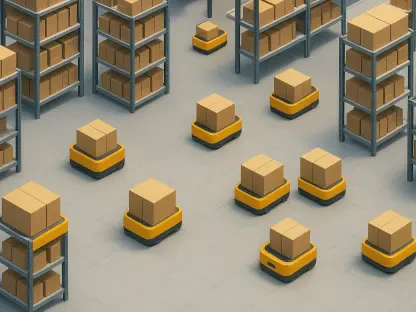

The invisible thread that binds a physical product to its digital twin is often the weakest link in a global supply chain, yet modern smart labeling is finally closing the perilous gap between the packaging line and the final warehouse destination. This transition represents more than a simple upgrade in identification; it is a fundamental shift toward an intelligent, data-driven ecosystem where products carry their own history, destination, and handling requirements. In a landscape where global disruptions are no longer anomalies but regular occurrences, the ability to maintain a continuous digital thread is what separates operational excellence from logistical failure. This review examines how smart labeling has moved beyond the simple tag to become a sophisticated communication tool that ensures accuracy and continuity in complex environments.
The core of the issue lies in the historical disconnect between the point where a product is packaged and the point where it enters an inventory system. Modern logistics identifies this as the “silent error” phenomenon, where a label printed or applied incorrectly at the packaging stage remains undetected until it causes a failure at the receiving dock or, worse, during fulfillment. Because packaging and warehousing have traditionally operated as separate functional silos, a mistake at the source propagates through the entire supply chain, gaining economic weight with every step it takes. Smart labeling addresses this by creating a bidirectional flow of information, allowing systems to verify the identity and status of a package at every critical junction.
Understanding the Packaging-to-Warehouse Connection Through Smart Labeling
Smart labeling technology functions as the primary digital thread connecting disparate stages of the product lifecycle into a unified stream of data. Unlike legacy systems, which treat labeling as the final, passive step of production, modern smart labels are active participants in the manufacturing process. They serve as a real-time bridge that solves the problem of information lag by ensuring that the physical package always matches its digital record in the Warehouse Management System. This integration is essential because it eliminates the reliance on human memory or manual cross-referencing, which are the primary drivers of discrepancies in modern distribution centers.
The relevance of this technology has surged as the economic impact of labeling failures has become more apparent to global enterprises. When a labeling error occurs, the result is not just a misplaced box but a disruption in supply chain continuity that can halt production lines and lead to massive chargebacks from retailers. By reducing the frequency of these failures, smart labeling provides a robust defense against the financial drain of incorrect shipments. It allows companies to transition from a reactive posture, where they fix errors after they happen, to a proactive model where the system prevents the error from occurring in the first place.
Radio Frequency Identification (RFID): High-Speed Processing Capabilities
Radio Frequency Identification has emerged as the cornerstone of smart labeling due to its unique ability to function without a direct line-of-sight. Unlike barcodes, which require a scanner to be physically aligned with the tag, RFID uses electromagnetic fields to capture data from thousands of items simultaneously. This capability allows for inventory processing speeds that are significantly faster than manual methods, effectively removing the bottleneck that occurs during the receiving and sorting stages. The achievement of 99.9% accuracy rates is not just a statistical improvement; it represents a move toward near-perfect inventory visibility that was previously impossible in high-volume environments.
The performance of RFID in 2026 is defined by its ability to handle complex, high-density environments where traditional scanning would fail. In a modern warehouse, an RFID gate can scan an entire pallet of mixed goods in seconds, automatically reconciling the physical items against the digital manifest. This level of automation reduces the labor hours required for auditing and virtually eliminates the human error associated with repetitive scanning. The technology has evolved to be more resilient, allowing tags to be read through various packaging materials and even in proximity to liquids or metals, which were once major technical hurdles.
Advanced 2D Data Matrix and NFC Integration
While RFID handles high-speed bulk processing, 2D Data Matrix codes and Near Field Communication (NFC) provide the high data capacity necessary for detailed tracking. A traditional barcode is limited to a few dozen characters, but a 2D matrix can store thousands, including batch numbers, manufacturing dates, and specific routing instructions. This allows the label to carry all the metadata required for compliance and logistics without needing to query a central database for every detail. NFC takes this a step further by allowing bidirectional communication via smartphones or specialized readers, enabling field technicians or even consumers to access the product history instantly.
These components are unique because they support a more decentralized data architecture. Instead of the label being a simple pointer to a database entry, it becomes a portable data carrier. This is particularly vital for international shipping, where a package may pass through various logistics providers who do not share the same software platforms. The 2D code or NFC chip ensures that the vital information stays with the product regardless of which system is reading it. This interoperability is the key to maintaining a single source of truth across a fragmented global supply chain, allowing for seamless handoffs between manufacturers, carriers, and retailers.
Market Evolution: The Transition From Legacy Barcode Systems
The shift away from traditional barcodes is driven by their physical vulnerability and limited utility in an AI-driven world. Barcodes are susceptible to environmental damage; a simple scratch or a bit of moisture from a refrigerated warehouse can render them unreadable, leading to manual interventions that slow down the entire operation. In contrast, the smart label market is projected to grow to nearly $39 billion by 2036, reflecting a clear industry consensus that the future of logistics requires more durable and intelligent identification. Companies are increasingly viewing the label as a communication tool that provides the granular data necessary for advanced analytics and machine learning.
The modernization of labeling also reflects a change in how businesses manage their assets. In the past, a label was a disposable tag that was discarded after the product reached its destination. Today, smart labels are integrated into the product’s circular economy journey, helping with everything from anti-counterfeiting to recycling instructions. This evolution has moved labeling from a cost center to a strategic asset. As logistics becomes more automated, the need for labels that can “talk” to robots and automated storage and retrieval systems has made legacy barcodes obsolete in many high-tech facilities.
Real-World Applications: Phased Implementation Strategies
In industries like food and beverage, smart labeling has become a necessity for regulatory compliance, specifically regarding allergen documentation and safety standards. The ability to track a specific batch back to its raw ingredients in seconds is crucial during a recall. Organizations that have successfully integrated smart labeling often follow a three-phase model to manage the transition. It typically begins at the receiving docks to capture inbound errors, moves to the packaging line for source-level integration, and culminates in a full system reconciliation where every movement is tracked in real-time. This phased approach allows for the gradual training of the workforce and the refinement of data protocols.
The integration with Warehouse Management Systems and Enterprise Resource Planning platforms creates a cohesive operational environment. When a smart label is scanned on the packaging line, it immediately updates the inventory levels in the ERP, allowing procurement teams to make better decisions based on actual production rather than estimates. This synergy eliminates the “ghost inventory” problem, where items are physically present but invisible to the digital system. By creating this single source of truth, businesses can operate with much tighter margins and faster turnaround times, which is essential for meeting the demands of modern e-commerce.
Overcoming Technical Hurdles: Analyzing Economic Barriers
Despite the clear advantages, smart labeling faces significant challenges, notably the “cost multiplier effect” where undetected errors grow more expensive over time. A labeling mistake caught at the packaging line might cost pennies to fix, but that same error in the warehouse requires quarantine, manual re-labeling, and expensive administrative reconciliation. Furthermore, high workforce turnover in the logistics sector often leads to a loss of institutional knowledge, making it harder to maintain complex labeling systems. This turnover contributes to “invisible inventory” when inexperienced workers mislabel or misplace goods, highlighting the need for technology that is both sophisticated and user-friendly.
Regulatory issues also continue to pose a hurdle, as seen in the high frequency of product recalls caused by documentation failures. These are often not defects in the product itself but failures in how the product’s data was communicated via the label. Ongoing development efforts are focused on making smart labels more durable and cheaper to produce, which would lower the barrier to entry for smaller manufacturers. Reducing the price per tag is a primary goal for the industry, as this would allow the technology to be applied to lower-margin goods, further expanding the reach of the digital thread throughout the global market.
Future Outlook: The Path Toward Predictive Logistics
The trajectory of smart labeling points toward total data continuity and the rise of predictive logistics. By using the wealth of data generated by smart labels, companies can anticipate bottlenecks before they occur and adjust their operations accordingly. Future developments will likely focus on even more sophisticated sensors that can monitor the environmental conditions of a package, such as temperature and humidity, and transmit that data through the smart label. This would be transformative for the pharmaceutical and perishable goods industries, where maintaining a specific environment is as important as the location of the product itself.
In the long term, the adoption of this technology is expected to lead to a significant reduction in safety stock levels, potentially by 15% to 25%. When a company has absolute confidence in its inventory data, it no longer needs to tie up capital in excess “just in case” stock. This frees up working capital for innovation and expansion, providing a competitive edge that extends far beyond the warehouse floor. The path toward operational excellence is paved with accurate, real-time data, and smart labeling is the vehicle that delivers that information from the production line to the end user.
Summary of Key Findings: A Decisive Industry Impact
The review of smart labeling technology established that the shift from simple error detection to proactive error prevention was the most significant advancement in modern logistics. The analysis showed that the connection between the packaging line and the warehouse remained a critical vulnerability that only intelligent data systems could effectively bridge. The research identified that the transition from legacy barcodes to RFID and 2D systems was driven by the need for higher accuracy, greater data density, and the ability to process goods at speeds that manual systems could never match. The findings confirmed that the economic impact of labeling failures, including the cost of recalls and freight errors, necessitated a more robust identification infrastructure.
The evaluation also underscored that while technical and economic hurdles like high implementation costs and workforce turnover existed, the long-term benefits of inventory visibility far outweighed these initial barriers. The technology proved its value by creating a single source of truth that integrated seamlessly with existing management platforms, leading to a reduction in safety stock and an increase in overall efficiency. Ultimately, the review concluded that bridging the gap between packaging and warehousing through smart labeling was no longer an optional upgrade but a fundamental requirement for any organization aiming for long-term operational excellence in a disrupted global economy.