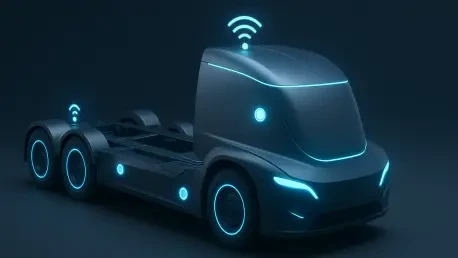

The global logistics industry stands on the precipice of a radical transformation as traditional long-haul shipping grapples with rising fuel costs and a persistent shortage of qualified commercial drivers. Pony.ai recently introduced its fourth-generation Level 4 autonomous heavy-duty truck at the IAA TRANSPORTATION 2026 exhibition in Hannover, Germany. This milestone marks the definitive transition from experimental autonomous prototypes to scalable, mass-produced freight solutions designed for the rigors of modern commerce. Built on the T9 battery-electric platform, the vehicle represents a convergence of cutting-edge artificial intelligence and sustainable automotive engineering. By showcasing this technology on a global stage, the company has signaled its readiness to move beyond pilot programs into full-scale commercial operations. The integration of high-level autonomy into a production-ready chassis provides a glimpse into a future where logistics are safer, cleaner, and significantly more efficient than previous models allowed.
Development and Strategic Integration
Collaborative Engineering: The T9 Foundation
The development cycle of this fourth-generation vehicle highlights a remarkably efficient collaboration between high-tech software developers and established automotive manufacturers. In just five months, the partnership progressed from a strategic agreement to a fully validated model ready for public exhibition, showcasing the power of integrated engineering. This rapid pace was made possible by leveraging the software expertise of the autonomous driving firm alongside the robust manufacturing capabilities of GAC. The T9 platform serves as a critical foundation, offering the structural integrity and electrical architecture necessary for sophisticated Level 4 operations. By utilizing a battery-electric chassis, the design addresses the urgent need for decarbonization in the logistics sector while providing a stable platform for high-performance computing. This synergy ensures that the final product is not merely a prototype but a vehicle engineered for the rigors of long-haul logistics across various terrains and climates.
A central theme of this announcement is the concept of a unified technology stack that can be applied across diverse vehicle platforms. The fourth-generation robotruck utilizes the same domain controller found in the most recent robotaxi models, illustrating a universal driver approach that simplifies software maintenance and updates. This common architecture allows for faster deployment of improvements across an entire fleet, regardless of whether the vehicle is transporting passengers or freight. Furthermore, the development team focused on reducing the complexity of the hardware integration to ensure that the assembly process remains as streamlined as possible. By standardizing the interface between the autonomous driving kit and the vehicle chassis, the partnership has laid the groundwork for high-volume manufacturing. This approach not only speeds up the time-to-market but also ensures that every unit produced meets the same exacting standards of safety and operational performance required for public roads.
Technical Reliability: Sensing and Economics
Safety remains the primary objective in the design of the fourth-generation truck, which features a comprehensive redundancy system covering all critical operational components. Every vital function, including steering, braking, communications, and power supply, is equipped with secondary backups to ensure that the vehicle can maintain control even in the event of a primary system failure. The sensing suite is equally impressive, consisting of nine lidars, three millimeter-wave radars, and 13 cameras that work in tandem to provide a complete 360-degree view of the surrounding environment. This sensor fusion strategy eliminates blind spots and allows the onboard computer to make split-second decisions with high precision in complex traffic scenarios. By prioritizing a redundant hardware architecture, the designers have addressed one of the most significant barriers to the widespread adoption of autonomous trucking, providing the reliability necessary for high-speed highway operations and congested port logistics.
The industry successfully transitioned toward a model where economic and environmental efficiency became the driving forces behind technological innovation. Pony.ai reduced the bill-of-materials cost for its autonomous driving kit by approximately 70 percent, which subsequently lowered the overall transportation cost per ton-kilometer by 30 percent compared to older systems. The implementation of specialized energy-efficiency algorithms and an ultra-low drag coefficient allowed for a ten percent reduction in energy consumption during long-haul routes. Moving forward, logistics providers should prioritize the integration of these high-efficiency platforms into existing supply chains to capitalize on these cost savings. Strategic expansion into regions like Europe and the Middle East established a template for international deployment that other firms must now follow to remain competitive. Future efforts focused on harmonizing global regulatory frameworks to support the seamless movement of autonomous freight across international borders.