
Rohit Laila stands at the intersection of physical movement and digital intelligence, bringing decades of deep-sector experience in logistics and supply chain management to the table. Having navigated the complex evolution of delivery systems from manual sorting to the cusp of full autonomy, he possesses a unique vantage point on how technology serves as the backbone of global commerce. His passion for innovation isn’t just about adopting new gadgets; it is about fundamentally re-engineering the reliability and efficiency of how the world operates. In this conversation, we explore how the latest advancements in physical AI and simulation libraries are providing the necessary “brain” and “senses” for the next generation of autonomous factories.
This discussion focuses on the groundbreaking integration of Omniverse libraries into the NVIDIA Agent Toolkit, a move that empowers AI agents to manage the complexities of 3D content creation. We delve into the technical nuances of sensor simulation and physics-based modeling that allow for realistic testing of lidar and radar outputs. Furthermore, we examine the collaborative efforts with industry leaders to bridge the gap between initial CAD designs and simulation-ready environments, ensuring that the physical AI era is built on a foundation of digital precision.
How does a “simulation-first” approach redefine the development of autonomous factories and robots compared to traditional prototyping?
In the old days of logistics, we built a physical prototype, watched it fail on the concrete floor, and then went back to the drawing board—a process that was both expensive and incredibly slow. This new “simulation-first” era flips that script by requiring robots and autonomous systems to be designed, tested, and trained in a virtual space before a single bolt is tightened in reality. It’s not just about pretty 3D pictures; we are talking about assets that have the right structure, materials, scale, and labels to act as they would in a physical warehouse. By utilizing the Agent Toolkit and Omniverse libraries, we can create simulation-ready environments that mimic the chaotic nature of a real-world factory. This allows us to iron out nearly all logic and safety issues in a digital twin, ensuring that when the physical machine finally powers up, it already has the “experience” of thousands of hours of operation without the risk of a single real-world collision.
In what ways do AI agents within the NVIDIA Agent Toolkit simplify the traditionally labor-intensive process of preparing 3D content for simulation?
Preparing 3D content has always been a massive bottleneck, often requiring technical artists to manually tag every sensor and define every physical property, but the new Omniverse libraries change that dynamic. AI agents now have the specialized tools and skills to build workflows, inspect complex scenes, and flag potential issues before they cause a simulation to crash. These agents can autonomously prepare assets, helping developers move much faster from raw 3D content to a functional, simulation-ready environment. It’s like having a digital foreman who can validate the mass and friction of an object with GPU-accelerated precision while the human designer focuses on high-level strategy. This level of automation means we can generate and test procedural content at a scale that was previously impossible, making the transition to physical AI feel almost frictionless.
Could you explain how specific libraries like ovrtx and ovphysx provide robots with the “senses” and “intuition” they need to function in virtual environments?
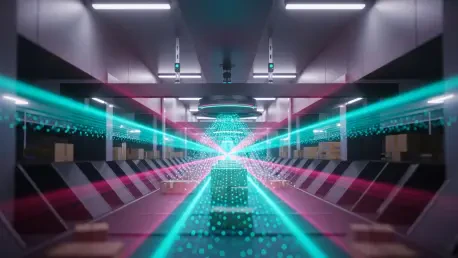
The technical magic happens when you give an AI the ability to actually “feel” and “see” its surroundings through these specialized libraries. The ovrtx library helps applications generate high-fidelity camera, lidar, and radar outputs directly from 3D scenes, allowing a robot to practice perceiving its environment just as it would on a busy loading dock. On the other side, ovphysx uses GPU-accelerated physics to bring realistic behavior to the scene, calculating mass, friction, and motion in real-time. Imagine a robotic arm reaching for a box; it needs to understand how that box will slide or resist based on its weight and the surface it’s sitting on. By testing these interactions in a virtual space first, we can ensure the robot’s physical behavior is predictable and safe before it ever encounters a human coworker.
How is the integration of OpenUSD and CAD-to-SimReady workflows bridging the gap between initial engineering designs and final autonomous testing?
One of the biggest headaches in our industry has been the “data silo” between the engineers who design a product and the teams who simulate its deployment. By using CAD-to-SimReady skills, we can now convert standard CAD data into SimReady assets built on the OpenUSD framework, which keeps the properties needed for physical AI simulation intact. Companies like PTC are already using this to connect cloud-native design workflows with physical simulation, ensuring that product design content stays connected with CAD and PDM data. This means if a designer changes the material of a component in their CAD software, that change can flow directly into the simulation, automatically updating the object’s physical properties. This connectivity eliminates the tedious manual rework that used to haunt the development cycle, allowing for a more agile and validated design process.
How do procedural 3D creation tools, such as those used by SideFX, benefit from having agent-ready tools integrated into their existing creative workflows?
Procedural creation is the secret sauce for building the incredibly complex and controllable worlds required for industrial AI. SideFX is exploring how these new libraries and OpenUSD workflows allow technical artists to use AI agents to support their Houdini workflows, providing a path to generate and test physics without leaving their creative environment. This allows an artist to create a massive, detailed warehouse layout and then have an agent immediately review and prepare that procedural content for simulation. It gives the human creator total control over the creative process while the AI handles the heavy lifting of validation and sensor simulation. The result is a much tighter feedback loop where you can see exactly how a change in the environment will impact the robot’s performance in real-time.
What is your forecast for the future of physical AI in the logistics and manufacturing sectors?
I believe we are entering a phase where the boundary between the digital and physical worlds will become nearly indistinguishable in terms of operational logic. Within the next few years, the “simulation-first” approach will be the standard for every major logistics hub, reducing deployment times for new autonomous fleets by as much as fifty percent. As AI agents become more adept at using tools like those announced at SIGGRAPH 2026, we will see factories that can self-optimize in a virtual space before implementing changes in the physical world. This will lead to a level of efficiency and safety that was once the stuff of science fiction, where robots and humans work in a perfectly choreographed, data-driven dance. The ability to validate every sensor beam and every physical interaction in simulation means we are moving toward a world of “zero-error” physical deployments.