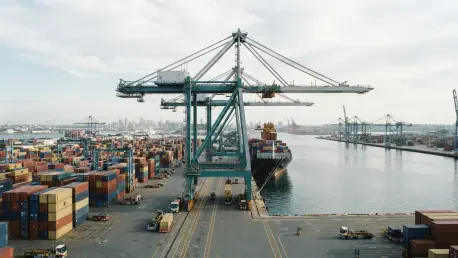

The global shipping landscape is currently undergoing a massive structural reorganization as port facilities shift from human-centric operations to high-precision robotic networks. Modern maritime hubs no longer operate as isolated clusters of heavy machinery but have evolved into sophisticated, data-driven, cyber-physical ecosystems where every container move is calculated by advanced algorithms. This transition marks the end of the era of monolithic port entities, where the terminal was seen as a single, blunt instrument of trade. Today, the focus has shifted toward granular, equipment-level intelligence, treating every crane and vehicle as a high-functioning digital node within a larger, synchronized framework.
Within this evolving architecture, the “limbs” of global trade—quay cranes, automated guided vehicles, and stacking cranes—have become the primary subjects of research and development. In the current 2026 landscape, the focus is not just on moving boxes but on the precision and fluidity with which these mechanical assets interact. While the terminal operating system serves as the brain, it is the performance of these individual limbs that determines the overall throughput and reliability of the supply chain. Consequently, there is a geographical surge in innovation coming out of Asia and Europe, where researchers are refining how these machines communicate and react to real-time environmental changes.
Several key technological drivers are pushing the industry forward at an unprecedented rate. Artificial Intelligence is no longer a peripheral tool; it is now deeply embedded in the hardware, enabling machines to learn from their own operational history. IoT sensors provide a continuous stream of data, creating high-fidelity digital twin simulations that allow port authorities to test operational changes in a virtual environment before deploying them on the dock. This convergence of physical strength and digital precision is transforming maritime logistics into a field defined by predictive maintenance, autonomous navigation, and millimeter-level accuracy.
Transforming Maritime Logistics: From Mechanical Strength to Cyber-Physical Ecosystems
The current state of port automation reflects a profound shift from traditional mechanical engineering toward a comprehensive cyber-physical approach. Historically, the primary goal was to build larger and faster machines to handle the growing size of container vessels. However, in the 2026 market, the emphasis has shifted to how these machines integrate into a wider ecosystem. This granular intelligence allows for a more flexible response to the inherent volatility of maritime shipping. Instead of a rigid, pre-programmed sequence of events, modern equipment can now adjust its behavior based on the specific requirements of each task, minimizing downtime and maximizing the utilization of every square foot of the terminal.
Furthermore, the roles of various mechanical entities are being redefined to support this new level of integration. Quay cranes are no longer just heavy lifters; they have become sophisticated sensing platforms that gather data on vessel stability and container integrity during the unloading process. Automated guided vehicles function as mobile sensors, mapping the terminal floor in real-time to identify obstacles or surface irregularities. Stacking cranes, meanwhile, utilize complex stacking algorithms to ensure that the most frequently used containers are always the most accessible. This interconnectedness ensures that no machine operates in a vacuum, creating a seamless flow of information and physical goods from ship to shore.
The geographical concentration of this research highlights a competitive race between major global regions to define the next generation of logistics standards. European ports are leading the way in the development of open-source interfaces and interoperability standards, ensuring that equipment from different manufacturers can work together effectively. Simultaneously, Asian terminals are pushing the boundaries of scale and sheer speed, implementing massive automated projects that serve as living laboratories for high-density cargo handling. These parallel efforts are driving a global standard for port efficiency that relies heavily on the marriage of physical robotics and cloud-based analytical platforms.
The Evolution of Automated Port Machinery and Market Intelligence
Defining the Five-Level Taxonomy of Equipment Automation
The industry has recently adopted a sophisticated five-level taxonomy for equipment automation, adapted from the standards used in the autonomous vehicle sector. At Level 1, machines remain fully manual, requiring a human operator to physically manipulate every control. Level 2 introduces operator assistance, where the machine can perform certain tasks like anti-sway movements, though the human remains the primary controller. Level 3 marks a significant transition toward semi-automation, allowing machinery to operate autonomously within strictly defined zones, such as a fenced-in container block where no humans are present. This stage is currently common in many modern stacking yards where safety can be strictly controlled.
At the more advanced stages, the level of complexity increases significantly as the machine takes on more decision-making responsibilities. Level 4 automation allows for high autonomy in broader areas, where vehicles like automated guided vehicles can navigate complex paths with minimal human oversight. The ultimate goal remains Level 5, or full automation, where machines can operate in mixed-traffic environments alongside human-driven trucks and terminal workers. Reaching this level requires a profound degree of synchronization between different types of machinery to ensure that hand-offs are executed with absolute safety and efficiency, reducing the risk of collisions and operational bottlenecks.
The transition from Level 2 human-computer interaction to Level 3 and 4 autonomous operations represents a major leap in terminal sustainability. When machines operate autonomously, they follow optimized paths and maintain consistent speeds, which significantly reduces energy consumption compared to the more erratic movements of manual operation. Moreover, this shift allows human workers to move from high-risk environments on the dock to remote control centers where they can oversee multiple machines simultaneously. This evolution not only improves safety but also addresses the ongoing labor shortages facing the maritime sector by making port work more attractive to a tech-savvy workforce.
Market Trends and Data-Driven Growth Projections
Looking at the trajectory from 2026 toward 2030, the market for automated port equipment is expected to grow as more facilities transition to smart stacking and AI-driven yard management. These systems are designed to minimize energy waste by reducing the number of times a container must be moved or reshuffled. Current data suggests that AI-optimized terminals can reduce reshuffling by up to thirty percent, which translates to a massive reduction in the operational carbon footprint of a major hub. The push for green logistics is no longer just a regulatory requirement but a core driver of investment in new machinery.
Innovation in horizontal transport is currently centered on the integration of sensor fusion and reinforcement learning. By combining data from cameras, lidar, and radar, automated vehicles can now perceive their environment with a degree of clarity that allows for safe operation even in adverse weather conditions. This technical precision is measured in millimeters, ensuring that containers are placed on trailers or stacks with the exact alignment required for automated systems to function correctly. This level of accuracy is essential for the high-speed operations required to service the mega-vessels that dominate modern trade routes.
Performance indicators are also evolving to reflect the shift toward synchronization rather than just raw speed. Instead of measuring the maximum speed of a single crane, port authorities are now looking at synchronized speed metrics, which evaluate how well a machine matches the pace of the rest of the fleet. This approach prevents bottlenecks where one fast machine outpaces the equipment downstream, leading to idle time and wasted energy. By tuning the entire terminal to a consistent, optimized rhythm, operators can achieve a higher level of long-term reliability and predictability in their cargo processing timelines.
Navigating Technical and Operational Obstacles in Port Modernization
Despite the rapid advancement of primary equipment, a significant automation lag remains for utility vehicles such as reach stackers and terminal tractors. These machines are often the most difficult to automate because they must operate in unstructured spaces and perform complex, non-repetitive maneuvers. While a quay crane moves along a fixed rail, a reach stacker must navigate through a cluttered yard and interact with a variety of different chassis and container types. This environmental complexity has kept many of these utility machines stuck at lower automation levels, creating a weak link in the overall automated workflow of brownfield ports.
Existing ports, often referred to as brownfield sites, face unique challenges when attempting to modernize their operations. Unlike greenfield ports that are built from the ground up with automation in mind, brownfield facilities must integrate new technology into legacy infrastructure and established workflows. This often results in a fragmented system where automated cranes must interact with human-driven trucks, leading to safety concerns and decreased efficiency. Overcoming these barriers requires a phased approach to modernization, where specific zones are automated one at a time while maintaining a high degree of oversight during the transition period.
The problem of vendor lock-in is another major hurdle that the industry is currently working to solve. For too long, proprietary software has prevented equipment from different manufacturers from communicating effectively, forcing port authorities to stick with a single supplier for their entire fleet. This lack of interoperability stifles innovation and drives up costs. To address this, there is a growing movement toward the adoption of interface standards like VDA 5050, which provide a common language for automated vehicles. By breaking down these proprietary barriers, ports can select the best machinery for their specific needs while ensuring that the entire fleet operates as a unified system.
Regulatory Frameworks, Connectivity Standards, and Cybersecurity
Ensuring the reliability of remote operations requires the implementation of deterministic networks that can guarantee millisecond-level signal consistency. In an environment where a massive crane is being operated from a control room miles away, any delay or jitter in the communication signal can have disastrous consequences. Current investments are focused on 5G and dedicated fiber-optic backbones that provide the low latency required for safe tele-operation. This connectivity is the foundation upon which all other automation efforts are built, and without it, the high-level coordination required for Level 4 and 5 automation would be impossible.
Compliance with international safety standards is becoming increasingly complex as machines take on more autonomous responsibilities in high-risk maritime environments. Regulators are now requiring that automated systems have redundant safety features and fail-safe mechanisms that can take over in the event of a system failure. This includes everything from physical emergency stop buttons to sophisticated software overrides that can detect when a machine is behaving erratically. These frameworks are essential for building trust among the workforce and ensuring that the move toward automation does not come at the expense of human safety or environmental protection.
As ports become more data-centric, the cyber-physical threat landscape is becoming a primary concern for terminal operators. The risk is no longer limited to data breaches; it now includes the potential for malicious actors to hijack the controls of heavy machinery or disrupt the dispatch algorithms that keep the port running. Implementing multi-factor authentication and anomaly detection systems is now a standard part of the automation process. These security measures are designed to detect unusual patterns in machine behavior, such as a crane attempting to move outside of its designated zone, and automatically shut down the system before any damage can occur.
Future Horizons: Innovation, Decarbonization, and Robotics
The push for green logistics is driving a massive wave of electrification across terminal fleets. Many ports are now moving toward charging-aware scheduling, where the power needs of electric vehicles are integrated into the daily operational plan. This ensures that vehicles are charged during off-peak hours or during natural lulls in terminal activity, preventing any impact on the local power grid. This shift toward electrification is a key component of the maritime industry’s commitment to decarbonization, helping to reduce the overall environmental impact of global trade as it moves toward net-zero targets.
Emerging maintenance robotics are also changing how ports manage their infrastructure. Unmanned aerial vehicles and remotely operated underwater vehicles are now being used to inspect quay walls and crane structures without requiring a shutdown of operations. These robots can identify structural issues such as cracks or corrosion long before they become a safety hazard, allowing for proactive maintenance that extends the life of the asset. This use of robotics in maintenance is a significant step toward the goal of a zero-downtime port, where repairs and inspections are carried out seamlessly alongside cargo handling.
Looking ahead, the industry is preparing for a transition to Level 5 automation in mixed-traffic environments where humans and robots must coexist. This requires a new level of environmental awareness, where machines can not only follow paths but also understand the intentions of the humans around them. Global economic conditions and evolving environmental regulations will continue to influence these investments, but the direction of the industry is clear. The move toward a synchronized, robotic future is driven by the need for mathematical precision and a long-term commitment to the reliability of the global supply chain.
Strategic Roadmap for a Synchronized Maritime Future
The research established that the successful transformation of a maritime terminal depended more on the strength of its digital interfaces than on the raw power of its cranes. It was discovered that the most resilient ports were those that moved away from proprietary, closed-loop systems in favor of open-architecture frameworks that allowed for multi-vendor collaboration. This shift ensured that the facility could evolve over time, integrating new technologies as they emerged without being tethered to a single manufacturer’s development cycle. The findings highlighted that the transition to automation was most effective when it was treated as a holistic evolution of the entire ecosystem rather than a series of isolated equipment upgrades.
Port authorities prioritized interface-first strategies that allowed human operators to collaborate with intelligent machines rather than being replaced by them. This approach recognized that while robots handled repetitive and high-precision tasks with ease, human expertise remained vital for managing the complex exceptions that often occur in the volatile shipping environment. The industry concluded that the long-term reliability of the global supply chain was best served by a hybrid model that combined mathematical precision with human oversight. By fostering this level of synchronization, maritime logistics centers successfully turned the challenge of modernization into a sustainable competitive advantage for the decades ahead.