
Beyond the Bin: Reimagining Municipal Logistics in North-West Germany
The rhythmic clatter of discarded smartphones and shattered glass once signaled a logistical headache for municipal workers in Germany, but a silent revolution in containment technology is finally replacing the chaos of the past. In the Emsland district, a significant shift is proving that industrial aesthetics can meet modern efficiency. For decades, the method of gathering small electronic devices remained largely stagnant, relying on outdated tools that failed to keep pace with the complexities of the digital age.
By replacing legacy equipment with high-performance plastic pallet boxes, Abfallwirtschaftsbetrieb Emsland moved beyond mere collection to a sophisticated logistical system. This transition represents a broader trend in municipal waste management toward prioritizing durable equipment that enhances operational efficiency while reducing the environmental footprint of regional recycling programs. This transformation demonstrates that the infrastructure behind waste disposal is just as critical as the recycling process itself.
The Fragile Reality of Traditional E-Waste Containment
The necessity of this upgrade stemmed from systemic failures in the previous model, which relied heavily on metal mesh containers. These industrial cages were never designed for the granular nature of modern e-waste; their open-grid structure allowed small components and batteries to slip through, necessitating the use of disposable plastic liners. This dual-component system was labor-intensive and environmentally counterproductive, as punctured liners generated significant single-use plastic waste and allowed material loss.
As global electronic waste volumes climb from 2026 through the next several years, a singular, robust containment solution has become a critical priority. Authorities seek to balance rising operational costs with environmental mandates that penalize material leakage and waste. The previous reliance on consumables created an inefficient cycle of purchasing and discarding liners that no longer aligns with modern industrial standards or the expectations of a circular economy.
The CB3 Transition: Engineering a Smarter Collection Loop
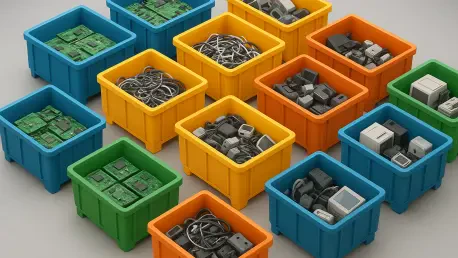
The core of this transformation lies in the integration of approximately 150 Craemer CB3 plastic pallet boxes, which eliminated the need for secondary packaging. These units feature solid, dimensionally stable walls that provide a secure environment for small appliances without the risk of contamination. Unlike metal mesh that can warp or rust, the industrial-grade plastic of the CB3 resists the daily rigors of public recycling sites and harsh weather exposure.
The boxes are designed for high-density storage, allowing them to be stacked securely to maximize the footprint of collection areas. Full compatibility with standard forklift operations enables a rapid exchange cycle where full units are swapped for empty ones in seconds. By removing consumable liners, the authority successfully streamlined its internal supply chain while ensuring hazardous components remain safely contained during the entire transport process to processing centers.
Operational Validation: Insights from Emsland and Craemer
Success in the Emsland initiative is grounded in firsthand reports highlighting tangible improvements in daily workflows. Serina Hofschlag of Abfallwirtschaftsbetrieb Emsland noted that the transition fundamentally improved the handling process, making the operation cleaner and more professional. Michael Winter of Craemer echoed this sentiment, pointing out that industrial plastic containers solve specific municipal challenges through superior engineering and a focus on long-term utility.
These expert perspectives confirm the shift was about adopting a durable philosophy toward waste management infrastructure. The integration of high-quality materials ensures the investment remains viable, reducing the frequency of equipment replacement. This alignment between municipal needs and industrial design has set a new benchmark for regional waste processing, proving that even mundane logistical tasks benefit from modern innovation and high-performance materials.
Modernizing Regional Waste Infrastructure: A Blueprint for Efficiency
The transition in Emsland established a clear framework for other organizations looking to modernize their infrastructure. Strategic audits identified locations where material loss was highest, allowing managers to target problematic collection points effectively. Procurement departments shifted focus away from short-term solutions toward high-performance, recyclable plastics that offered a longer service life than traditional combinations of metal and disposable plastic.
Logistics were organized around standardized box dimensions to allow for the immediate replacement of full containers, maintaining a constant flow toward processing centers. Operations became more fluid as manual liner installation was removed, allowing personnel to focus on higher-value tasks. Ultimately, this move toward specialized containment provided a scalable model that balanced immediate operational gains with the necessity for long-term ecological responsibility in an increasingly digital world.