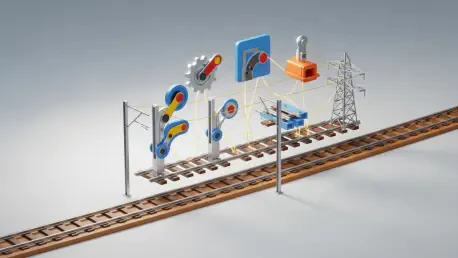

Maintaining a high-capacity rail network demands a strategic shift away from reactive maintenance toward a holistic model of infrastructure management that prioritizes long-term stability over short-term technical adjustments. In the complex world of modern transit, an intervention represents any planned activity designed to sustain or improve an asset, from replacing a section of track to updating a signaling relay. When these interventions are handled in isolation, the rail network suffers from a thousand small cuts, each leading to cumulative delays and ballooning operational costs. Strategic packaging, however, serves as the glue that binds these disparate tasks into a coordinated, efficient work bank.
The core of this evolution lies in the transition from project-centric thinking to network-centric planning. Instead of viewing a signal failure and a worn-out sleeper as two unrelated problems, infrastructure managers now recognize them as components of a single geographical corridor that can be addressed simultaneously. This sophisticated coordination is no longer a luxury but a requirement for financial sustainability. By optimizing how and when these interventions occur, rail operators can maximize the value of every hour the track is closed to traffic, ensuring that the network remains a reliable backbone for the economy.
The High Cost of a Closed Track: Why Technical Fixes Are No Longer Enough
Every minute a major rail artery remains out of service, the economic ripples are felt far beyond the station platforms. The cost of closing a track is not merely the sum of labor and materials; it is the staggering loss of productivity, the disruption of supply chains, and the erosion of passenger confidence. Traditional maintenance models often focus exclusively on the technical fix, ignoring the logistical burden of mobilization and the high price of network access. When a track is reopened only to be closed again weeks later for a different task, the inefficiency is both visible and financially damaging.
A fragmented approach to maintenance also introduces unnecessary risks to the delivery schedule. When work is managed in silos, teams often compete for the same limited access windows, leading to scheduling conflicts that delay critical safety upgrades. Moving beyond simple technical repairs requires a mindset that treats track access as a finite, precious commodity. By grouping multiple disciplines into a single, comprehensive work block, organizations can reduce the frequency of closures and significantly lower the overall expenditure associated with site setup and logistics.
Beyond the Spreadsheet: The Critical Need for Integrated Network Planning
For decades, the rail industry relied on disconnected spreadsheets and isolated databases to track asset conditions and plan future work. This fragmented information environment creates a dangerous lack of visibility regarding the knock-on effects of planning decisions. When a track engineer updates a renewal schedule in one document, the signaling team in another department may be completely unaware of the change. This lack of a unified data source leads to duplicated efforts, conflicting priorities, and a general inability to see how individual interventions impact the broader health of the network.
Integrated network planning replaces these digital silos with a connected data environment that provides a single version of the truth. In this model, every site assessment, cost estimate, and project dependency is linked within a centralized system. This connectivity allows planners to see the entire network as a living organism, where a change in one area is immediately reflected across all related disciplines. With the ability to visualize the entire work bank in a single interface, managers can move away from manual data entry and toward high-level strategic analysis.
Geography, Timing, and Scope: The Mechanics of Efficient Packaging
The most successful rail programs are built on three fundamental pillars: geography, timing, and scope. Geographical synergy involves looking at the physical layout of the network to identify clusters of work that can be performed in the same location. If a bridge repair is already scheduled, it makes logistical sense to assess the track, drainage, and overhead lines in that immediate vicinity. By focusing on corridors rather than isolated assets, planners can create more resilient work packages that address all necessary maintenance in a single, efficient mobilization.
Timing and scope further refine this process by ensuring that different disciplines are logically sequenced within a given access window. This requires a deep understanding of functional synergies—knowing, for example, how signaling adjustments must follow track renewals to ensure system integrity. Modern packaging tools allow for sophisticated scenario testing, where planners can adjust the scope of a work block to see how it affects the overall timeline and budget. This data-driven approach ensures that every package is optimized for maximum output, reducing the total duration of closures while increasing the volume of work completed.
Establishing Program Resilience and Budget Credibility through Data
In an era of fluctuating funding and rigorous regulatory oversight, budget credibility is the lifeblood of infrastructure management. Regulators and investors demand transparency, seeking proof that every dollar spent contributes directly to the long-term health of the rail network. Packaging provides this transparency by linking every expenditure to a logical, well-defined work bank. When a program is built on connected data, cost quantities and program assumptions are easily defensible, allowing managers to justify their spending with empirical evidence rather than vague estimates.
Resilience is the other side of the coin, providing the flexibility needed to handle unexpected changes in the operating environment. If a sudden budget cut occurs or an asset deteriorates faster than predicted, a package-based planning model allows the organization to pivot quickly. Instead of manually updating thousands of independent spreadsheet cells, planners can reassess entire groups of work based on the most current data. This systemic approach ensures that the most critical interventions are prioritized, maintaining network safety and performance even in the face of financial or operational volatility.
A Roadmap for Transitioning to Connected Asset Management
The transition toward connected asset management was defined by the integration of sophisticated digital platforms that bridged the gap between field data and executive decision-making. Infrastructure managers moved away from manual scheduling and adopted automated systems that identified synergies across the network. These organizations prioritized a centralized data store, which ensured that every stakeholder operated from the same set of assumptions. The roadmap focused on establishing clear data standards and fostering a culture of collaboration across different engineering disciplines.
The successful implementation of these packaging strategies resulted in a significant reduction in network downtime and a more predictable financial outlook. Stakeholders utilized advanced analytics to simulate the impact of various intervention strategies, which allowed them to select the most cost-effective path forward. By the time the transition was complete, the industry had moved from a reactive maintenance posture to a proactive, strategic model of network stewardship. This evolution safeguarded the socioeconomic value of the rail network and ensured its resilience for the next generation of travelers.