
Rohit Laila has spent decades navigating the intricate webs of global supply chains, witnessing firsthand how technology transforms the way we move goods across borders. This discussion explores the implications of a strategic $50 million investment in North American infrastructure designed to streamline regional manufacturing. We delve into the expansion of air freight services into Mexico, the impact of automation on warehouse efficiency, and how integrated networks are solving complex cross-border challenges for industrial giants seeking greater reliability.
With nearly $50 million being directed toward North American infrastructure, how does this level of investment reshape the competitive landscape for automotive and industrial manufacturers?
An investment of $50 million signals that the region is doubling down on its manufacturing potential to manage recent supply chain disruptions. For automotive players, this creates an “easy button” for complex logistics, ensuring parts move with a reliability that was previously hard to guarantee in such a volatile trade environment. This capital infusion allows for a seamless flow of components, preventing high-stakes production lines from grinding to a halt due to missing inventory. It shifts the industry focus from simple survival to strategic growth by reinforcing the physical and digital networks that support high-value shipments.
How does the introduction of time-definite air freight services to and from Mexico specifically address the long-standing pain points of cross-border trade?
The launch of these services provides manufacturers with critical one-, two-, or three-day delivery options that finally eliminate the guesswork of international shipping. By offering these time-definite windows starting in August, companies can bypass traditional border bottlenecks that often cause catastrophic production delays. This level of clarity allows executives like David MacNeil to plan their business cycles and customer experiences with absolute confidence. It transforms a historically sluggish process into a high-speed gateway that keeps sensitive shipments moving without the usual friction or lack of visibility.
Given that automation is now integrated into more than 67% of facilities, how is technology fundamentally changing the way goods are tracked and handled?
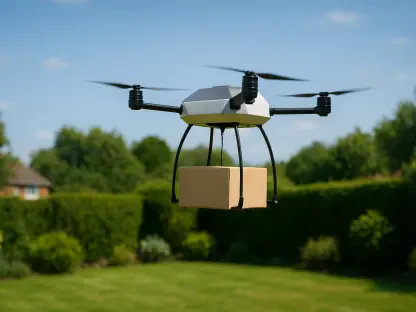
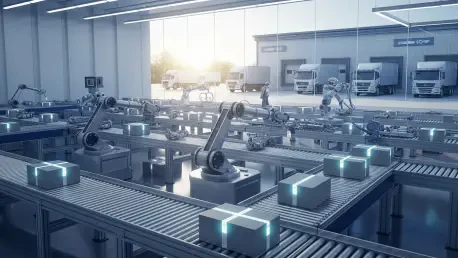
Reaching a threshold where 67% of facilities utilize automation is a massive milestone that replaces manual uncertainty with high-speed precision. When you combine this level of automation with RFID tracking technology, the “black hole” of the supply chain virtually disappears for the modern manufacturer. Every package emits a digital pulse, providing the real-time visibility essential for maintaining tight just-in-time manufacturing schedules. Integrating these high-tech hubs with services like Roadie for same-day delivery creates a responsive network capable of handling both bulk industrial freight and urgent last-minute needs.
What is your forecast for the future of North American logistics?
I believe we are entering an era of unprecedented connectivity where the lines between the United States, Mexico, and Canada will continue to blur from a logistics perspective. As automation expands further across the network, we will see even more rapid transitions and fewer manual touchpoints, leading to a truly frictionless trade zone. These heavy investments will trigger a ripple effect, forcing the entire industry to adopt integrated models to stay competitive in a fast-paced market. Ultimately, the winners will be those who prioritize total network reliability, turning their supply chains into a powerful advantage rather than just a cost center.