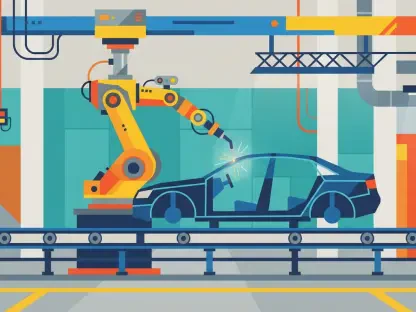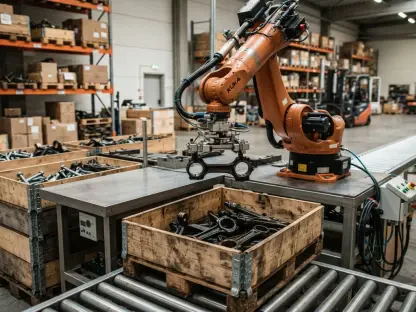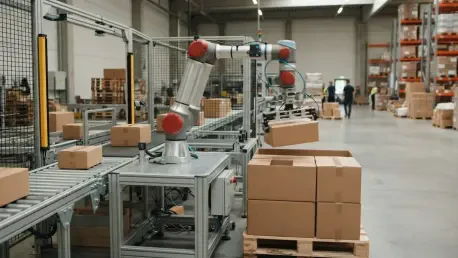

The traditional boundaries between rigid industrial automation and the fluid decision-making processes of the human mind are rapidly dissolving as physical artificial intelligence takes center stage. This technological shift marks a transition from pre-programmed repetition to perception-driven agility. The collaboration between Teradyne Robotics and Sereact epitomizes this evolution, targeting logistical complexities that once paralyzed standard systems. By fusing machine learning with robust mechanical hardware, these entities redefined how machines interpret and interact with the physical world.
The Core Pillars: Sereact and Teradyne Integration
The Cortex Platform: A Unified Neural Engine
Sereact’s Cortex software functions as a centralized neural engine for robotic fleets. Unlike traditional systems requiring individual retraining for every new SKU, this “single model” approach allows robots to generalize their skills across diverse objects. Shared intelligence ensures that knowledge acquired by one unit in a warehouse instantly benefits the entire network, significantly reducing the downtime traditionally associated with manual configuration and item mapping.
High-Performance Hardware: The Physical Foundation
Universal Robots provide the mechanical dexterity necessary to execute complex AI commands. These collaborative arms are engineered for high-frequency tasks, offering the precision required for delicate kitting or heavy bin consolidation. This technical synergy between an open-platform hardware design and Sereact’s software creates a versatile ecosystem where the robot is no longer a static tool but an adaptive participant in the production cycle.
Emergent Trends: The Shift to Scalable Intelligence
The sector is moving from experimental pilot programs toward large-scale, multi-unit deployments across global supply chains. The industry now prioritizes “plug-and-play” AI that integrates with existing infrastructure without replacing established conveyor systems. This accessibility lowers the barrier to entry for smaller retailers. Moreover, open-architecture systems allow third-party developers to interface with hardware, preventing proprietary lock-in and encouraging modular improvement.
Real-World Applications: From Logistics to Retail
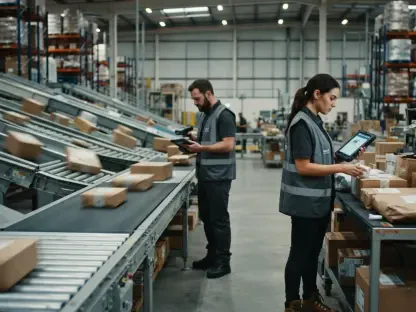
Practical applications are evident in fashion and retail, where robots handle unstructured items like polybags or delicate fabrics. In logistics hubs, dual-arm systems manage mixed goods and unknown packaging autonomously. These systems now bridge the gap between storage and the final assembly line, kitting complex components and tending machines without the need for constant manual oversight or specific item teaching.
The Challenge: Navigating Barriers to Adoption
Technical hurdles remain, specifically regarding perception accuracy for highly reflective or deformable materials. Cameras often struggle with transparent plastics or metallic surfaces, leading to grasping errors. Furthermore, market skepticism persists as some operators still favor the predictable reliability of traditional fixed automation over the dynamic nature of AI-driven systems, requiring manufacturers to prove consistent long-term uptime.
Future Trajectory: Global Expansion and Generalization
The expansion of Sereact into North American markets via its Boston headquarters signals a new phase of global competition. This move will likely accelerate the development of general-purpose robotic intelligence capable of operating in diverse, unpredictable manufacturing environments. As these systems become more intuitive, they will become standardized components of global labor strategies, mitigating labor shortages through autonomous efficiency.
The partnership between Teradyne and Sereact represented a pivotal moment in the normalization of intelligent robotics. This collaboration demonstrated that “single model” AI successfully transformed collaborative robots from specialized tools into versatile assets capable of managing supply chain volatility. Industry leaders who embraced this integration found themselves better positioned to scale their operations without the constraints of per-task programming. Ultimately, physical AI transitioned from a niche innovation to an essential industrial standard.