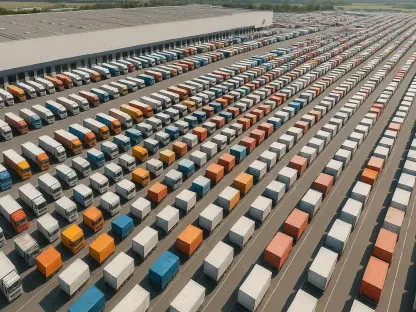

The aggressive expansion of Amazon into the domestic less-than-truckload market represents the most significant shift in freight dynamics since the deregulation of the industry decades ago. By 2026, the company has successfully transitioned from a captive shipper to a major third-party logistics provider, leveraging a dense network of sortation centers and a technologically advanced fleet to undercut traditional carriers. This evolution is driven by a need to maximize asset utilization across its middle-mile operations, transforming what was once a cost center into a high-margin revenue stream. Shippers are increasingly looking toward this model for its visibility and reliability, as the internal demand provides a volume that ensures frequent departures. As this trend continues through 2028, the market is witnessing a convergence where retail fulfillment and industrial freight move closer together, fundamentally altering the competitive landscape for legacy players like FedEx and Old Dominion.
Strategic Logistics Infrastructure: Building a Seamless Network
Integrated Networks: The Relay Transformation
Central to this structural shift is the Amazon Relay ecosystem, a digital platform that has effectively commoditized the interaction between shippers and carriers through real-time data integration. Unlike the fragmented systems used by traditional freight brokerages, this platform provides an end-to-end view of the supply chain, allowing for instantaneous load matching and automated scheduling that reduces empty miles significantly. For the thousands of independent owner-operators and small fleets, the interface offers a streamlined way to access premium freight without the administrative overhead typical of older industry models. The ability to monitor driver performance and equipment health via proprietary onboard technology ensures a level of service consistency that was previously difficult to achieve. Consequently, the adoption of these automated workflows has set a new benchmark for efficiency, forcing competitors to accelerate their own digital transformation efforts to remain viable in this market.
Beyond the software, the physical footprint of new sortation and inbound facilities has fundamentally changed the geography of American freight moving into 2027 and beyond. By strategically placing these nodes closer to major population centers, the network minimizes the distance required for regional hauls, which is the primary pain point for traditional less-than-truckload providers dealing with long-haul inefficiencies. These facilities are designed with high levels of automation, utilizing robotics to sort palletized shipments with a precision that manual cross-docking operations cannot replicate. This speed allows for later pickup times and faster transit, meeting the growing demand from commercial clients for near-real-time replenishment cycles. As more small businesses integrate their inventory directly into this infrastructure, the distinction between a delivery service and a freight carrier becomes irrelevant. The scale of this operation allows for a density that keeps costs low while maintaining a high frequency.
Market Response: Shifting Toward Transparency
The evolution of the less-than-truckload market became solidified as businesses shifted their focus toward total cost of ownership rather than just base freight rates. Successful logistics managers prioritized the integration of real-time tracking and automated documentation into their existing workflows to maintain pace with these new industry standards. By adopting transparent pricing models, organizations effectively reduced their administrative burden and improved their long-range planning accuracy. The industry moved away from opaque negotiation tactics toward a data-centric approach that rewarded efficiency and reliability above all else. Shippers who transitioned their operations early found that the increased visibility allowed for leaner inventory levels and more responsive customer service protocols. This transformation proved that staying competitive required a fundamental embrace of technological convergence, where the carrier and the shipper operated within a unified digital environment to mitigate the historical volatility.