
The traditional warehouse floor, once a frantic theater of manual barcode scans and clipboard-bound tallies, has effectively reached its cognitive ceiling in the face of modern consumer demand. As global logistics networks become increasingly strained by the speed of e-commerce and the complexity of global trade, the reliance on human-centric data entry has shifted from a standard practice to a significant operational bottleneck. Warehouse computer vision has emerged not merely as a replacement for the handheld scanner, but as a comprehensive layer of facility-wide intelligence that interprets the physical world with a level of granular detail and speed that was previously unattainable. This transition represents a fundamental move from transactional data capture—where a scan merely records a point in time—to a continuous stream of contextual awareness that informs every aspect of supply chain management.
The Evolution of Vision Technology in Logistics
The journey toward modern vision-centric logistics began with the simple, rigid parameters of the one-dimensional barcode. For decades, the industry relied on laser scanners that required a direct, unobstructed line of sight and high-contrast environments to function. These systems were purely reactive; they could tell a Warehouse Management System (WMS) that an item had moved from Point A to Point B, but they offered no insight into the condition of the item, the efficiency of the path taken, or the environmental factors surrounding the transaction. As logistics evolved, the “rules-based” nature of these early systems became a liability, as any deviation in lighting, label orientation, or packaging texture would lead to system failure and require manual intervention.
In the early part of the decade leading up to 2026, the emergence of machine learning began to dismantle these rigid boundaries. The shift toward AI-driven operational intelligence has allowed systems to move past simple pattern matching toward sophisticated perception. This evolution was necessitated by the sheer volume of data that modern distribution centers must process. Today, vision technology is no longer an isolated tool for scanning individual boxes; it is an integrated ecosystem of cameras and sensors that monitor the entire facility. This progression has been fueled by the democratization of high-speed processing and the refinement of neural networks, allowing warehouses to transform from static storage hubs into dynamic, self-correcting environments.
Core Components of AI-Enabled Warehouse Systems
Neural Networks and Advanced Image Processing
At the heart of modern warehouse intelligence lies the deep learning architecture that powers image interpretation. Unlike traditional software that searches for a specific geometric shape, neural networks are trained on millions of images to recognize objects, text, and conditions under highly variable circumstances. This capability is critical in a warehouse where labels are frequently torn, occluded by plastic wrap, or obscured by shadows. Advanced image processing algorithms can now reconstruct missing data from a damaged QR code or extract alphanumeric characters from a crumpled shipping manifest with higher accuracy than a human operator. This robustness ensures that the flow of goods is never halted by minor physical imperfections that would have paralyzed older systems.
Moreover, these networks are capable of multi-tasking within a single frame. A single overhead camera can simultaneously identify a pallet’s SKU, verify the integrity of its shrink-wrap, and check for the presence of mandatory safety labeling. The unique advantage here is the move away from “brittle” algorithms. Because these models are adaptive, they continuously improve through exposure to new data. If a warehouse introduces a new type of packaging or changes its lighting scheme, the neural network adjusts its internal weights to maintain performance. This adaptability reduces the long-term cost of ownership by eliminating the need for constant manual recalibration of the software.
Smart Sensors and Edge AI Hardware
The physical hardware supporting these algorithms has undergone a parallel transformation, moving away from centralized processing toward Edge AI. In previous iterations, video feeds had to be transmitted to a central server for analysis, creating latency and consuming massive amounts of bandwidth. Modern smart vision sensors, however, perform the majority of the heavy lifting locally on the device. By integrating high-performance processors directly into the camera housing, these systems can make millisecond decisions regarding sorting or collision avoidance. This localized intelligence is what allows autonomous systems to operate at high speeds without the risk of communication delays that could lead to operational errors.
This hardware shift has also made sophisticated vision more accessible from a budgetary perspective. The mass production of high-resolution CMOS sensors and specialized AI chips has lowered the entry barrier for smaller logistics providers. Furthermore, the durability of this hardware has been engineered specifically for the harsh environments of the industrial world. Whether operating in the sub-zero temperatures of a cold-storage facility or the dusty, high-vibration environment of a bulk-loading dock, these sensors provide a consistent stream of data. The result is a hardware layer that is both powerful enough to handle complex computations and resilient enough to ensure long-term uptime in demanding conditions.
3D Vision: Spatial Intelligence and Digital Twins
The transition from two-dimensional scanning to three-dimensional mapping has unlocked a new dimension of efficiency. While 2D vision is excellent for identifying labels, 3D vision systems utilize technologies like LiDAR and stereo-vision to perceive depth, volume, and spatial relationships. This spatial intelligence allows systems to calculate the exact dimensions of an incoming parcel, ensuring that it is assigned to a storage slot that maximizes space utilization. By accurately measuring the “cube” of every item, facilities can eliminate the “dead air” that often plagues warehouses, directly increasing the profitability per square foot.
This 3D data serves as the foundation for the creation of digital twins—real-time virtual replicas of the physical warehouse. A digital twin is not a static map but a living model that reflects the current state of every pallet, forklift, and worker. When a 3D vision system identifies an empty rack space, the digital twin is updated instantly, allowing the WMS to trigger a replenishment order or a slotting optimization routine. This synchronization between the physical and digital realms provides managers with a god-eye view of their operations, enabling them to simulate changes in layout or workflow in the virtual space before committing any physical resources to the task.
Current Innovations and Industry Shifts
The logistics industry is currently witnessing a massive pivot in how technology is procured and deployed, most notably through the rise of “Robotics-as-a-Service” (RaaS). This model allows warehouse operators to deploy fleets of vision-enabled robots without the prohibitive upfront capital expenditure that once limited such technology to global giants. By moving to a subscription-based model, companies can scale their technological footprint up or down based on seasonal demand, ensuring they are only paying for the utility they consume. This shift has accelerated the adoption of computer vision, as the financial risk is largely shifted to the technology provider, who is responsible for keeping the hardware and software updated.
Furthermore, there is a clear trend toward the replacement of “if-this-then-that” rules-based algorithms with flexible, adaptive machine learning models. In the past, if a robot encountered an unfamiliar obstacle, it would simply stop and wait for human assistance. Today, adaptive vision allows robots to navigate complex, changing environments by predicting the movement of nearby objects and personnel. This shift from reactive to proactive behavior is essential for maintaining the high-velocity throughput required in the current logistics landscape. As these models become more sophisticated, they are moving closer to achieving human-like situational awareness, allowing for more fluid and natural collaboration between machines and people.
Real-World Applications and Use Cases
Autonomous Inventory Auditing
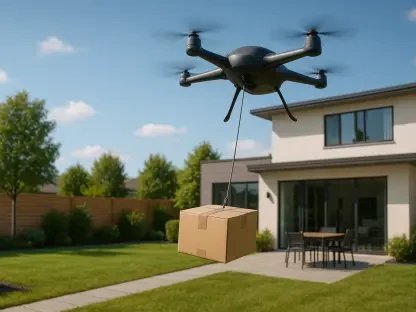
One of the most transformative applications of computer vision is the automation of the cycle-counting process. Historically, inventory audits required workers to be elevated on lift trucks or to manually scan thousands of items, a task that was both time-consuming and prone to human error. Now, autonomous mobile robots (AMRs) and specialized drones equipped with multi-angle vision systems can traverse warehouse aisles after hours. These systems scan every pallet and bin, comparing what they “see” with the records in the WMS. By identifying discrepancies in real-time, these autonomous auditors ensure that inventory accuracy remains near 100%, preventing the “stock-outs” and lost sales that result from inaccurate data.
Workplace Safety: Hazard Detection and Compliance
Vision systems have become the primary line of defense in maintaining workplace safety. By deploying cameras equipped with motion-tracking and object-recognition software, facilities can create virtual “safety zones” around hazardous equipment. If a pedestrian enters a restricted area or crosses the path of an oncoming forklift, the system can automatically trigger an audible alarm or even slow the vehicle down to prevent a collision. Moreover, computer vision is being used to monitor compliance with personal protective equipment (PPE) protocols. Algorithms can detect whether workers are wearing hard hats or high-visibility vests, providing a non-intrusive way to enforce safety standards and reduce the risk of insurance claims and workplace injuries.
Space Optimization and Slotting
The optimization of warehouse layout is no longer a static, once-a-year project. With the data provided by continuous visual monitoring, managers can implement dynamic slotting strategies. For example, if vision sensors detect that a particular product is being picked more frequently than usual, the system can suggest moving that stock to a more accessible “prime” location. This real-time optimization reduces the travel time for pickers and equipment, streamlining the entire fulfillment process. Additionally, visual data helps identify underutilized rack space—such as pallets that are only half-full—allowing for better consolidation and maximizing the storage capacity of the existing footprint.
Technical and Operational Challenges
Physical: Environmental Limitations and Occlusion
Despite its rapid advancement, computer vision still faces significant physical hurdles within the warehouse environment. The most prominent of these is “occlusion,” where an object is hidden behind another, making it invisible to a camera’s line of sight. No matter how advanced the AI, a vision system cannot record what it cannot see. This requires a strategic and often redundant placement of cameras to ensure full coverage, which can increase the complexity of the initial installation. Furthermore, environmental factors such as glare from overhead lights, heavy dust, or the reflective surfaces of shrink-wrap can still occasionally confuse sensors, necessitating specialized lighting solutions or lens coatings.
Implementation: Procedural Barriers and False Positives
Beyond the physical limitations, there are significant procedural challenges in implementing AI-driven vision. One of the primary risks is the occurrence of “false positives,” where the system incorrectly identifies a safety hazard or an inventory discrepancy. If these errors occur too frequently, “alarm fatigue” can set in among workers, leading them to ignore legitimate alerts. To be successful, a high-tech vision solution must be built upon a foundation of strong manual processes. A vision system can identify that a pallet is in the wrong place, but it cannot fix the procedural breakdown that led to the error. Therefore, the implementation of this technology must be accompanied by rigorous training and a commitment to data-driven process improvement.
Future Trajectory of Warehouse Intelligence
Looking toward the window from 2026 to 2030, the technology is moving toward a state of full synchronization where predictive analytics will dominate. The goal is to move from knowing what is happening to knowing what will happen. By analyzing historical visual data, AI will be able to predict warehouse congestion before it occurs or identify which pieces of equipment are likely to fail based on subtle changes in their movement patterns. This shift toward predictive maintenance and proactive labor allocation will allow warehouses to operate at peak efficiency even during extreme peak seasons.
Another breakthrough on the horizon involves the enhancement of “hand-eye coordination” for robotic picking systems. Currently, picking irregular or fragile items remains a challenge for robots, but the integration of high-fidelity 3D vision with tactile sensors is closing this gap. This will eventually lead to the development of fully automated picking and packing lines that can handle everything from heavy industrial parts to delicate consumer electronics with the same level of precision. As these systems become more integrated into the global supply chain, the level of transparency will reach a point where every single item’s journey can be visually tracked and verified from the factory floor to the customer’s doorstep.
Final Assessment and Summary
The integration of computer vision into warehouse operations represented a pivotal shift in how the logistics industry approached the concept of visibility. It was no longer enough to simply track barcodes; the demand for higher throughput and lower costs drove a necessity for contextual intelligence. Throughout this transition, the technology proved its value by not only reducing labor costs but also by providing a granular level of data that was previously hidden from management. The implementation of neural networks and 3D vision transformed the warehouse from a passive storage space into an active participant in the supply chain, capable of self-auditing and real-time optimization.
Ultimately, the shift toward warehouse computer vision was a decisive response to the labor shortages and operational complexities of the mid-2020s. While physical challenges like occlusion and environmental variability remained, the benefits of improved inventory accuracy and enhanced workplace safety far outweighed the technical hurdles. Early adopters who successfully integrated these vision systems gained a significant competitive advantage by creating more resilient, flexible, and transparent logistics networks. This technology laid the groundwork for the next generation of fully autonomous facilities, ensuring that the global supply chain remained robust enough to meet the ever-evolving demands of the modern world.