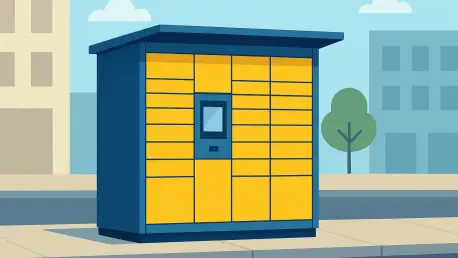

Solar-powered units provide the company with the unique advantage of selecting installation sites that were previously inaccessible due to power constraints. This technological shift has allowed YEEP! to rapidly expand its presence across the United Kingdom, recently celebrating the achievement of 4,000 active locker locations. Under the leadership of Jamie Dickinson, who took the helm in late 2023, the organization has nearly doubled its physical footprint from an initial base of 2,250 sites. This aggressive scaling is part of a broader strategic roadmap aiming to establish a network of 5,000 locations by the conclusion of 2026. The transition from a smaller operator to a major infrastructure player has required a fundamental rethink of how logistics networks interact with urban and rural environments. By prioritizing accessibility and installation speed, the company has bypassed many of the bureaucratic hurdles and civil engineering costs associated with traditional grid-connected hubs.
Technological Advancements: The Generation 3 Rollout
The cornerstone of this expansion is the introduction of “Generation 3” hardware, a collaborative effort with shareholder and partner kernTerminal AG. These advanced units represent a significant modernization of the user experience, featuring an intuitive touchscreen interface that caters to both time-pressed couriers and end-consumers. Beyond the visual upgrades, the internal architecture focuses on long-term sustainability through integrated solar-powered battery technology. This autonomy from the national grid allows for placement in diverse environments, from remote train stations to community centers, without the need for extensive electrical groundwork. The hardware design emphasizes durability and energy efficiency, ensuring that the lockers remain operational even during periods of low sunlight. By integrating these systems, the company ensures its infrastructure remains resilient and adaptable to the evolving demands of the modern e-commerce landscape, where speed and reliability are paramount.
All new deployments scheduled to begin in November 2026 will adhere to this high-performance specification, ensuring a uniform standard across the growing network. There is also a comprehensive plan in place to upgrade the existing legacy units by early 2027, effectively future-proofing the entire infrastructure against technological obsolescence. This commitment to hardware parity ensures that users receive a consistent experience regardless of which locker they visit. The move away from grid dependency significantly reduces the carbon footprint associated with parcel delivery, aligning with global shifts toward greener logistics solutions. Furthermore, the modular nature of the Generation 3 units allows for easier maintenance and component replacement, minimizing downtime and maximizing the return on investment for each site. This logistical agility is a key differentiator in a crowded market, providing the company with the necessary tools to maintain its upward trajectory while optimizing its environmental impact.
Strategic Scaling: Digital Infrastructure and Market Reach
Parallel to the hardware advancements, YEEP! has invested heavily in developing a proprietary operating system tailored specifically to the unique demands of an open locker network. This software suite serves as the central nervous system of the operation, managing complex logistical tasks such as initial site surveys, installation scheduling, and proactive maintenance alerts. By building these digital tools in-house, the company has gained total visibility over its entire scaling process, allowing for real-time adjustments and data-driven decision-making. This shift toward internal technological control reflects a wider industry trend where logistics firms seek to reduce reliance on third-party vendors to improve service reliability. The software allows for seamless communication between the lockers and the central hub, ensuring that occupancy rates are optimized and that any technical issues are identified and resolved before they impact the end-user. This level of oversight is crucial for maintaining high service standards.
Stakeholders prioritized long-term network reliability over short-term gains, which facilitated the transition into a high-growth phase. Decision-makers implemented standardized hardware and software protocols that ensured consistent service quality across thousands of sites. Organizations seeking to replicate this success should consider investing in energy-independent technologies to bypass traditional infrastructure bottlenecks. The focus on sustainability proved to be more than just a corporate social responsibility initiative; it became a core operational strength that enabled rapid expansion. Future logistics strategies had to incorporate carrier-neutral models to handle the increasing volume of e-commerce returns and pickups efficiently. By adopting these flexible infrastructure solutions, the company established a blueprint for scalable, environmentally conscious delivery networks. This shift toward professionalized leadership and bespoke technology set a new benchmark for the industry, emphasizing the path to market dominance.