
A strategic Memorandum of Understanding with the National Capital Region Transport Corporation signals Blue Dart’s departure from its traditional reliance on road and air networks. This move reflects a broader industry shift where speed and reliability are no longer solely dependent on the frequency of flight schedules or the clearance of highway bottlenecks. By exploring the integration of express logistics into high-speed regional rail infrastructure, the company is attempting to rewrite the playbook for urban distribution in India’s most congested corridors. The collaboration focuses on the Namo Bharat corridor, a pioneering transit system designed to facilitate rapid movement within the National Capital Region. This transition represents a sophisticated response to the increasing pressure of e-commerce volumes and the urgent need for more sustainable delivery methods. As the logistics landscape becomes more complex, this multimodal approach aims to ensure that high-priority shipments remain insulated from the unpredictable nature of metropolitan traffic.
Pioneering High-Speed Rail for Express Delivery
The 82-kilometer Delhi-Ghaziabad-Meerut corridor serves as the testing ground for this ambitious project, providing a controlled environment to assess how express shipments can share space with high-speed passenger traffic. Navigating the dense urban sprawl of the National Capital Region has historically been a logistical nightmare, characterized by unpredictable delays and significant fuel consumption. By shifting a portion of its ground volume to the Namo Bharat system, Blue Dart is positioning itself to bypass these traditional hurdles entirely. This rail-integrated model is not merely a tactical adjustment but a strategic alignment with modern Environmental, Social, and Governance mandates. Utilizing electric rail technology significantly lowers the carbon footprint per shipment, addressing the growing demand from corporate clients for greener supply chain solutions. The initial phases of this partnership focus on the technical feasibility of synchronized scheduling and the efficient movement of goods through transit stations during off-peak hours.
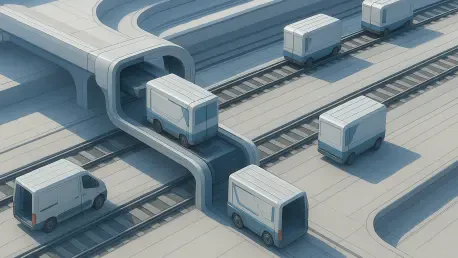
Integrating freight into a system primarily designed for passengers requires a revolutionary approach to terminal infrastructure and cargo handling. The current feasibility study examines how transit stations can accommodate specialized containers or modular loading systems without disrupting the flow of daily commuters. This Rail-Parcel segment could potentially become a scalable blueprint for other major Indian megacities currently grappling with urban gridlock and air quality concerns. Success in this venture depends on the development of specialized infrastructure, including dedicated loading docks and high-speed sorting mechanisms at key interchanges along the 82-kilometer route. Furthermore, the collaboration aims to establish a predictable transit rhythm that mirrors the precision of air freight but at a fraction of the carbon cost. If the pilot proves successful, the model could lead to a permanent shift in how first-mile and middle-mile logistics are managed across the country’s burgeoning rapid transit networks, setting a new benchmark for global urban logistics.
Financial Strength and Leadership Transitions
While these operational shifts are underway, the financial foundation of the company remains exceptionally robust, providing the necessary capital to fund such innovative infrastructure projects. For the first quarter ending in June of the 2027 fiscal year, the organization reported consolidated operations revenue of ₹1,657.7 crore, a substantial increase from the ₹1,441.9 crore recorded in the same period of the previous year. Even more notable was the surge in consolidated net profit, which reached ₹88.5 crore, up from ₹48.8 crore, signaling that the company has effectively navigated the inflationary pressures of the current market. To sustain this momentum and offset the rising costs associated with multimodal integration, a Domestic General Price Increase ranging from 9% to 12% is scheduled for implementation in early 2027. This pricing strategy reflects a calculated bet that the market will prioritize reliability and environmental responsibility over lower-cost, traditional road-based alternatives as delivery expectations continue to evolve.
The management of these strategic initiatives falls to a new leadership team during a critical phase of organizational evolution. Following the retirement of Balfour Manuel in late November 2026, R.S. Subramanian assumed the role of Managing Director, inheriting both the ambitious rail expansion and the task of maintaining investor confidence. This transition occurs as the company faces external challenges, including a recent GST show cause notice involving a tax demand of ₹27.10 crore served to its aviation subsidiary. While the financial impact of this regulatory hurdle is manageable given the recent profit surge, it highlights the complex legal and administrative landscape that modern logistics giants must navigate. The ability of the new leadership to resolve these tax matters while simultaneously scaling the Namo Bharat pilot will be a defining factor in the company’s performance over the coming months. Maintaining a balance between regulatory compliance and aggressive expansion is essential for ensuring that the transition to a multimodal framework remains profitable.
Navigating the Future of Urban Logistics
The shift toward rail-integrated logistics is part of a larger structural transformation within the Indian logistics sector, heavily influenced by the PM Gati Shakti National Master Plan. This government-led initiative promotes seamless connectivity across different modes of transport, encouraging companies to look beyond single-mode solutions for more resilient supply chains. By positioning itself as an early adopter of the rail-parcel segment, the organization is decoupling its core operations from the volatility of fuel surcharges and the unpredictability of road traffic. This approach allows for a more standardized delivery schedule, offering a level of precision that was previously difficult to achieve in dense urban environments. Furthermore, the integration of rail into the delivery mix provides a hedge against potential future regulations targeting heavy vehicle traffic in metropolitan centers. As more cities adopt green zones and restrict diesel truck access during peak hours, having a pre-established rail network provides a significant competitive advantage.
The strategic move toward multimodal rail integration offered a clear path toward overcoming the historical limitations of urban distribution and environmental sustainability. While the exploratory phase with the Namo Bharat corridor revealed the complexities of coordinating freight within passenger-centric systems, it also established a foundation for traffic-independent logistics. Moving forward, the successful implementation of this strategy required the development of collaborative frameworks between transit authorities and private logistics providers to optimize station use during low-traffic periods. The leadership correctly identified that future profitability depended on moving away from carbon-intensive road networks and toward a more integrated, electric rail-based system. Ultimately, the transition demonstrated that high-speed rail could serve as a vital artery for express shipments, provided that investments in specialized terminal infrastructure kept pace with growing e-commerce demands. This shift set a new standard for first-mile and last-mile efficiency within India’s growing cities.