



The New Era of Flexible Automation in American Warehousing
The rapid convergence of artificial intelligence and physical automation is currently dismantling the traditional barriers that once limited the efficiency of American distribution centers. At the forefront of this industrial shift is Vecna Robotics, a Massachusetts-based innovator that recently secured $31 million in funding to scale its “dock-to-dock” automation solutions. This investment signals a growing market preference for versatile systems that can be integrated into existing facilities without the prohibitive costs of permanent infrastructure. By focusing on dynamic, AI-driven orchestration, the company addresses the surging demand for high-volume productivity while maintaining a strictly domestic manufacturing footprint. This approach ultimately sets a new standard for how goods move through the modern supply chain in an increasingly volatile global market.
From Fixed Tracks to Fluid Intelligence: The Evolution of Material Handling
Historically, warehouse automation relied on “fixed” systems, such as conveyors and automated storage and retrieval systems that required massive capital investment and permanent structural modifications. While effective for predictable volumes, these systems struggled to adapt to the volatility of modern e-commerce and the high-mix demands of today’s consumers. The industry eventually pivoted toward early-stage robotics, yet many of these initial solutions operated in silos, automating single tasks without considering the broader workflow. Vecna Robotics emerged from this need for cohesion, building a foundation on flexible automation that can be deployed within existing facilities without installing magnetic tape. This marked a significant departure from the restrictive logistics models of the past, allowing for a more modular approach to growth.
Revolutionizing the Workflow: Orchestrated Autonomy in Practice
CaseFlow: Doubling Throughput with Intelligent Technology
One of the most significant contributions to the sector is the introduction of CaseFlow technology, which optimizes the interaction between humans and machines. Unlike traditional picking methods where workers spend the majority of their time walking or driving between locations, this system manages the complex navigation of material movement. Real-world data from partners like GEODIS reveals that this technology can double picking throughput by allowing human workers to focus exclusively on picking tasks. This shift has a secondary, vital benefit: it drastically reduces training times for new staff. Because the interface is intuitive and the robot handles the logistics planning, new employees reached 200% performance levels almost immediately, solving a critical pain point in a tight labor market.
Domestic Sourcing: The Security of US-Based Manufacturing
In an era of increasing geopolitical sensitivity and supply chain volatility, Vecna Robotics positioned itself as a premier U.S.-based manufacturer. This is particularly relevant following recent regulatory actions emphasizing the need for secure, domestic sourcing for connected technologies. For North American warehouse operators, “Made in the USA” is no longer just a patriotic sentiment; it is a strategic advantage for long-term supportability and cybersecurity. By keeping design and manufacturing within the United States, the company ensures that its robotic fleets are compliant with local standards. This strategy also insulates operators from the risks associated with international trade disputes or foreign hardware vulnerabilities, providing a level of reliability that offshore competitors struggle to match.
The Pivotal Platform: The Power of Fleet Orchestration
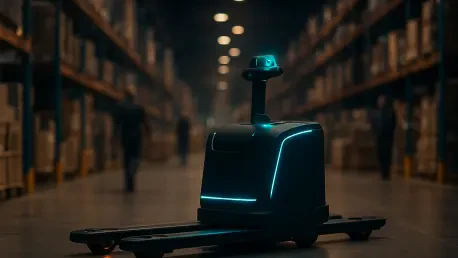
The true intelligence of this approach lies in the Pivotal orchestration platform, which acts as the brain for the entire facility. Rather than deploying isolated machines, Pivotal coordinates a diverse fleet—ranging from co-bot pallet jacks to autonomous forklifts and tuggers—into a single, cohesive ecosystem. This prevents the bottleneck effect common in automated warehouses where different systems fail to communicate with each other. By analyzing environmental variables in real-time, the platform adjusts workflows on the fly, ensuring that material moves smoothly from the loading dock to the shipping bay. This level of integration addresses the common misconception that more robots automatically lead to more efficiency, proving that the coordination of those robots is what truly unlocks productivity.
Anticipating the Next Wave: Logistic Innovations and AI Integration
Looking ahead, the infusion of new capital is set to accelerate research and development, particularly in expanding automation into more complex pallet movement workflows. We are likely to see a shift from 2026 to 2028 toward even more autonomous “dark” segments of the warehouse where robots handle bulk movements with minimal human oversight. As AI models become more sophisticated, these robots will move beyond simple pathfinding to predictive logistics, anticipating surges in demand before they happen. Furthermore, as regulatory environments continue to favor domestic technology, the industry is poised to see a broader trend of reshoring high-tech components. These innovations will likely focus on advanced sensor fusion, making shared human-robot zones safer and more efficient.
Strategic Takeaways: Enhancing Warehouse Productivity and Resilience
For warehouse operators and logistics professionals, the success of flexible automation offers several actionable insights. First, flexibility is the new efficiency; investing in systems that do not require fixed infrastructure allows for easier scaling as business needs change. Second, the human-in-the-loop model remains the most effective way to boost immediate throughput, provided the technology removes non-value-added tasks like travel and manual data entry. Finally, businesses should prioritize platforms that offer holistic orchestration rather than individual task automation. Implementing a unified platform ensures that as a fleet grows, it becomes more efficient rather than more cluttered, providing a clear roadmap for long-term digital transformation and sustained competitive advantage.
Building a Resilient Future: The Lasting Impact of Automation
Vecna Robotics created a blueprint for the future of domestic logistics by synthesizing advanced AI orchestration with a commitment to local manufacturing. The company provided a scalable solution to the labor shortages and efficiency gaps that previously hindered the supply chain. As the industry moved toward more intelligent, adaptable, and secure operations, the role of flexible dock-to-dock automation became increasingly vital for survival. Ultimately, the transition from rigid structures to orchestrated autonomy redefined the standards of the global logistics race. This shift ensured that American warehouses remained resilient against external shocks while fostering a new era of technological self-sufficiency that benefitted the entire economic landscape.


